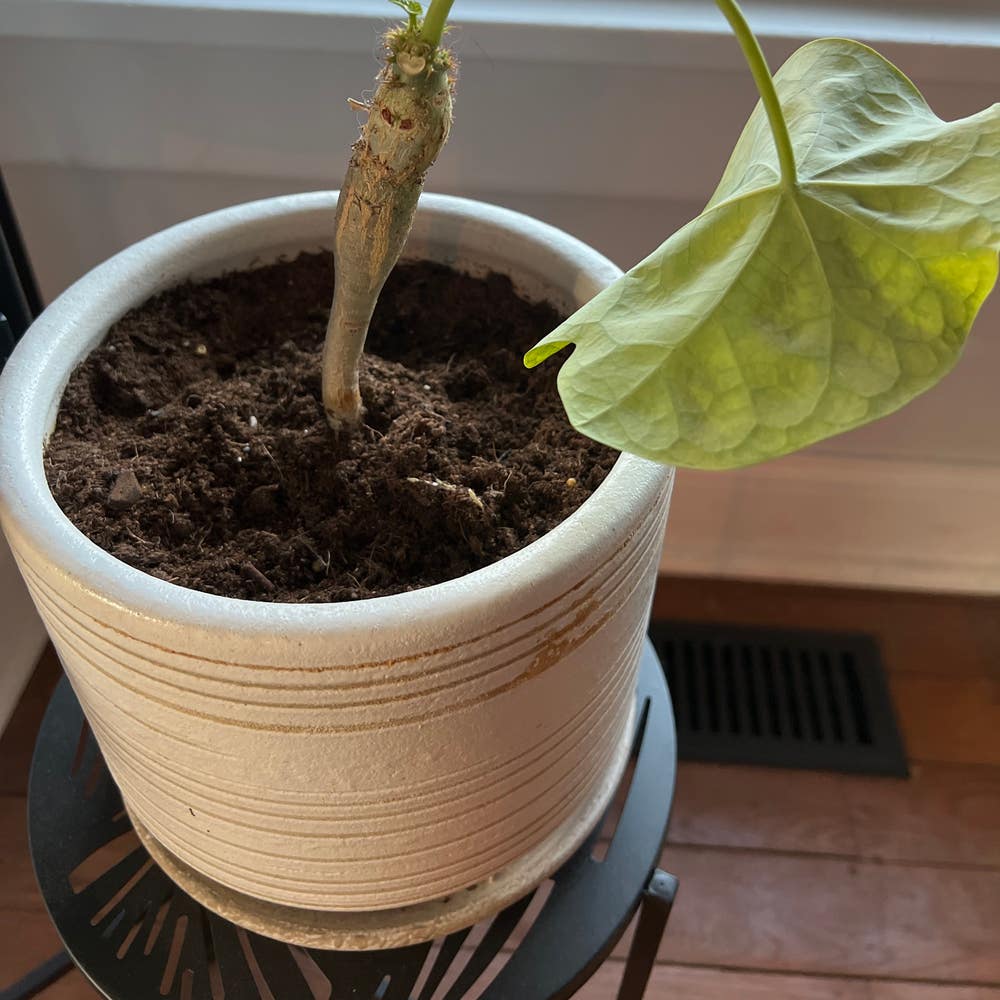
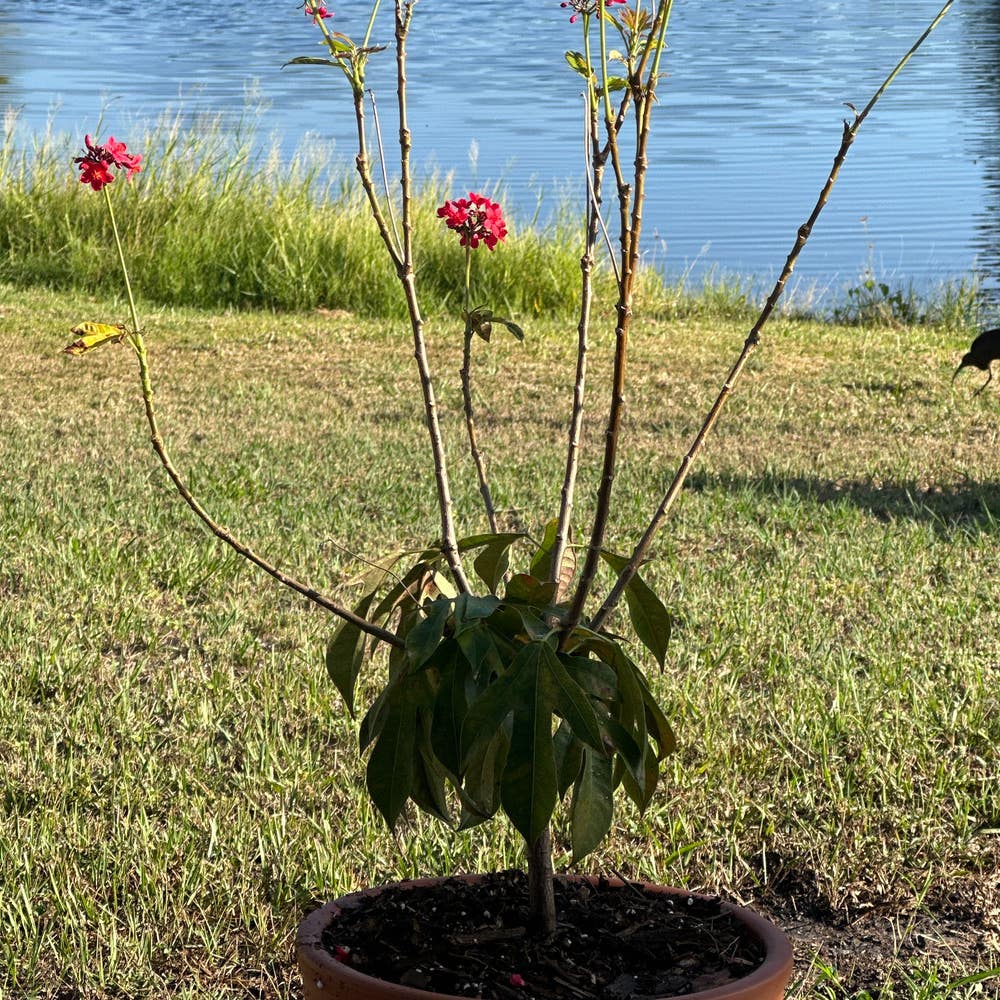
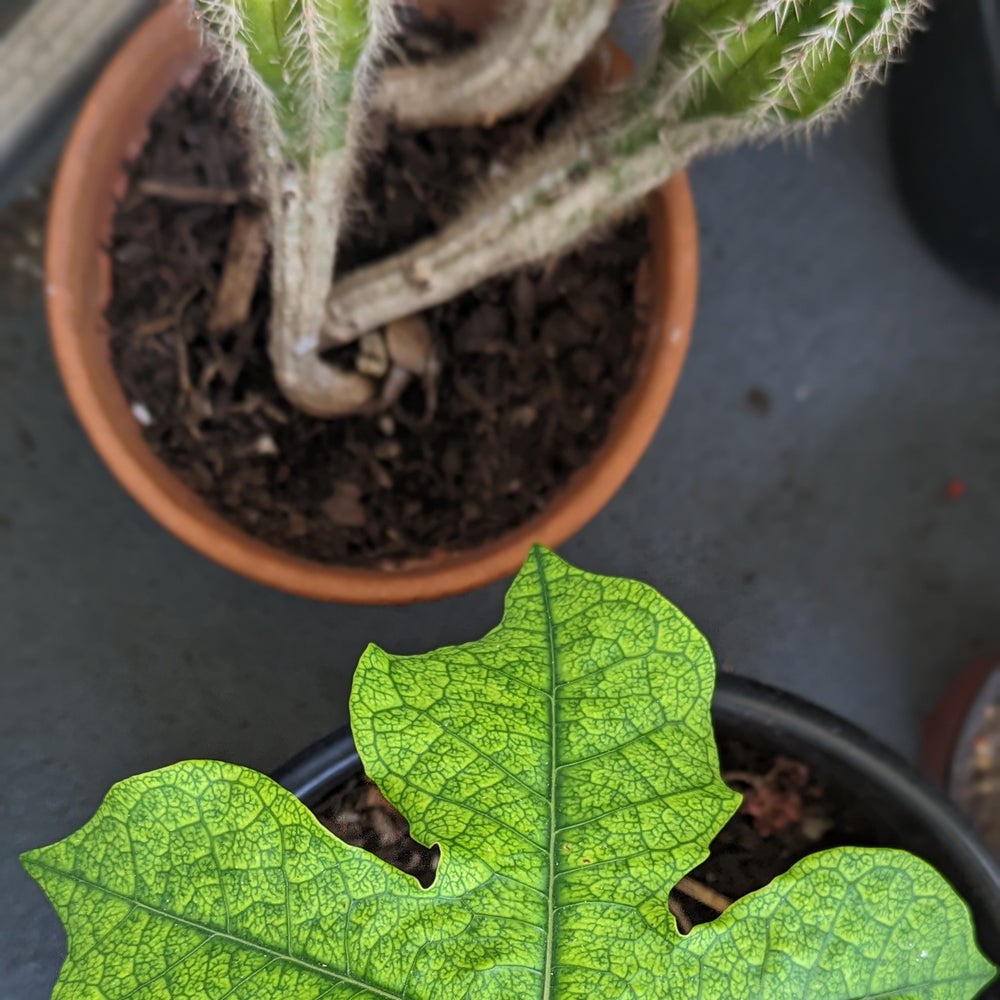
🌴 Humidity Needs for Your Buddha's Palm Plant
Jatropha podagrica
By the Greg Editorial Team
Oct 19, 2024•5 min read
This article was created with the help of AI so we can cover more plants for you. May contain errors. See one? Report it here.
Master the perfect humidity 🌬️ for your Buddha's Palm to thrive and radiate vibrant energy in your home!
- 🌬️ Buddha's Palm thrives in humidity levels between 60% and 80% for optimal health.
- 🌿 Signs of low humidity include leaf curling and browning; monitor closely.
- 💧 Use humidifiers or pebble trays to boost humidity and support your plant's growth.
Ideal Humidity Levels
Optimal Range 🌬️
For your Buddha's Palm Plant to thrive, aim for a relative humidity of 60% to 80%. When humidity dips below 60%, you might notice stress signs like leaf curling and browning, which can be alarming.
Impact on Growth 🌱
High humidity plays a crucial role in helping those unique fan-shaped leaves retain moisture. This moisture retention directly correlates with the plant's overall vigor, making it essential for robust growth.
Maintaining the right humidity not only keeps your plant looking vibrant but also supports its health and resilience. A well-cared-for Buddha's Palm can be a stunning addition to your indoor space, radiating life and energy.
As we explore local humidity considerations next, you'll learn how to assess and create the ideal environment for your plant.
Local Humidity Considerations
🌧️ Assessing Local Humidity Levels
To ensure your Buddha's Palm thrives, start by gauging your indoor humidity. A humidity meter for plants is an excellent tool for this, providing accurate readings to help you understand your environment.
Next, consider your local climate conditions. Factors like seasonal changes and geographic location can significantly impact indoor humidity levels, so be aware of how these elements interact with your plant care routine.
🌴 Creating Ideal Conditions
Creating a microclimate is essential for mimicking the Buddha's Palm's native tropical environment. You can achieve this by grouping your plants together, which naturally raises humidity levels through transpiration.
Additionally, consider using materials like plastic wrap or a glass dome to trap moisture around your plant. This simple setup can help maintain the humidity levels your Buddha's Palm craves, ensuring it stays healthy and vibrant.
By taking these steps, you can create a nurturing atmosphere that supports your plant's growth and well-being.
Strategies for Boosting Humidity
🌬️ Using Humidifiers
Humidifiers are a fantastic way to maintain the ideal humidity levels for your Buddha's Palm Plant. Look for ultrasonic or evaporative models, as they effectively disperse moisture without overheating the air.
For optimal results, set your humidifier to maintain humidity levels between 60% and 80%. This range not only supports your plant's health but also creates a comfortable environment for you.
🌿 Grouping Plants Together
Creating a humid microenvironment can significantly benefit your plants. When you group your Buddha's Palm with other humidity-loving plants, they collectively release moisture into the air.
This proximity enhances humidity retention, making it easier for all your plants to thrive. Plus, it adds a lush, green aesthetic to your space!
🪨 Pebble Trays and Water Bowls
Setting up pebble trays is a simple yet effective method to boost humidity. Fill a shallow tray with pebbles and water, ensuring the pot sits above the water line to avoid root rot.
Additionally, placing water bowls near your plant can promote evaporation, further increasing humidity levels. This method is low-maintenance and works wonders for your indoor garden.
💦 Misting Techniques
Misting your Buddha's Palm can provide an immediate humidity boost. Aim to mist in the early morning or late afternoon when temperatures are cooler, allowing the moisture to linger longer.
However, be cautious not to over-mist, as this can lead to mold growth or leaf damage. A light misting a few times a week is usually sufficient to keep your plant happy.
These strategies can significantly enhance the humidity around your Buddha's Palm, ensuring it thrives in your home. Next, let’s explore how to manage humidity levels effectively, especially if they become too high.
Strategies for Reducing Humidity
🌬️ Ventilation Techniques
Airflow is crucial for preventing mold and mildew in your indoor garden. Improving ventilation can be as simple as opening windows or using fans to circulate air around your Buddha's Palm Plant.
Consider installing exhaust fans or using air purifiers with built-in fans. These methods not only enhance airflow but also help maintain a balanced humidity level.
🚫 Avoiding Overwatering
Overwatering is a common mistake that can lead to increased humidity levels. If your plant's soil remains soggy, it can create a damp environment that encourages mold growth.
Watch for signs of overwatering, such as yellowing leaves or a musty smell from the soil. Adjust your watering practices by allowing the top inch of soil to dry out before watering again.
🪴 Choosing the Right Potting Mix
Selecting the right potting mix is essential for promoting drainage. Look for mixes that contain perlite or sand, which help prevent excess moisture retention.
Additionally, using breathable pots, like terracotta, enhances air circulation around the roots. This can significantly reduce humidity levels and keep your Buddha's Palm thriving.
By implementing these strategies, you can create a balanced environment that supports your plant's health while keeping humidity in check. Next, let’s explore effective methods for monitoring humidity levels to ensure your plant remains in its ideal conditions.
Monitoring Humidity
🌡️ Using a Hygrometer
To keep your Buddha's Palm thriving, monitoring humidity is essential. You can choose between analog and digital hygrometers, both of which effectively measure moisture levels.
Digital hygrometers often provide quicker readings and may include additional features like temperature displays. For the best results, place your hygrometer close to the plant, ideally at the same height as the leaves, to get an accurate reading of the humidity it experiences.
🌵 Signs of Low Humidity
Recognizing the signs of low humidity can save your plant from stress. Look for visual indicators such as leaf curling, browning edges, and wilting leaves.
Behaviorally, your Buddha's Palm may exhibit slower growth and reduced leaf production. These signs are crucial for timely intervention, ensuring your plant remains healthy and vibrant.
By keeping an eye on humidity levels and understanding the signs of distress, you can create a nurturing environment for your Buddha's Palm. Next, let's explore effective strategies for boosting humidity to support your plant's growth.
⚠️ Safety First
This content is for general information and may contain errors, omissions, or outdated details. It is not medical, veterinary advice, or an endorsement of therapeutic claims.
Always consult a qualified healthcare professional before using any plant as food, medicine, or supplement.
Never eat any plant (or feed one to pets) without confirming its identity with at least two trusted sources.
If you suspect poisoning, call Poison Control (800) 222-1222, the Pet Poison Helpline (800) 213-6680, or your local emergency service immediately.
Spotted an error? Please report it here.
Ensure your Buddha's Palm flourishes in its perfect humidity zone 🌧️ by using Greg for tailored tips and reminders that keep your plant happy and healthy!