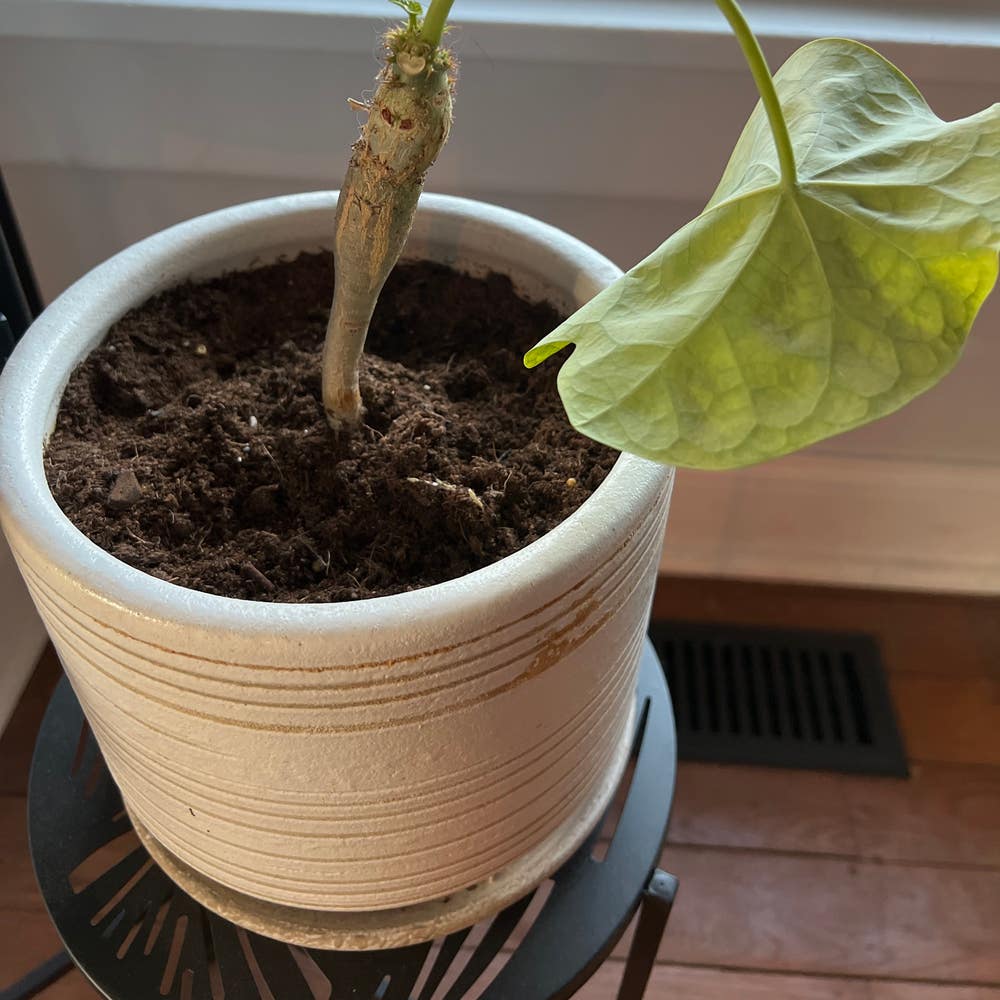
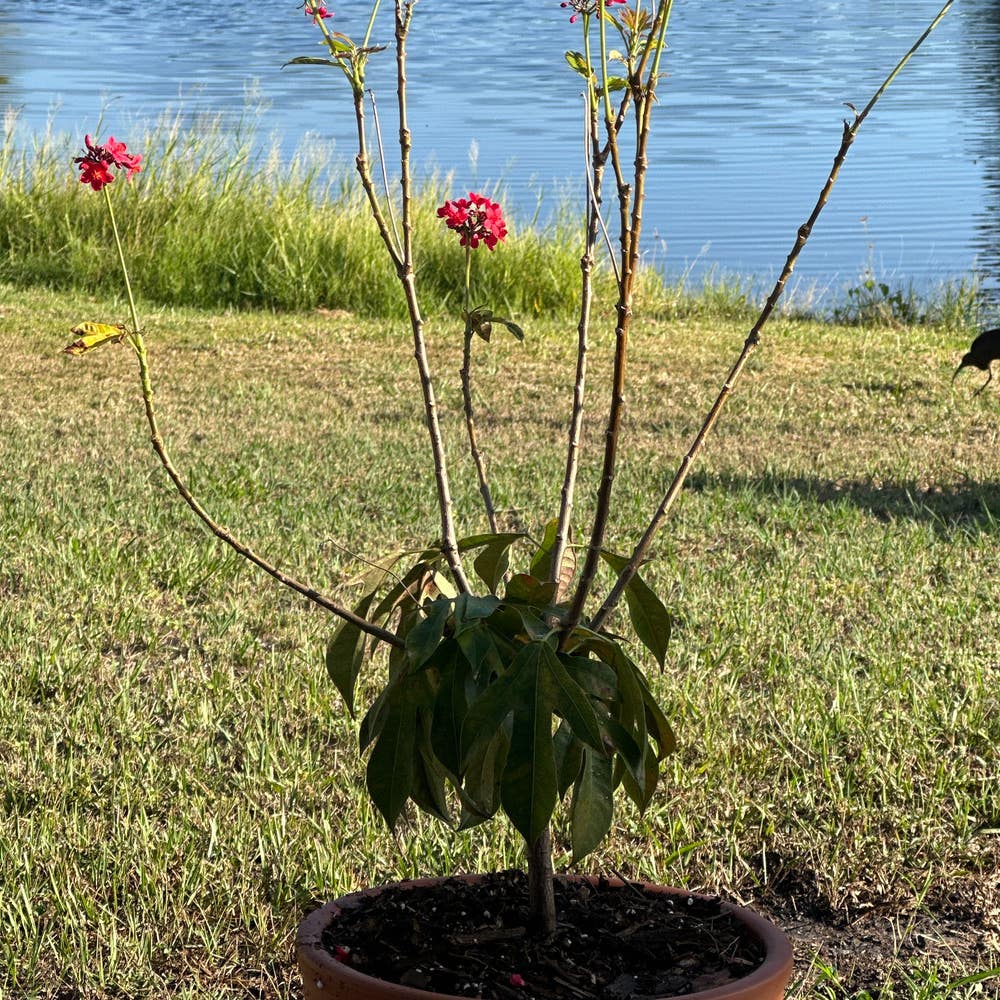
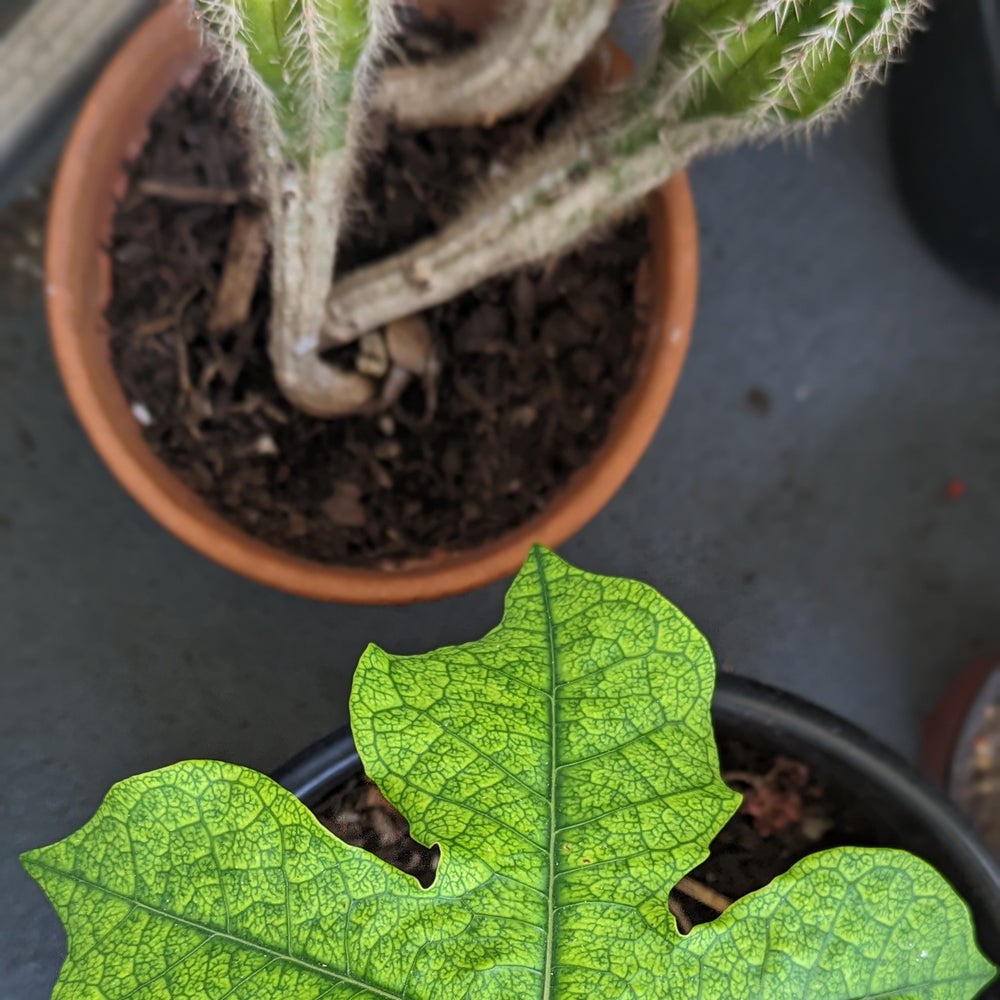
🌴 How to Fix Dropping Leaves on Your Buddha's Palm Plant
Jatropha podagrica
By the Greg Editorial Team
Oct 19, 2024•6 min read
This article was created with the help of AI so we can cover more plants for you. May contain errors. See one? Report it here.
Prevent leaf drop in your Buddha's Palm 🌴 with simple watering tips and environmental care for a thriving plant!
- 💧 Overwatering and underwatering both cause leaf drop; maintain balanced watering habits.
- 🌡️ Stable temperatures between 65°F and 85°F prevent environmental stress and leaf drop.
- 🌿 Regular pest checks and balanced fertilization keep your Buddha's Palm healthy and thriving.
Causes of Leaf Drop
💧 Overwatering and Its Effects
Overwatering is a common culprit behind leaf drop in Buddha's Palm plants. Symptoms include yellowing leaves, wilting despite moist soil, and root rot development.
To prevent water accumulation, it's crucial to use well-draining soil. Aim to water your plant every 1-2 weeks, allowing the soil to dry out between waterings.
🚰 Underwatering and Its Symptoms
Underwatering can also lead to leaf drop, manifesting as brown, crispy leaf tips and drooping leaves. You might notice the soil pulling away from the pot edges.
Adjust your watering frequency based on environmental conditions, typically every 1-2 weeks, to keep your plant healthy.
🌡️ Environmental Stress Factors
Temperature Sensitivity
Buddha's Palm thrives in temperatures ranging from 65°F to 85°F (18°C to 29°C). Symptoms of temperature stress include leaf drop and browning edges.
Avoid drafts and sudden temperature changes to maintain a stable environment for your plant.
🌬️ Humidity Requirements
Optimal humidity levels for Buddha's Palm are between 50-70%. Low humidity can cause leaf curling and browning tips.
To increase humidity, consider using pebble trays, humidifiers, or misting the leaves regularly.
🥦 Nutrient Deficiencies
Nutrient deficiencies can also lead to leaf drop. Common issues include nitrogen deficiency, which causes yellowing leaves and stunted growth, and potassium deficiency, leading to leaf tip burn and weak stems.
Balanced fertilization is essential; use a balanced liquid fertilizer every 4-6 weeks during the growing season to keep your plant nourished.
🐛 Pest Infestations
Pests can wreak havoc on your Buddha's Palm, leading to leaf drop and discoloration. Common pests include spider mites, which leave fine webbing and stippled leaves, and mealybugs, identifiable by their cotton-like clusters on leaves.
Regular pest inspections and early intervention are vital for maintaining plant health.
Diagnosing the Problem
Identifying Signs of Overwatering 🌧️
Overwatering can be a sneaky culprit behind leaf drop. Check for soggy soil and root rot, which can lead to yellowing leaves and wilting, even when the soil feels moist.
Recognizing Signs of Underwatering 🏜️
Underwatering presents its own set of challenges. Assess the leaf texture; if they feel crispy or droopy, it's time to check the soil moisture levels.
Assessing Environmental Conditions 🌡️
Environmental factors play a crucial role in your plant's health. Measure temperature and humidity levels to ensure they fall within the ideal range, and evaluate light exposure to determine if your plant is getting too much or too little light.
Checking for Pests and Diseases 🐛
Pests and diseases can wreak havoc on your Buddha's Palm. Inspect leaves and stems for any signs of pests, and look for discoloration or spots that may indicate disease.
By carefully diagnosing these issues, you can take the necessary steps to restore your plant's health. Next, let's explore effective solutions for leaf drop.
Solutions for Leaf Drop
🌊 Adjusting Watering Practices
Establishing a consistent watering schedule is crucial for your Buddha's Palm. Tailor it to your plant's environment, ensuring you check the soil moisture regularly.
Use the finger test: insert your finger into the soil to gauge moisture levels. If it feels dry an inch down, it's time to water.
Ensure proper drainage by using pots with drainage holes. This prevents water accumulation, which can lead to root rot.
💧 Improving Humidity Levels
Humidity plays a vital role in your plant's health. To maintain optimal humidity, consider using a humidifier in dry conditions.
Creating a pebble tray can also help. Fill a tray with water and pebbles, then place your pot on top to increase moisture around the plant.
Regularly misting the leaves during dry seasons can provide an extra boost of humidity. This simple step can make a significant difference.
🌱 Fertilizing for Nutrient Balance
Balanced fertilization is key to preventing nutrient deficiencies. Choose a fertilizer with an N-P-K ratio of 10-10-10 for best results.
Apply this fertilizer every 4-6 weeks during the growing season. Following the package instructions for dosage will ensure your plant gets the nutrients it needs.
🐞 Pest Management Strategies
Regular inspections are essential for early pest detection. Look for signs like webbing or cotton-like clusters on leaves.
If you spot pests, use insecticidal soap or neem oil for treatment. These options are effective and safe for your plant.
Consider introducing beneficial insects, like ladybugs, for natural pest control. They can help keep pest populations in check.
🌿 Repotting Techniques for Better Drainage
If your plant struggles with drainage, repotting may be necessary. Choose a pot that is 1-2 inches larger in diameter to give roots room to grow.
Use a well-draining potting mix, such as one containing peat and perlite. This will help prevent water accumulation.
Repot during the growing season to minimize stress on your plant. This timing allows for quicker recovery and healthier growth.
With these solutions, you can effectively address leaf drop issues and promote a thriving Buddha's Palm. Next, let’s explore preventative measures to keep your plant healthy year-round.
Preventative Measures
Best Practices for Watering 🌊
Water your Buddha's Palm only when the top inch of soil feels dry. This simple practice helps prevent overwatering, which can lead to root rot.
Avoid letting the plant sit in water, as this can suffocate the roots and cause serious damage. Proper drainage is key to a healthy plant.
Ideal Humidity and Temperature Conditions 🌡️
Maintain humidity levels between 50-70% for optimal growth. This range helps prevent leaf drop and keeps your plant thriving.
Keep temperatures within the ideal range of 65°F to 85°F. Sudden temperature changes can stress your plant, leading to unwanted leaf loss.
Regular Monitoring for Pests 🐜
Conduct weekly inspections for pests to catch any issues early. Look for signs like webbing or cotton-like clusters on leaves.
Using sticky traps can help monitor pest populations effectively. This proactive approach ensures your plant stays healthy and vibrant.
Seasonal Care Adjustments 🍂
Adjust watering and humidity levels based on seasonal changes. Plants often require more attention during dry winter months.
Provide extra care during winter when indoor air is drier. This small effort can make a significant difference in your plant's health.
By following these preventative measures, you can create a nurturing environment for your Buddha's Palm. This foundation will help ensure your plant remains lush and vibrant, ready to transition smoothly into the next section on diagnosing any potential problems.
⚠️ Safety First
This content is for general information and may contain errors, omissions, or outdated details. It is not medical, veterinary advice, or an endorsement of therapeutic claims.
Always consult a qualified healthcare professional before using any plant as food, medicine, or supplement.
Never eat any plant (or feed one to pets) without confirming its identity with at least two trusted sources.
If you suspect poisoning, call Poison Control (800) 222-1222, the Pet Poison Helpline (800) 213-6680, or your local emergency service immediately.
Spotted an error? Please report it here.
Keep your Buddha's Palm vibrant and healthy 🌴 by using Greg's tailored watering and humidity reminders to prevent leaf drop and ensure optimal growth!