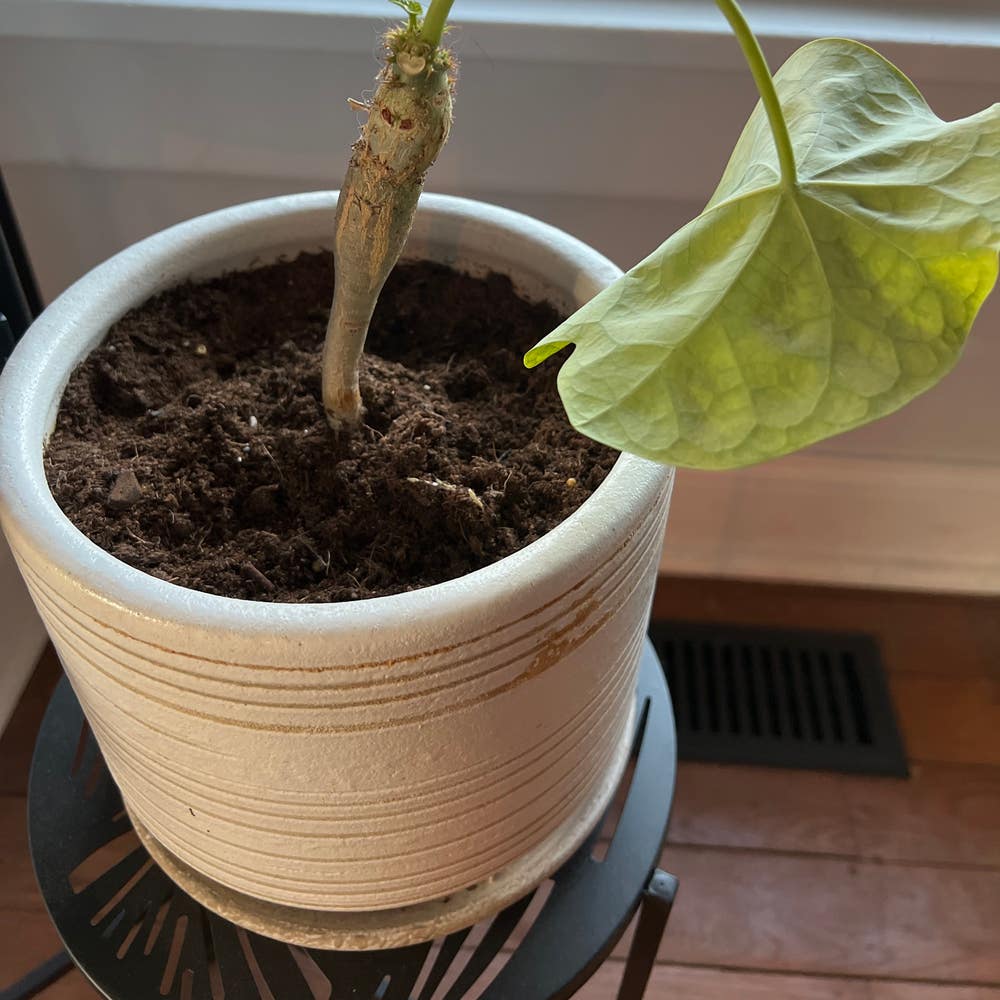
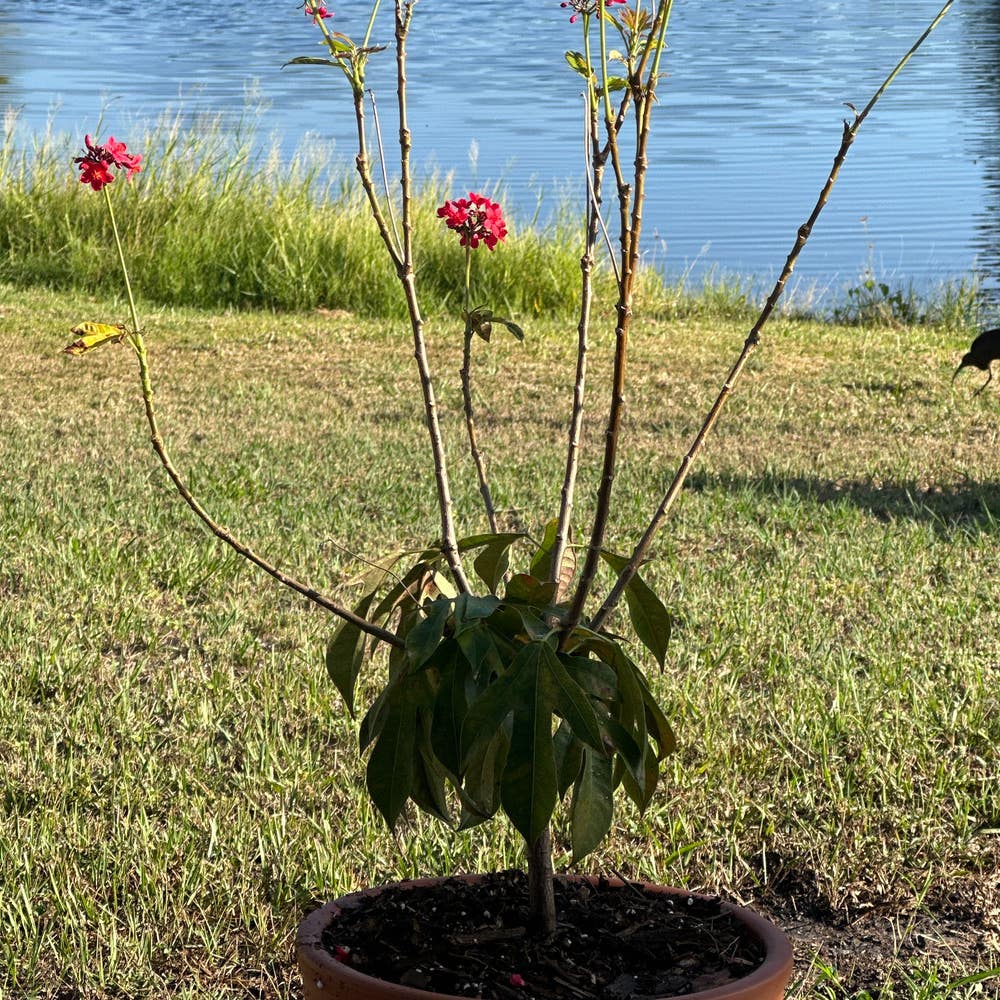
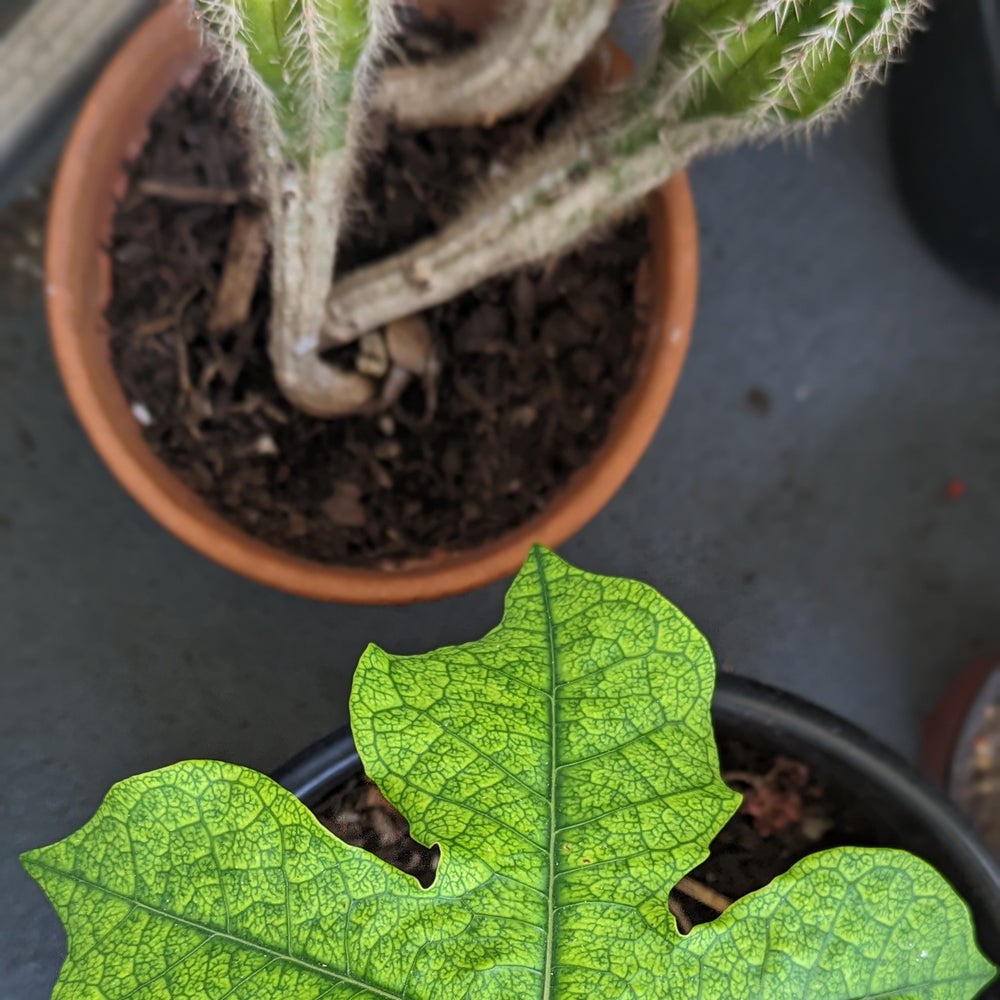
👐 10 Tips for Growing Buddha's Palm Plant
Jatropha podagrica
By the Greg Editorial Team
Oct 19, 2024•5 min read
This article was created with the help of AI so we can cover more plants for you. May contain errors. See one? Report it here.
Cultivate a thriving Buddha's Palm 🌴 with expert planting and care tips for vibrant growth and beauty in your space!
- 🌞 Bright, indirect sunlight is essential for thriving Buddha's Palm plants indoors.
- 🌱 Well-draining, loamy soil with pH 6.0-7.5 promotes optimal growth and health.
- 💧 Weekly watering during growth season prevents yellowing leaves and ensures root development.
Site Selection and Soil Preparation
🌍 Choosing the Right Location
When it comes to growing Buddha's Palm, location is key. If you're planting indoors, aim for a spot that receives bright, indirect sunlight to keep your plant thriving.
For outdoor growth, choose subtropical climates. Ensure the plant is shielded from harsh winds to protect its delicate leaves.
🌱 Soil Type and pH Requirements
Buddha's Palm flourishes in well-draining, loamy soil. This type of soil provides the right balance of nutrients and moisture retention.
Aim for a pH range of 6.0 to 7.5 for optimal growth. This slightly acidic to neutral range helps your plant absorb nutrients effectively.
🧑🌾 Preparing the Soil for Planting
Testing soil pH and nutrient levels: Start by checking your soil's pH and nutrient content. This will guide your amendments.
Amending soil with organic matter: Incorporate compost or peat moss to enrich the soil. This boosts fertility and improves structure.
Ensuring proper drainage: If your soil retains too much water, add perlite or sand. This will enhance drainage and prevent root rot.
With the right location and soil preparation, your Buddha's Palm will be set for a healthy start. Next, let’s dive into effective planting techniques to ensure your plant thrives!
Planting Techniques
Step-by-Step Planting Instructions 🌱
Planting your Buddha's Palm is straightforward and rewarding. Follow these easy steps for a successful start:
- Choose a suitable pot or planting area.
- Prepare the soil as outlined above.
- Dig a hole or prepare the pot with drainage holes.
- Place the plant in the hole or pot, ensuring the root ball is level with the soil surface.
- Backfill with soil and water thoroughly.
Spacing and Depth Considerations 📏
When planting outdoors, spacing is crucial for healthy growth. Aim for a distance of 3-5 feet between each plant to allow for air circulation and sunlight.
For depth, plant your Buddha's Palm 2-3 inches deeper than the root ball. This helps anchor the plant and supports its growth.
Container vs. Ground Planting 🪴
Choosing between container and ground planting can impact your plant's health and your gardening experience.
Advantages of Container Growing:
- Mobility: Easily move your plant to optimize sunlight or protect it from harsh weather.
- Soil Control: Manage soil conditions more effectively, ensuring your plant thrives.
- Pest Management: Simplifies monitoring and controlling pests.
Considerations for Ground Planting:
- Permanent Location: Once planted, your Buddha's Palm will stay put, which can be beneficial for long-term growth.
- Larger Growth Potential: Ground planting often allows for more extensive root systems, leading to bigger plants.
With these planting techniques, you're well on your way to nurturing a healthy Buddha's Palm. Next, let’s explore how to care for your plant through proper watering and fertilizing techniques.
Watering and Fertilizing
💧 Watering Frequency and Techniques
To keep your Buddha's Palm thriving, establish a consistent watering schedule. Water weekly during the growing season, but reduce frequency in winter when the plant's growth slows.
Deep watering is key. This technique encourages roots to grow deeper, enhancing the plant's stability and resilience.
🌱 Best Fertilizers
For optimal growth, use a balanced NPK fertilizer, like 10-10-10, or consider organic options. Fertilize every 4-6 weeks during the growing season to provide essential nutrients.
⚠️ Signs of Overwatering or Underwatering
Be vigilant about your plant's health. Overwatering can lead to yellowing leaves and root rot, while underwatering often results in wilting and browning leaf tips.
Regularly check your plant's condition to catch these issues early. Adjust your watering practices as needed to keep your Buddha's Palm in peak condition.
As you nurture your plant, remember that proper care sets the stage for vibrant growth. Next, we’ll explore essential pruning and maintenance techniques to keep your Buddha's Palm looking its best.
Pruning and Maintenance
✂️ When and How to Prune
Pruning your Buddha's Palm plant is best done in early spring, just before new growth begins. Use clean, sharp pruning shears to remove any dead or damaged leaves, promoting a healthier plant.
🌿 Maintaining Plant Health and Aesthetics
Regular inspections are crucial for spotting pests and diseases early. Keeping the leaves clean not only enhances their appearance but also boosts photosynthesis, helping your plant thrive.
📅 Seasonal Care Routines
Adjust your watering and fertilizing routines as the seasons change. In colder months, take extra precautions to protect your plant from frost, ensuring it remains healthy year-round.
With these pruning and maintenance tips, your Buddha's Palm will flourish beautifully. Next, let’s dive into common challenges and solutions to keep your plant thriving despite any obstacles.
Common Challenges and Solutions
🐛 Identifying Pests and Diseases
Buddha's Palm plants can face a few pesky challenges. Common pests include aphids, spider mites, and scale insects, which can sap the plant's vitality.
Diseases like root rot and leaf spot can also occur, often due to overwatering or poor drainage. Regular inspections can help catch these issues early.
🛠️ Troubleshooting Growth Issues
If your plant is growing slowly, it might be time to check for nutrient deficiencies or inadequate light. Ensure it’s getting enough bright, indirect sunlight to thrive.
Leaf drop can be a sign of stress. Assess your watering practices and environmental conditions to pinpoint the problem.
🌡️ Tips for Overcoming Environmental Challenges
Extreme heat can be tough on your Buddha's Palm. Providing shade during peak sun hours can help protect it from scorching.
Using mulch is another effective strategy. It retains soil moisture and helps regulate temperature, creating a more stable environment for your plant.
With these tips, you can tackle common challenges and keep your Buddha's Palm flourishing. Next, let’s explore the essential pruning and maintenance techniques to ensure your plant remains healthy and vibrant.
⚠️ Safety First
This content is for general information and may contain errors, omissions, or outdated details. It is not medical, veterinary advice, or an endorsement of therapeutic claims.
Always consult a qualified healthcare professional before using any plant as food, medicine, or supplement.
Never eat any plant (or feed one to pets) without confirming its identity with at least two trusted sources.
If you suspect poisoning, call Poison Control (800) 222-1222, the Pet Poison Helpline (800) 213-6680, or your local emergency service immediately.
Spotted an error? Please report it here.
Cultivate a vibrant Buddha's Palm 🌴 by using Greg's tailored watering reminders and expert tips to keep your plant thriving all year round!