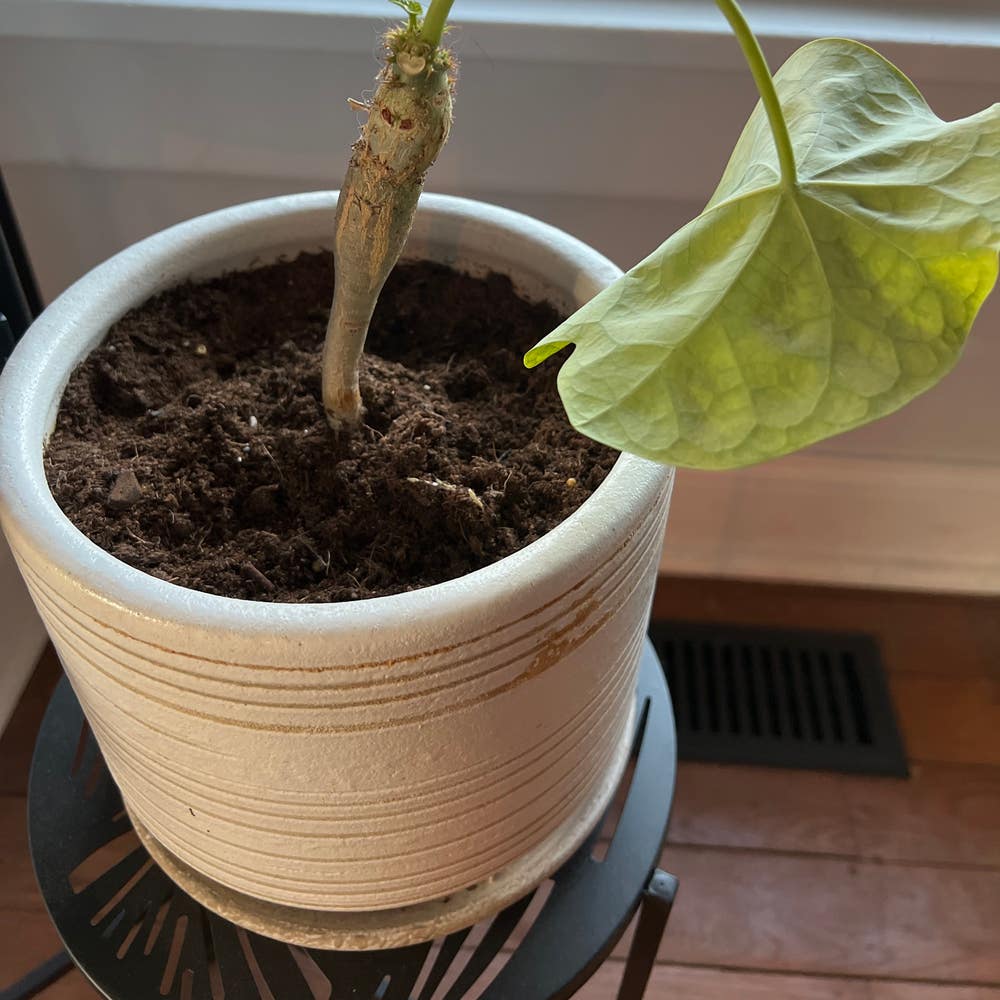
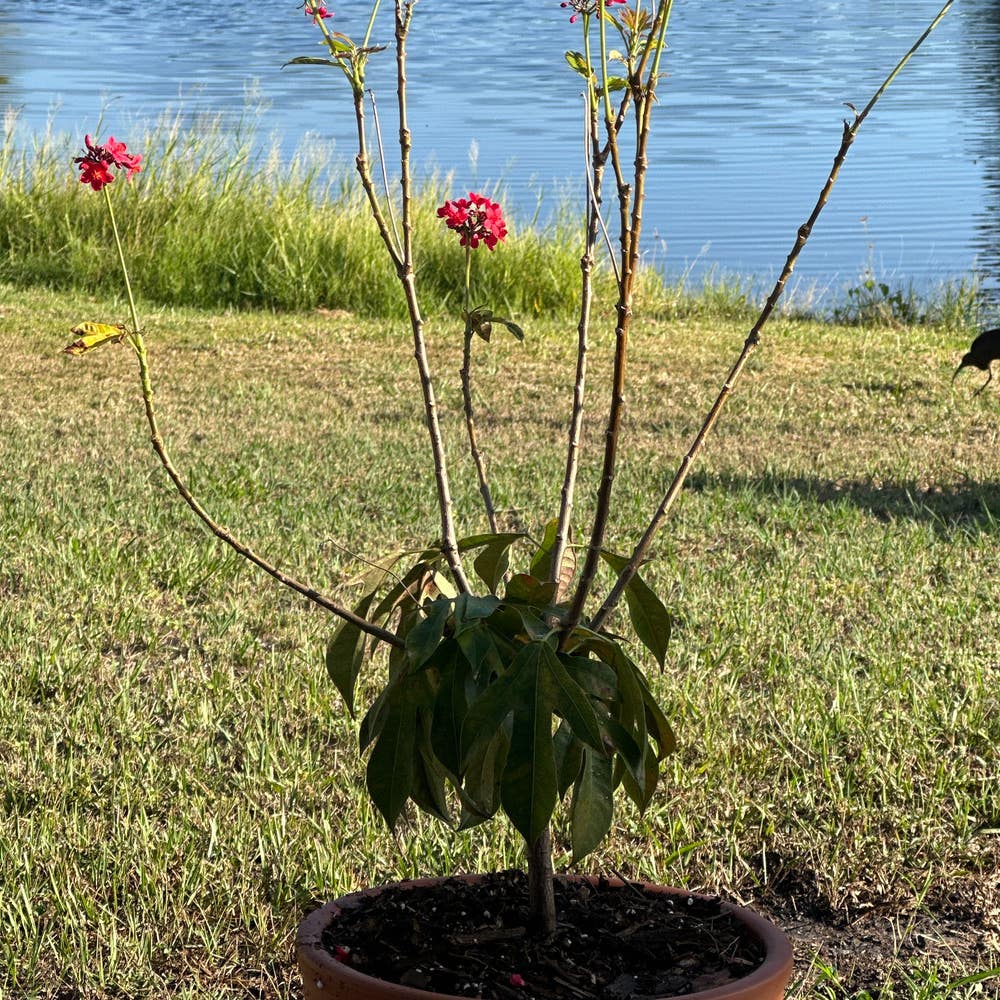
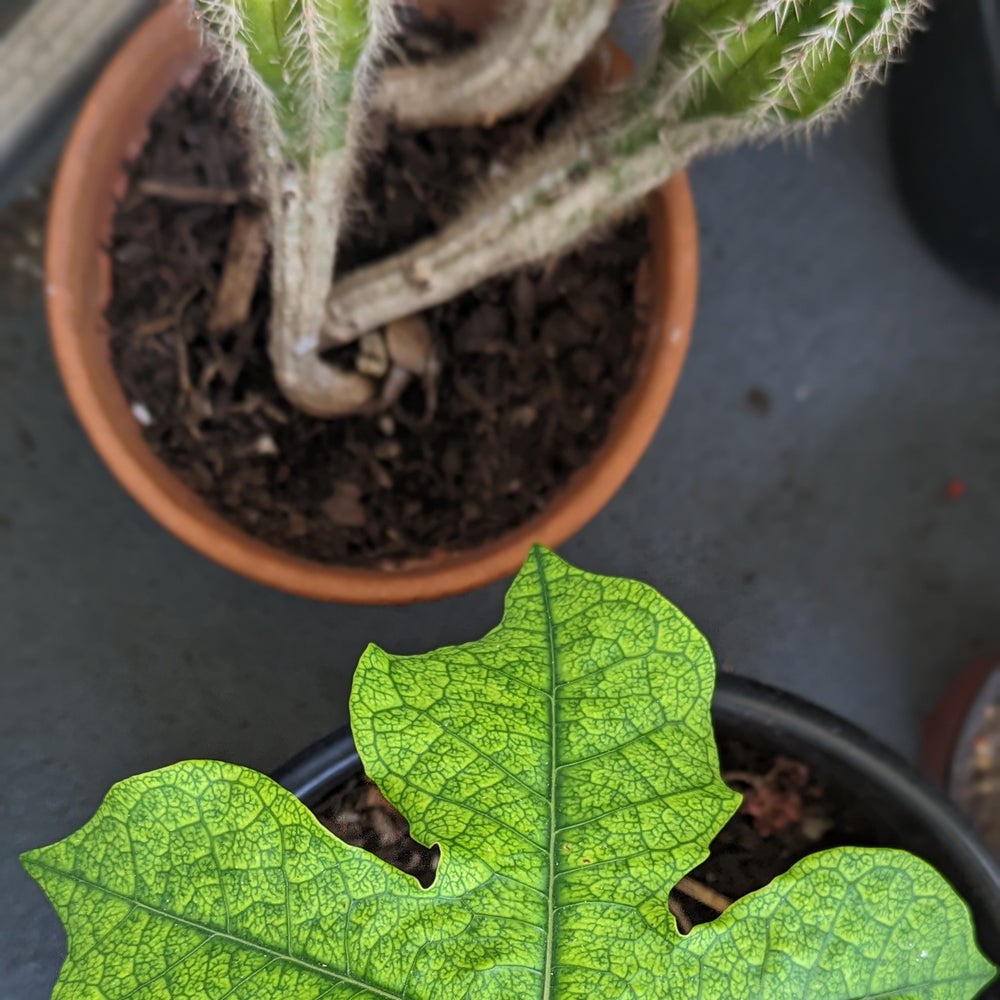
🌴 How to Cure Droopy Leaves on Your Buddha's Palm Plant
Jatropha podagrica
By the Greg Editorial Team
Oct 19, 2024•6 min read
This article was created with the help of AI so we can cover more plants for you. May contain errors. See one? Report it here.
Transform your droopy Buddha's Palm 🌴 with essential tips on watering, humidity, and pest control for vibrant growth!
- 💧 Overwatering and underwatering cause droopy leaves; maintain a consistent watering schedule.
- 🌡️ Ideal temperature for Buddha's Palm is 65°F to 85°F; avoid extreme conditions.
- 🌿 High humidity (50%+) is crucial; use humidifiers or pebble trays to boost moisture.
Causes of Droopy Leaves
💧 Overwatering: Signs and Solutions
Overwatering is a common culprit behind droopy leaves. Look for yellowing leaves and mushy stems, which indicate excess moisture.
Root rot is another serious issue, characterized by dark, slimy roots when inspected. To combat overwatering, allow the soil to dry out before rewatering.
Using well-draining soil is crucial to prevent water retention. Adjust your watering frequency based on seasonal changes to keep your Buddha's Palm thriving.
🌵 Underwatering: Identifying Symptoms
Underwatering can also lead to droopy leaves. Symptoms include crispy, brown leaf tips and edges, along with soil pulling away from the pot edges.
To remedy this, establish a consistent watering schedule. Consider using a moisture meter to gauge soil moisture levels accurately and water thoroughly until excess drains from the bottom.
🌡️ Environmental Stress: Temperature and Humidity
Temperature and humidity play significant roles in leaf health. The ideal temperature range for your Buddha's Palm is between 65°F to 85°F (18°C to 29°C).
Signs of temperature stress include leaf curling or drooping. High humidity levels (50% or higher) are essential; low humidity can cause leaf browning and droop.
To improve humidity, use a humidifier or create pebble trays with water. Grouping plants together can also help create a microclimate.
🏺 Soil Quality: Importance of Drainage
Soil quality is vital for healthy plant growth. Well-draining soil prevents root rot and promotes robust root development.
Signs of poor drainage include water pooling on the surface or slow drainage. To enhance drainage, amend the soil with perlite or sand and choose pots with drainage holes.
🐛 Pest Infestation: Common Pests Affecting Leaves
Pest infestations can stress your plant, leading to droopy leaves. Common pests include spider mites, which leave fine webbing and stippled leaves, and mealybugs, recognizable by their white, cotton-like clusters.
Regularly inspect your plants for these pests. Use insecticidal soap or neem oil for effective treatment and to keep your plant healthy.
Understanding these causes will help you take proactive steps in caring for your Buddha's Palm. Next, we’ll explore how to diagnose droopy leaves effectively.
Diagnosing Droopy Leaves
👀 Visual Inspection: What to Look For
Start by examining your Buddha's Palm plant closely. Look for any discoloration, spots, or wilting that could indicate underlying issues.
Next, assess the texture of the leaves. Softness may suggest overwatering, while crispiness often points to underwatering.
💧 Soil Moisture Check: Techniques for Assessment
To check soil moisture, use the finger test. Insert your finger into the soil up to two inches to gauge its dampness.
For a more precise measurement, consider using a moisture meter. This tool provides accurate readings, helping you determine when to water.
🌡️ Environmental Factors: Assessing Light and Temperature
Light is crucial for your plant's health. Buddha's Palm prefers bright, indirect light; too much direct sunlight can lead to stress and droopy leaves.
Temperature also plays a significant role. Ensure your plant is shielded from drafts and sudden temperature changes to maintain its well-being.
By carefully diagnosing these factors, you can take the necessary steps to revive your droopy leaves. Next, let’s explore effective treatment methods to restore your plant's vitality.
Treating Droopy Leaves
Step-by-Step Guide to Adjusting Watering Practices 🌊
Assess Current Watering Schedule: Start by evaluating how often you water your Buddha's Palm. Adjust the frequency based on the plant's specific needs and the season.
Water Thoroughly: When you do water, ensure that it’s enough to saturate the soil, allowing excess water to drain out. This helps prevent both overwatering and underwatering.
Monitor Soil Moisture Regularly: Keep an eye on the soil moisture to avoid future issues. A consistent check will help you maintain the right balance.
Improving Humidity: Methods and Tools 💧
Use a Humidifier: To keep humidity levels optimal, consider using a humidifier. This is especially useful in dry environments.
Create a Pebble Tray: Place a tray filled with pebbles and water beneath the pot. As the water evaporates, it will increase humidity around the plant.
Mist Leaves Occasionally: Lightly misting the leaves can also help boost humidity. Just be careful not to overdo it!
Soil Amendments: Enhancing Drainage 🪴
Mix Perlite or Sand: To improve drainage, mix perlite or sand into your existing soil. This will help prevent water from pooling.
Repot if Necessary: If drainage issues persist, consider repotting your plant into a container with drainage holes. This is crucial for healthy root growth.
Monitor Soil Moisture After Amendments: After making changes, keep an eye on soil moisture levels. This ensures that your amendments are effective.
Pest Control: Organic and Chemical Solutions 🐞
Organic Methods: Introduce beneficial insects like ladybugs to keep pests at bay. Neem oil or insecticidal soap can also be effective treatments.
Chemical Solutions: If you face severe infestations, applying systemic insecticides may be necessary.
Regular Monitoring: Stay vigilant and regularly check for pests. This proactive approach will help prevent future infestations.
By addressing these key areas, you can effectively treat droopy leaves on your Buddha's Palm and promote a healthier plant. Next, let’s explore how to prevent future issues to keep your plant thriving.
Preventing Future Issues
Regular Maintenance: Watering Schedule 🌊
Establishing a consistent watering routine is crucial for your Buddha's Palm plant. Adjust your schedule based on seasonal needs to keep your plant thriving.
Using the Greg plant care app can be a game-changer. It offers AI-powered reminders, ensuring you never forget to water your plant.
Ideal Growing Conditions: Temperature and Humidity 🌡️
Maintaining optimal temperature and humidity levels year-round is essential. Aim for a comfortable range of 65°F to 85°F (18°C to 29°C) and keep humidity levels above 50%.
Regularly check environmental conditions to ensure your plant remains healthy. A little attention goes a long way in preventing droopy leaves.
Seasonal Adjustments: Adapting Care Throughout the Year 🍂
As seasons change, so should your care routine. Adjust your watering frequency to match the plant's needs during different times of the year.
Don’t forget to monitor light exposure as well. Adjusting your plant's placement can help it soak up the right amount of light, promoting robust growth.
By implementing these preventive measures, you'll set your Buddha's Palm up for success. Next, let's dive into diagnosing droopy leaves to tackle any issues head-on.
⚠️ Safety First
This content is for general information and may contain errors, omissions, or outdated details. It is not medical, veterinary advice, or an endorsement of therapeutic claims.
Always consult a qualified healthcare professional before using any plant as food, medicine, or supplement.
Never eat any plant (or feed one to pets) without confirming its identity with at least two trusted sources.
If you suspect poisoning, call Poison Control (800) 222-1222, the Pet Poison Helpline (800) 213-6680, or your local emergency service immediately.
Spotted an error? Please report it here.
Revive your Buddha's Palm and keep it thriving 🌱 with Greg's tailored watering reminders and humidity tips that ensure your plant stays happy and healthy!