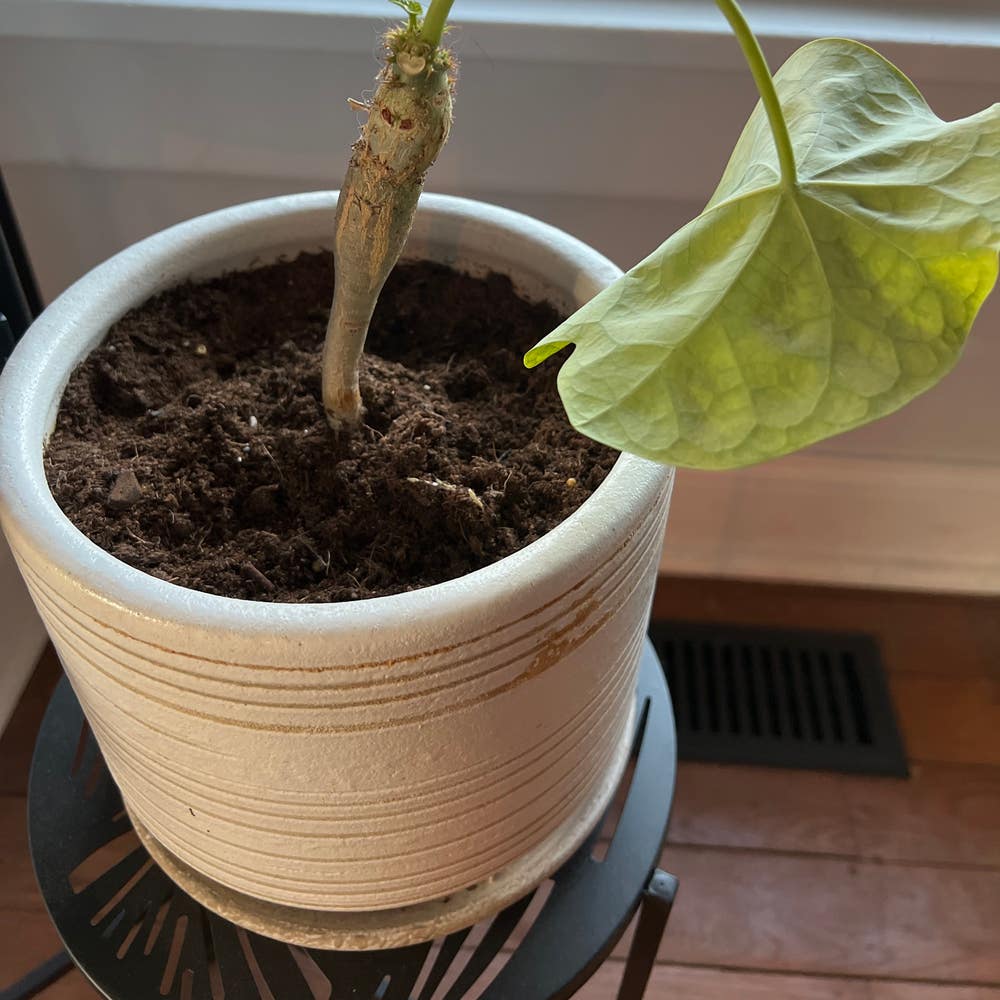
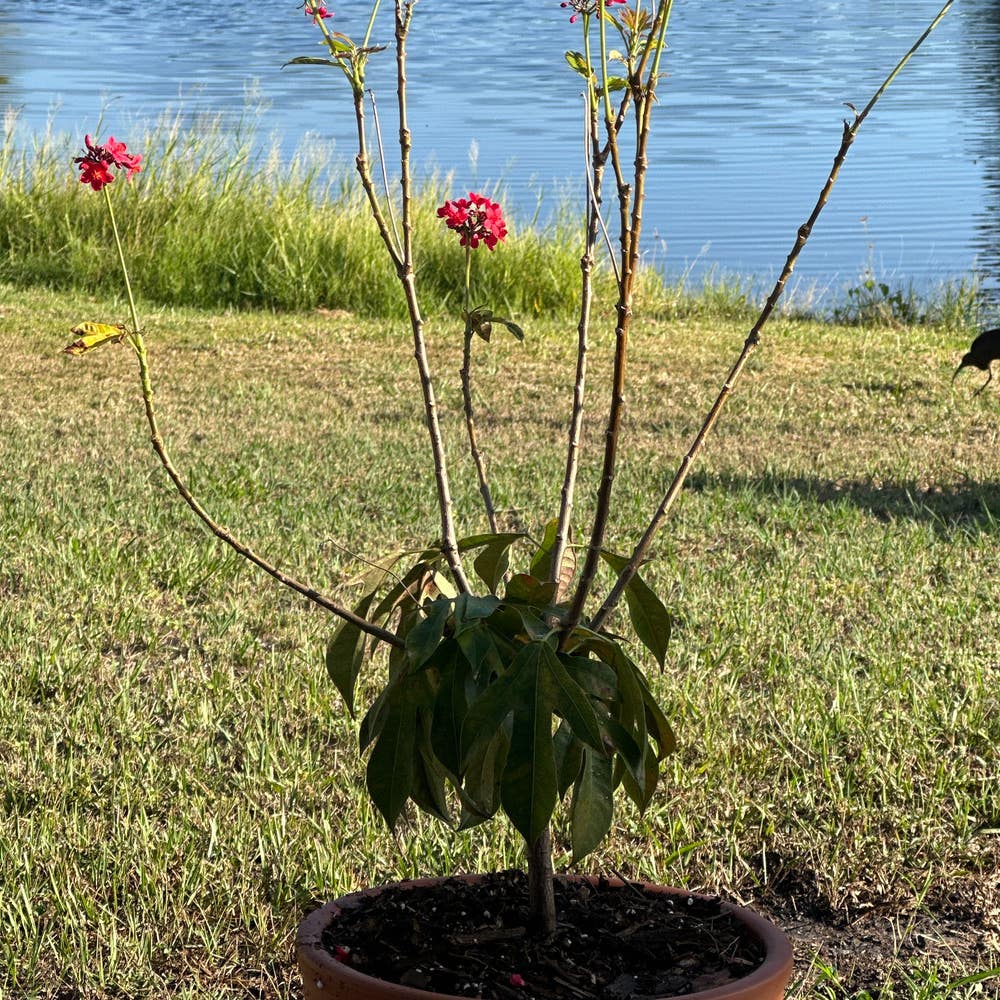
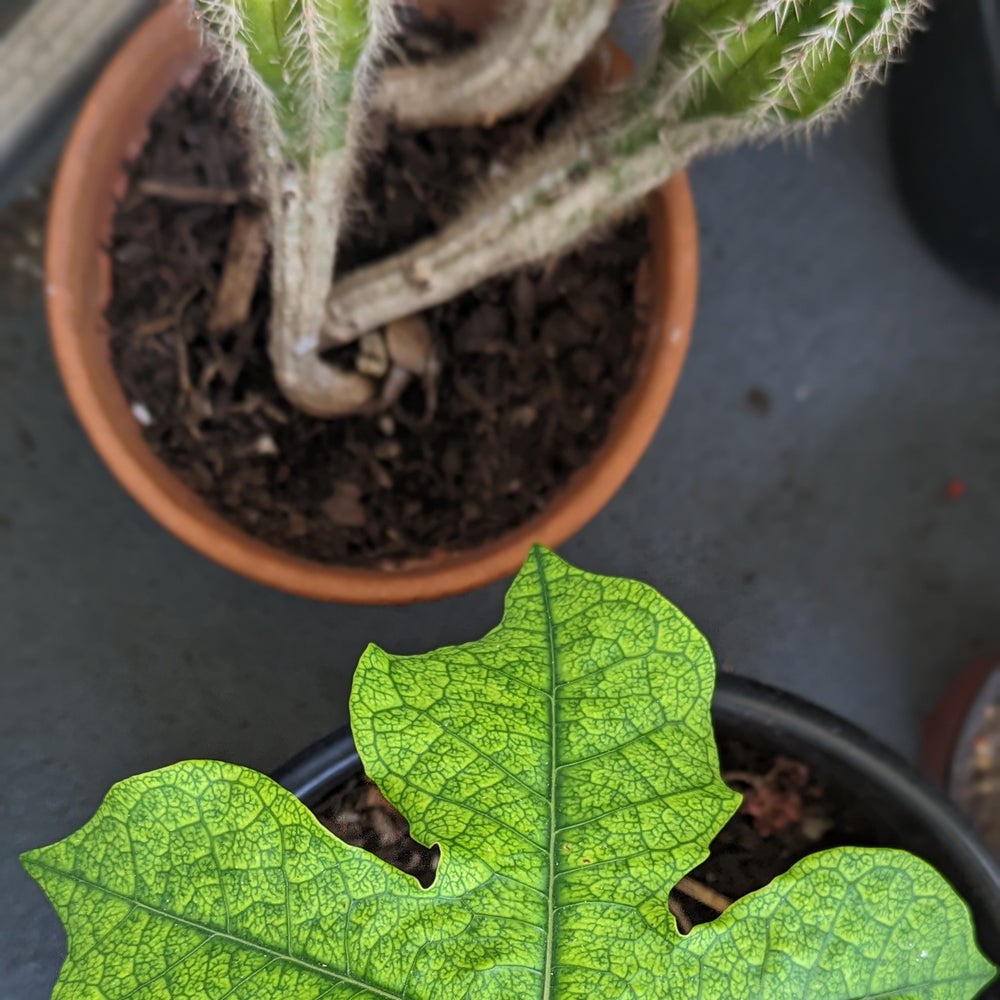
🧘 Why Are My Buddha Belly Plant Leaves Curling?
Jatropha podagrica
By the Greg Editorial Team
Jun 18, 2024•5 min read
This article was created with the help of AI so we can cover more plants for you. May contain errors. See one? Report it here.
Solve your Buddha Belly Plant's leaf curl conundrum and reclaim its whimsical allure! 🌿
- 🌡️ Steady climate above 60°F and moderate humidity keeps leaves uncurled.
- 🌞💧 Bright, indirect light and proper watering prevent leaf curling.
- 🐛 Watch for pests and nutrient needs; use balanced fertilizer and pest control.
Spotting the Signs: When Your Buddha Belly Plant's Leaves Curl
🌡️ Temperature and Humidity Woes
Temperature swings are like kryptonite to Buddha Belly plants. They prefer a steady climate, with temperatures ideally above 60°F. Too cold, and the leaves curl up in protest; too hot, and they might as well be in a plant sauna. Humidity also plays a crucial role. These plants don't appreciate the dryness of a desert nor the sogginess of a swamp. Aim for that sweet spot of moderate humidity to keep the leaves from throwing a fit.
💡 Light: Too Much or Too Little?
Finding the right light for your Buddha Belly plant is a balancing act. Bright, indirect sunlight is the golden ticket to flat, happy leaves. Direct sun scorches them, while too little light leaves them reaching for more. If you notice the leaves curling, it might be time to shuffle your plant to a spot where the light is just right. Adjust your plant's position like you're tuning a guitar, until the leaves uncurl and sing.

Watering Woes: The Curl Culprit
🚰 The Perils of Over and Underwatering
Overwatering turns your Buddha Belly Plant into a soggy mess, while underwatering leaves it crispy. Spot the signs: yellowing leaves and a heavier pot indicate too much water; dry soil and a light pot scream for hydration.
Adjusting your watering schedule is crucial. The soil should be moist, like a wrung-out sponge, not a swamp. Check the soil an inch deep—if it's dry, it's time to water; if damp, wait it out.
🍽️ The Role of Drainage
Well-draining soil and pots with drainage holes are non-negotiable. They prevent water from throwing a pool party at your plant's roots. Mix in perlite, sand, or peat moss to keep the soil aerated and the water flowing.
Elevate your pot or use a pebble-filled saucer to increase humidity while avoiding waterlogging. Remember, your Buddha Belly Plant doesn't need a bath, just a drink.

Feeding Your Buddha Belly Plant
💡 Spotting Nutrient Deficiencies
Yellowing leaves might be shouting for nitrogen, while crispy edges could be whispering for potassium. Weak stems? They're probably begging for a comprehensive nutrient boost.
🍽️ Choosing the Right Fertilizer
Balance is your mantra here. Opt for a balanced fertilizer and adhere to the instructions like they're the law. Overdoing it can lead to a nutrient overdose, so think of fertilizing as a fine dining experience, not an all-you-can-eat buffet. During the growing seasons of spring and summer, a biweekly schedule with a diluted mix will do the trick. Remember, winter is a no-feed zone; your plant is on a diet during its dormant phase.

The Tiny Troublemakers: Pests and Diseases
🐛 Identifying Pests and Pathogens
Your Buddha Belly Plant's leaves are curling, and you suspect tiny invaders. Spider mites and aphids are the usual suspects, treating your plant like an all-you-can-eat buffet. They leave leaves pale, sickly, and crinkled. Fungus gnats might buzz around if your soil's too wet, and scale insects could be latching onto your plant, sucking it dry. Look for telltale signs like webbing, sticky residue, or a sudden yellow splotchiness.
💪 Fighting Back Against Infestations
Early detection is your best defense. Once you've spotted these critters, it's time to show them the door. Start with a gentle approach – a blast of water or insecticidal soap to knock them off their feet. Neem oil can be a plant's best friend, acting as a natural deterrent for those pests. If you're dealing with a full-blown infestation, you might need to bring out the big guns – chemical pesticides. But use these sparingly, as they can be a double-edged sword, harming beneficial insects as well. Remember, the key to pest control is not just to react but to prevent. Keep your plant clean, check regularly for pests, and maintain proper watering to avoid creating a pest paradise.
Wrapping Up: Prevention and Proactive Care
🛡️ Combining Prevention with Cure
Preventative care is the shield against leaf curling. Think of it as the daily vitamin for your Buddha Belly Plant. Routine inspections are crucial; they're like check-ups with the doc, but for your plant.
🌿 Quick Recap: Keeping Leaves Flat
Consistency in care is your mantra. A stable watering schedule, balanced light exposure, and controlled humidity levels are the trifecta for leaf health. It's not just about reacting to problems; it's about creating a stable environment where issues are less likely to arise.
🧘 Final Tips: The Zen of Plant Care
- Visual Checks: Keep an eye out for any changes in your plant's appearance. Spots or blights? Time to act.
- Texture Tells: If the leaves feel different, it's time to reassess your care routine.
- Water Wisely: Only water when the soil is dry to the touch. Overwatering is a no-go.
- Prune Proactively: Snip off any mushy or damaged leaves to prevent disease spread.
- Fungal Foes: At the first sign of trouble, improve air circulation and consider a fungicide.
- Routine Adjustments: Rotate the plant for even growth and light exposure. Use fertilizers sparingly.
- Monitoring: Keep a log of the plant's condition and your care adjustments. It's like a diary, but for plant parenting.
Remember, your Buddha Belly Plant's health is a puzzle, and you're the master puzzler. Stay vigilant, be consistent, and your plant will reward you with its quirky beauty.
⚠️ Safety First
This content is for general information and may contain errors, omissions, or outdated details. It is not medical, veterinary advice, or an endorsement of therapeutic claims.
Always consult a qualified healthcare professional before using any plant as food, medicine, or supplement.
Never eat any plant (or feed one to pets) without confirming its identity with at least two trusted sources.
If you suspect poisoning, call Poison Control (800) 222-1222, the Pet Poison Helpline (800) 213-6680, or your local emergency service immediately.
Spotted an error? Please report it here.
Keep your Buddha Belly plant's leaves unfurled and fabulous 🌿 with Greg's personalized care reminders that prevent curling woes.