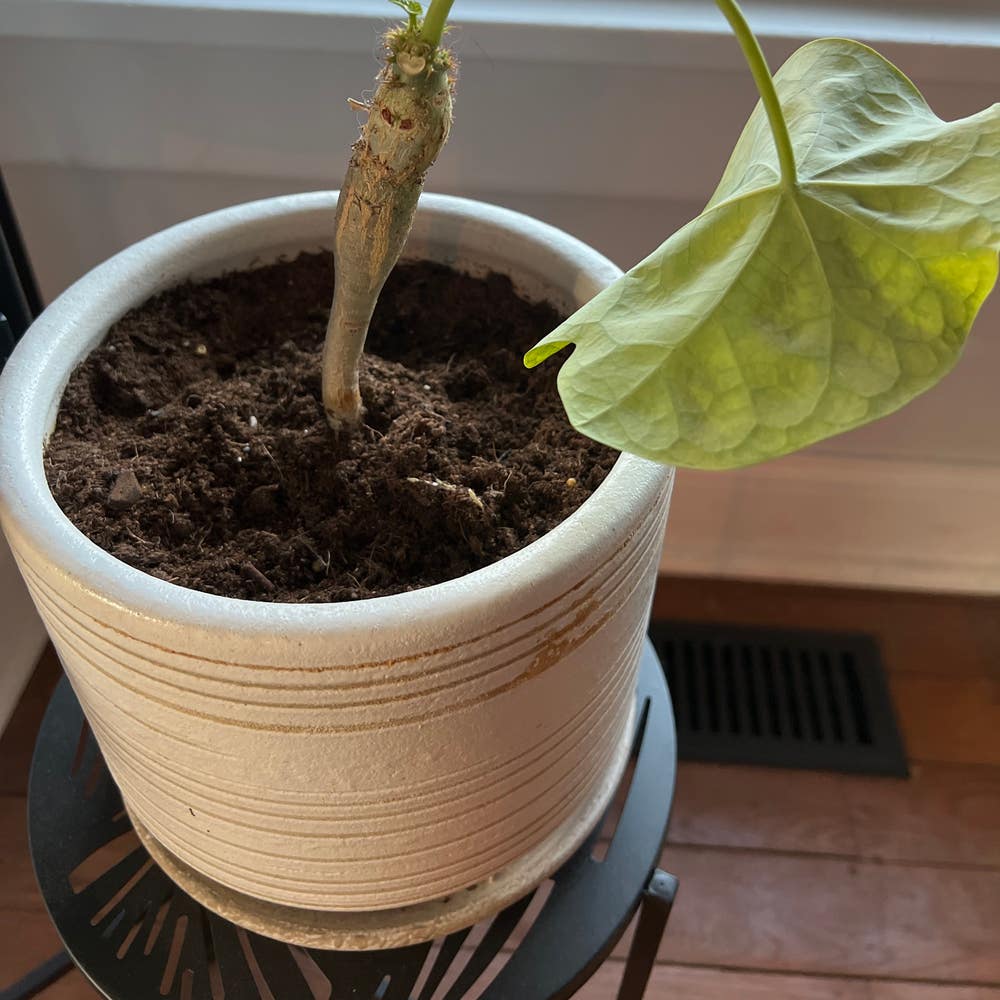
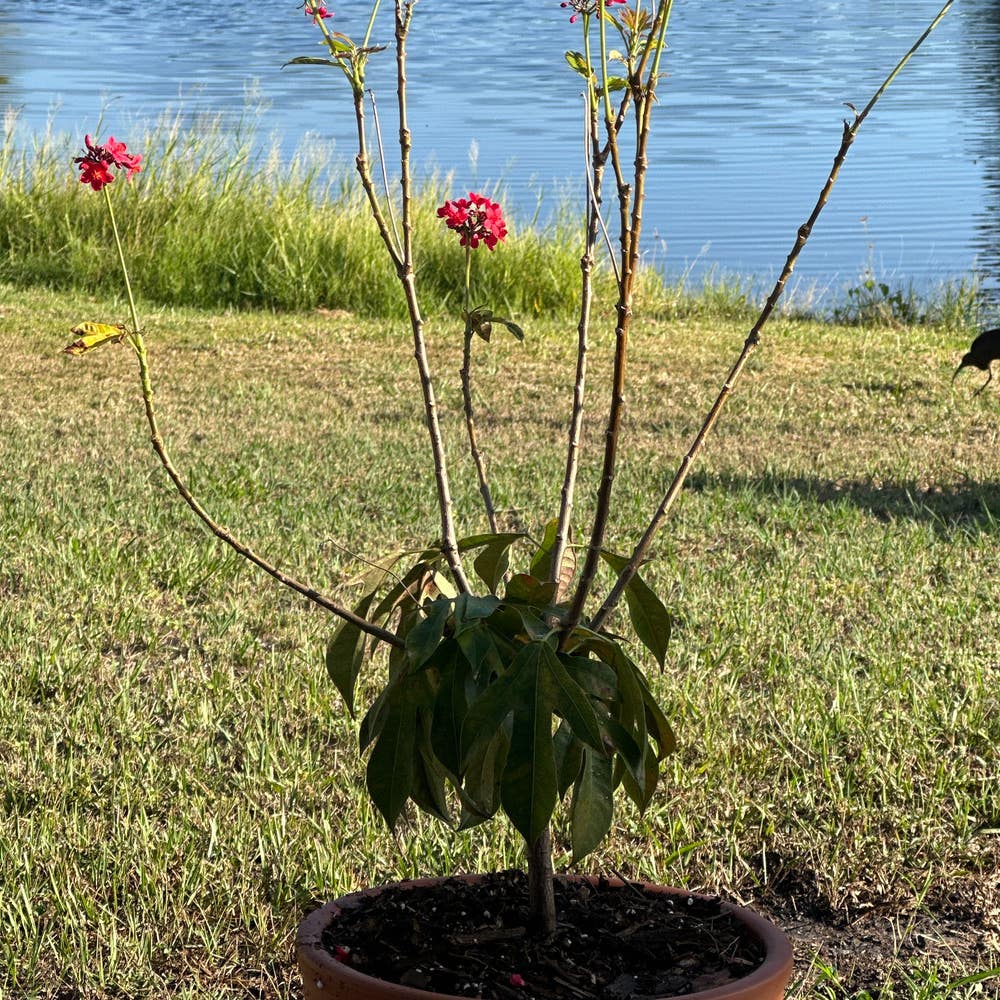
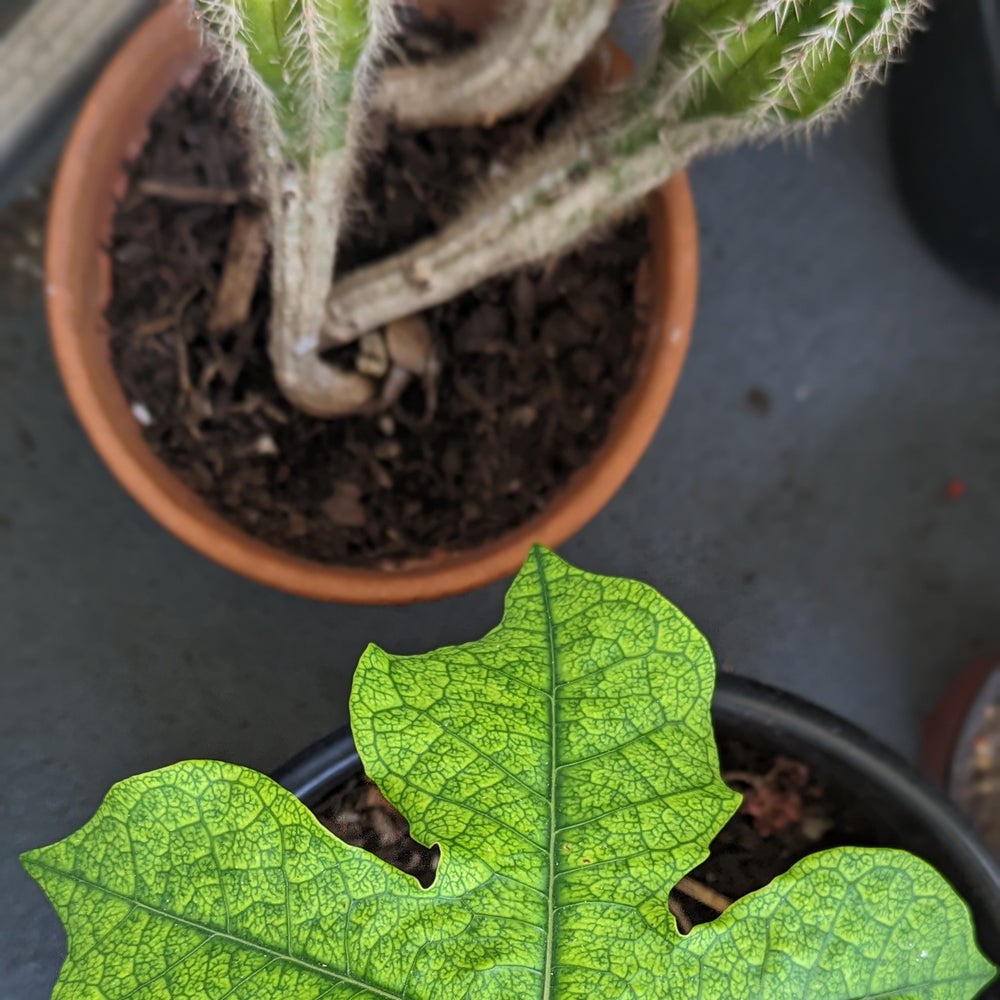
What Should I Do When Buddha Belly Plant Leaves Turn Yellow?
Jatropha podagrica
By the Greg Editorial Team
Jun 18, 2024•4 min read
This article was created with the help of AI so we can cover more plants for you. May contain errors. See one? Report it here.
Solve your Buddha Belly's yellow leaf puzzle 🌿 and restore its lush green glory!
- Over/underwatering? Check leaf texture: wilted or crispy.
- Yellow leaves? Ensure proper drainage and nutrient balance.
- Consistent care and monitoring prevent and address yellowing.
Pinpointing the Culprit Behind Yellow Leaves
💧 Overwatering vs. Underwatering
Overwatering can turn your Buddha Belly into a swamp dweller, with leaves that yellow and wilt like overcooked spinach. The soil should feel like a wrung-out sponge—not a soggy mess. Underwatering, on the other hand, leaves your plant parched, with leaves as crispy as autumn leaves. Check the top inch of soil; if it's dry, it's time to water.
🌱 Soil and Drainage: The Root of the Problem?
Poor drainage is like wet feet on a cold day—uncomfortable and unhealthy. Ensure your pot has drainage holes to avoid waterlogging. If your Buddha Belly's roots are swimming instead of sipping, it's time to rethink your soil mix. Aim for one that's well-draining, yet retains enough moisture to keep the roots happy.
🍽️ Nutrient Deficiency: Is Your Plant Hungry?
Yellow leaves might be your plant's way of saying, "Feed me!" A lack of essential nutrients like nitrogen or potassium can leave your Buddha Belly looking more jaundiced than jolly. Consider a balanced fertilizer, but don't go overboard—too much can be just as bad as too little.
🌞 Light Exposure: Too Much Sun or Not Enough?
Like Goldilocks, your Buddha Belly wants its light just right. Too much sun can bleach leaves like overdone laundry, while too little leaves them languishing in the shadows. Aim for bright, indirect sunlight—think of it as the plant equivalent of a shady spot on a sunny beach.

Turning Over a New Leaf: Solutions for Yellowing
💧 Watering Wisdom
Consistency is your mantra when it comes to watering. Forget about watering on a whim; your Buddha Belly needs a steady rhythm. Soak the soil until water runs free from the drainage holes, then let it dry out a bit before the next session. Overwatering is like throwing a pool party for your plant's roots – fun at first, but they'll soon be gasping for air.
🌱 Soil Solutions
The right soil mix is like a comfy bed for your plant. It should be well-draining yet retain enough moisture to keep the roots happy. Consider adding coco coir or vermiculite to strike that perfect balance. If your plant's bed is too soggy, it's time for a soil intervention.
🌿 Feeding Finesse
Fertilizers are the vitamins of the plant world, but more is not always better. Use a balanced fertilizer and follow the instructions to the letter. If your Buddha Belly is looking pale, it might be craving nitrogen – just don't turn it into a nitrogen junkie.
☀️ Lighting the Way
Sunlight for your Buddha Belly should be just right – think Goldilocks, not Icarus. Too much sun and your plant will sunbathe itself into a crisp; too little, and it'll look like it's been binge-watching Netflix in a dark room. Adjust light levels to find that sweet spot where your plant thrives. If natural light is scarce, consider a grow light to brighten up your plant's life.

Keeping the Green: Preventing Yellow Leaves
👩🌾 Consistent Care: Your Plant's Best Friend
Routine is your Buddha Belly Plant's BFF. Like a well-oiled machine, a regular care schedule prevents those yellow-leaf blues.
Watering should be like clockwork, with soil that's moist, not a swamp. The goal? Balance.
🚨 Vigilant Monitoring: Catching Yellow Before It Catches On
Observation is key. Spot a change in leaf color or texture? Time to play detective and tweak your care strategy.
Pests and diseases are party crashers. Spot them early, and show them the door with neem oil or insecticidal soap.
Rotate your plant for even sun exposure and prune with purpose, but don't go Edward Scissorhands on it.
Remember, your plant's leaves are like mood rings, reflecting its health. Keep an eye out, and you'll catch issues before they turn into a yellow mess.

⚠️ Safety First
This content is for general information and may contain errors, omissions, or outdated details. It is not medical, veterinary advice, or an endorsement of therapeutic claims.
Always consult a qualified healthcare professional before using any plant as food, medicine, or supplement.
Never eat any plant (or feed one to pets) without confirming its identity with at least two trusted sources.
If you suspect poisoning, call Poison Control (800) 222-1222, the Pet Poison Helpline (800) 213-6680, or your local emergency service immediately.
Spotted an error? Please report it here.
Keep your Buddha Belly Plant's leaves radiantly green 🌿 with Greg's personalized care schedule that ensures the perfect balance of water, nutrients, and light.