Why Are My Buddha Belly Plant Leaves Mushy?
Jatropha podagrica
By the Greg Editorial Team
Jun 18, 2024•3 min read
This article was created with the help of AI so we can cover more plants for you. May contain errors. See one? Report it here.
Prevent mushy leaves and master your Buddha Belly Plant's moisture with these savvy tips! 🌿🔍
- Overwatering signs: Yellow, mushy leaves and bursting indicate too much water.
- Root rot and mold: Dark roots and soil mildew mean serious health issues.
- Preventive measures: Adjust watering, repot, prune, and ensure air circulation.
Spotting Trouble: Signs Your Buddha Belly Plant is Too Wet
💧 Overwatering Symptoms
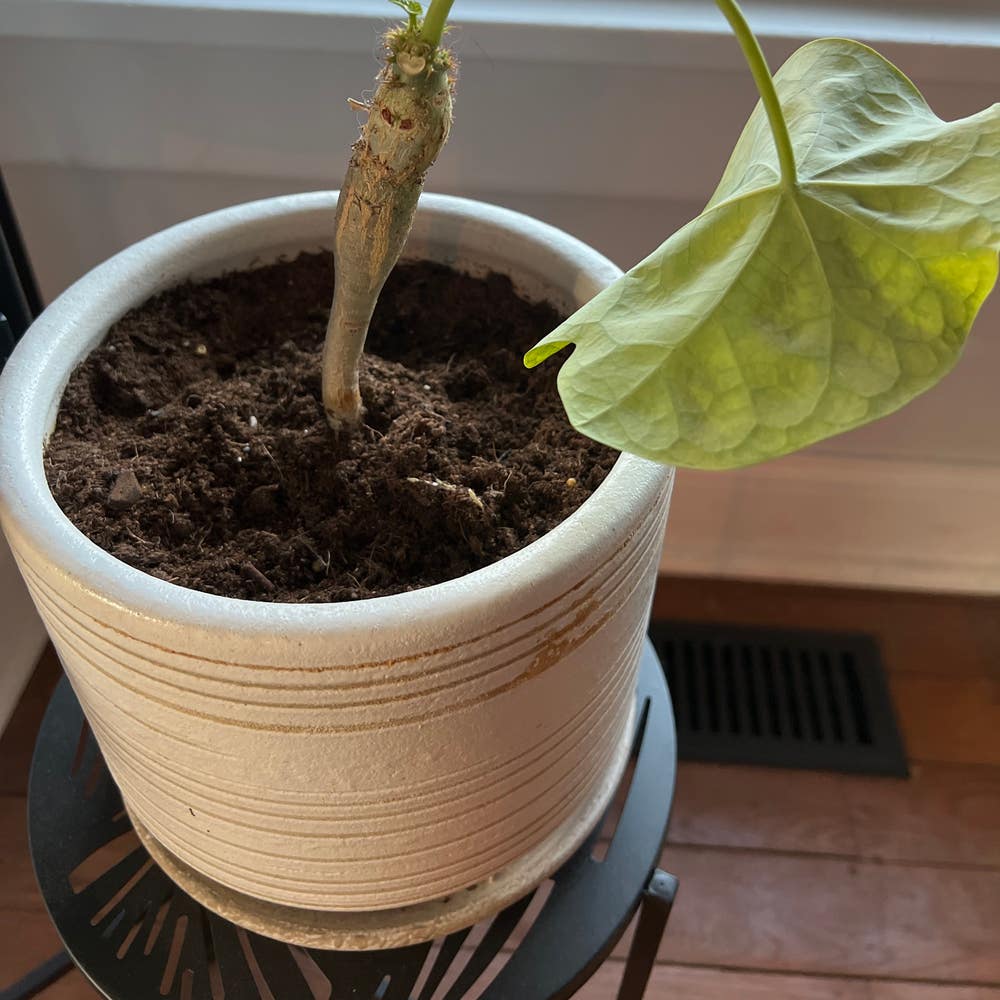
Yellowing leaves and a mushy texture are the plant's way of waving a white flag. If your Buddha Belly Plant's leaves look like they've been on a water binge, it's time to rethink your watering strategy. Leaves may even burst, a clear sign of water gluttony.
🚱 Root Rot Red Flags
Root rot is like the silent assassin of the plant world, lurking beneath the soil. If you unearth roots that are as dark and mushy as overripe bananas, you've got a serious problem. It's a race against time to save your plant from this underground menace.
🍄 Fungal Foes
Mold or mildew on the soil surface? That's the botanical equivalent of a distress flare. These fungal invaders thrive in the damp conditions you've accidentally created. If your plant's leaves are sporting unsightly spots or blisters, known as oedema, it's a cry for less hydration and more air.

First Aid for Your Waterlogged Plant
💧 Cutting Back on Water
Ease up on the aqua. Your Buddha Belly Plant isn't training for a swim meet. Let the soil go from wet to moist before you consider another watering session. This may mean breaking up with your watering can for a week or two.
🌱 The Right Pot and Soil Mix
Repotting is not just for plant aesthetics; it's a lifeline. Choose a pot with drainage holes—think Swiss cheese. Combine that with a soil mix that's more about liberation than clinginess. Ingredients like perlite and sand aren't just for building castles; they're your plant's ticket to breathable living.
✂️ Pruning with Purpose
Get snippy with the mushy leaves. Sanitized shears in hand, cut away the soggy sorrow, leaving only the firm, hopeful green behind. It's not just a trim; it's a declaration that you won't stand for mushiness. After the prune-fest, resist the urge to shower your plant with love via the watering can. Keep it on the drier side, like a plant's version of a desert retreat.

Turning the Tide: Preventing Future Leaf Mush
🌊 Mastering Moisture Levels
Moisture meters and the finger test are your best buds when it comes to watering. They're like personal trainers for your watering routine—keeping you in check so you don't drown your plant in love. Adjust watering based on soil feel, not the calendar, and watch for that sweet spot of moist, not soggy, soil.
💨 Boosting Breathability
Good air circulation is like a breath of fresh air for your plant's leaves. Place your Buddha Belly where air can do the tango around it, preventing that dreaded moisture buildup. And don't forget to fluff up the soil now and then; it's like giving your plant's roots room to stretch after a long nap.

⚠️ Safety First
This content is for general information and may contain errors, omissions, or outdated details. It is not medical, veterinary advice, or an endorsement of therapeutic claims.
Always consult a qualified healthcare professional before using any plant as food, medicine, or supplement.
Never eat any plant (or feed one to pets) without confirming its identity with at least two trusted sources.
If you suspect poisoning, call Poison Control (800) 222-1222, the Pet Poison Helpline (800) 213-6680, or your local emergency service immediately.
Spotted an error? Please report it here.
Avoid the mush and master moisture for your Buddha Belly Plant with Greg's custom watering plan 🚿, ensuring you dodge overwatering and root rot for a thriving green companion.