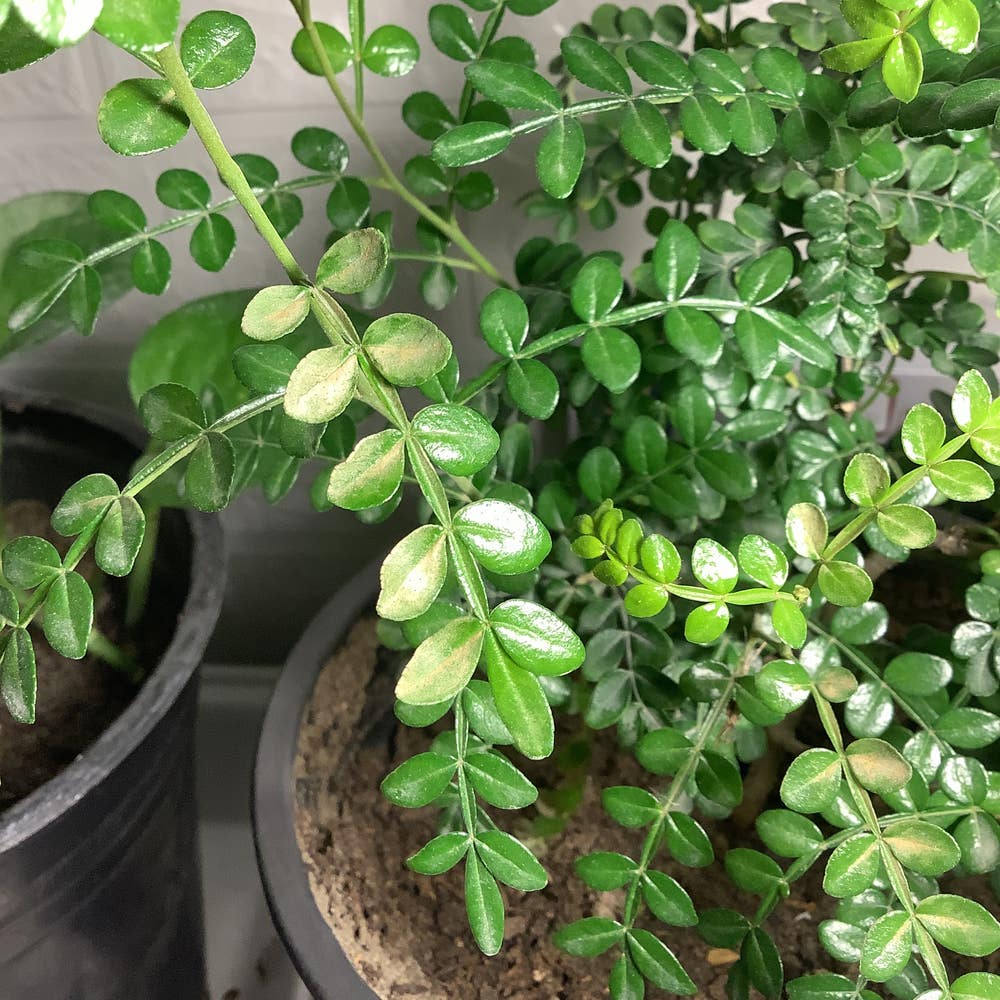
🌵 Why Your Green Prickly Ash Has Yellow Leaves
Zanthoxylum piperitum
By the Greg Editorial Team
Oct 17, 2024•6 min read
This article was created with the help of AI so we can cover more plants for you. May contain errors. See one? Report it here.
- 🌱 Yellow leaves indicate issues like nutrient deficiencies, watering problems, or environmental stress.
- 💧 Overwatering and underwatering both cause yellowing; maintain consistent watering practices.
- 🌞 Excess sunlight and temperature fluctuations can scorch leaves; provide shade and mulch for protection.
Causes of Yellow Leaves
🌱 Nutrient Deficiencies
Nitrogen Deficiency
Nitrogen deficiency is a common issue that manifests as yellowing of older leaves and stunted growth. To remedy this, use a balanced fertilizer that contains nitrogen, which is essential for healthy foliage.
Iron Chlorosis
Iron chlorosis presents itself through yellowing between leaf veins while the veins themselves remain green. Applying chelated iron or adjusting the soil pH can effectively address this deficiency.
💧 Watering Issues
Overwatering
Overwatering can lead to yellowing leaves, wilting, and even root rot. To combat this, allow the soil to dry out between watering sessions and improve drainage to prevent waterlogging.
Underwatering
Underwatering results in yellowing leaves with crispy edges. Ensure you water deeply and consistently, and monitor soil moisture levels to keep your plant hydrated.
🌡️ Environmental Stress
Temperature Fluctuations
Temperature fluctuations can cause sudden yellowing and leaf drop. Providing shade during extreme heat and mulching to regulate soil temperature can help mitigate these effects.
Sunlight Exposure
Excessive sunlight can lead to yellowing leaves and leaf scorch. Adjusting the planting location or providing shade during peak sunlight hours can protect your prickly ash from damage.
Understanding these causes is crucial for maintaining the health of your green prickly ash. By addressing nutrient deficiencies, watering issues, and environmental stressors, you can ensure vibrant foliage and robust growth. Next, we’ll explore how to diagnose yellow leaves effectively.
Diagnosing Yellow Leaves
👀 Visual Symptoms to Look For
When diagnosing yellow leaves on your green prickly ash, start by observing the leaf color changes. Is the yellowing gradual or sudden? Gradual yellowing often indicates nutrient deficiencies, while sudden yellowing could signal environmental stress.
Next, examine the leaf texture. Are the leaves wilting, crispy, or soft? These textures can provide clues about the underlying issue.
Finally, consider the location of yellowing. Are the older leaves turning yellow, or is it the new growth? Older leaves typically show signs of nutrient deficiencies, while new growth may indicate watering or environmental problems.
🧪 Soil Testing for pH and Nutrients
Soil testing is crucial for diagnosing yellow leaves. You can use home soil test kits or opt for professional lab testing for more accurate results.
For prickly ash, the ideal pH range is between 6.0 to 7.5. Maintaining this pH level ensures that nutrients are available for absorption, helping your plant thrive.
By paying attention to these visual symptoms and conducting soil tests, you can effectively diagnose the causes of yellow leaves and take appropriate action. This sets the stage for the next steps in treatment and care.
Treatment Options
Adjusting Watering Practices 🌊
Overwatering can be a silent killer for your green prickly ash. To correct this, start by assessing drainage; ensure your pots or garden beds have adequate drainage holes.
Next, modify your watering schedule. Water less frequently, allowing the soil to dry out between sessions.
Underwatering is just as detrimental. Begin by checking soil moisture; a moisture meter or a simple finger test can do wonders.
Once you’ve gauged the moisture, water thoroughly. Deep watering encourages robust root growth, ensuring your plant thrives.
Fertilization Techniques 🌱
Choosing the right fertilizer is crucial for your prickly ash's health. Balanced NPK fertilizers or organic options are highly recommended.
Timing is everything. Apply fertilizers in early spring and mid-summer for optimal results.
Always follow dosage guidelines based on your plant's size. This ensures your prickly ash gets the nutrients it needs without the risk of over-fertilization.
Soil Amendments 🏡
Soil amendments can significantly enhance your plant's environment. Consider using compost, peat moss, or well-rotted manure.
These amendments improve soil structure, drainage, and nutrient availability. A well-prepared soil can make all the difference in your prickly ash's vitality.
By adjusting your watering practices, fertilization techniques, and soil amendments, you can effectively combat yellow leaves and promote a healthier plant.
Next, let’s explore preventive measures to keep your prickly ash thriving year-round.
Preventive Measures
Proper Planting Techniques 🌱
To ensure your green prickly ash thrives, start with the right planting depth. The root crown should be level with the soil surface to promote healthy growth.
Spacing is equally important. Allow adequate space between plants for air circulation, which helps prevent diseases.
Soil preparation is crucial too. Amending the soil with organic matter before planting enhances its structure and nutrient content.
Seasonal Care Tips 🌸
Spring is the perfect time to fertilize your prickly ash and check for pests. A little proactive care can make a big difference.
In summer, keep an eye on watering and sunlight exposure. Adjust as needed to prevent stress on your plant.
As fall approaches, don’t forget to mulch. This protects the roots and prepares your plant for winter's chill.
Regular Monitoring for Pests and Diseases 🕵️♂️
Regular inspections are key to maintaining a healthy prickly ash. Aim to check leaves and stems weekly for any signs of pests or disease.
Early detection can save your plant from serious issues down the line. Stay vigilant, and your prickly ash will thank you!
With these preventive measures in place, you can enjoy a vibrant and healthy green prickly ash. Next, let’s explore common pests and diseases that may threaten your plant’s well-being.
Common Pests and Diseases
🐜 Identifying Pests That Cause Yellowing
Aphids
Aphids are tiny pests that can wreak havoc on your green prickly ash. Look for symptoms like curling leaves and a sticky residue on the plant, which indicates their presence.
To control aphids, consider using insecticidal soap or introducing beneficial insects like ladybugs. These natural predators can help keep aphid populations in check.
Spider Mites
Spider mites are another culprit behind yellowing leaves. You might notice fine webbing on your plant and stippled leaves, which are signs of their feeding.
To combat spider mites, increase humidity around your plant and consider using miticides if the infestation is severe. Keeping the environment moist can deter these pests.
🍄 Fungal Infections and Their Treatment
Root Rot
Root rot is a serious issue that can lead to wilting and yellowing leaves, even when you’re watering adequately. This condition often arises from poor drainage, which suffocates the roots.
To treat root rot, improve drainage by ensuring pots have adequate holes. You may also need to remove affected roots and apply a fungicide to prevent further spread.
Powdery Mildew
Powdery mildew manifests as white powdery spots on leaves, signaling a fungal infection. This can lead to yellowing and overall decline in plant health.
To treat powdery mildew, increase air circulation around your plant and apply fungicides as needed. Keeping your prickly ash well-ventilated can help prevent this issue.
Understanding these pests and diseases is crucial for maintaining the health of your green prickly ash. By identifying symptoms early and applying the right treatments, you can keep your plant thriving and vibrant.
Next, let’s explore effective treatment options to restore your plant's health.
⚠️ Safety First
This content is for general information and may contain errors, omissions, or outdated details. It is not medical, veterinary advice, or an endorsement of therapeutic claims.
Always consult a qualified healthcare professional before using any plant as food, medicine, or supplement.
Never eat any plant (or feed one to pets) without confirming its identity with at least two trusted sources.
If you suspect poisoning, call Poison Control (800) 222-1222, the Pet Poison Helpline (800) 213-6680, or your local emergency service immediately.
Spotted an error? Please report it here.
Keep your green prickly ash vibrant and healthy 🌿 by using Greg's tailored watering and fertilization reminders to tackle yellow leaves before they become a problem!