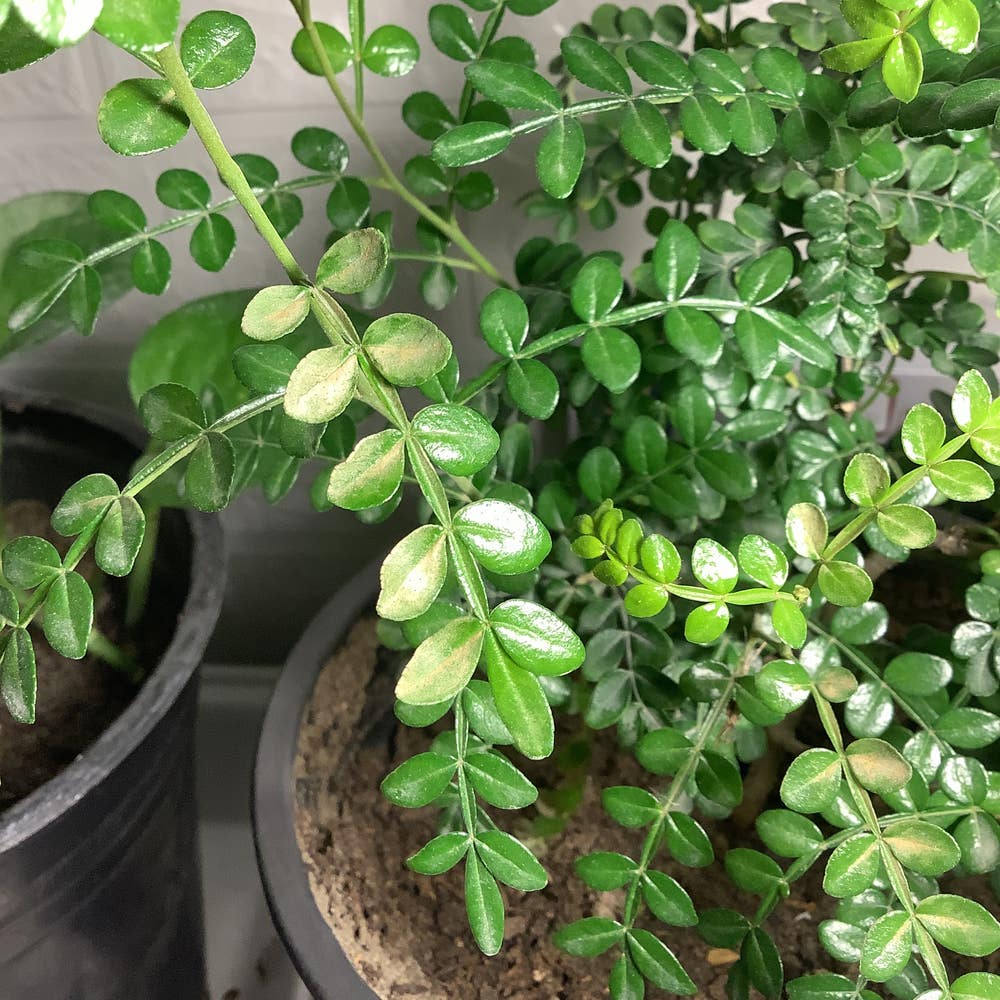
🌵 How to Fix Leaves Falling Over on Your Green Prickly Ash
Zanthoxylum piperitum
By the Greg Editorial Team
Oct 17, 2024•5 min read
This article was created with the help of AI so we can cover more plants for you. May contain errors. See one? Report it here.
- 💧 Diagnose water issues: Overwatering and underwatering cause leaf drop; adjust accordingly.
- 🐛 Inspect for pests: Regular checks prevent damage from pests like stippling and webbing.
- 🌱 Prune and monitor: Regular pruning and health checks promote growth and reduce stress.
Diagnosing the Problem
🌊 Signs of Overwatering vs. Underwatering
Understanding the signs of overwatering and underwatering is crucial for your Green Prickly Ash's health.
Overwatering indicators include yellowing leaves, mushy roots, and unexpected leaf drop. If you notice these symptoms, it’s time to reassess your watering habits.
On the flip side, underwatering manifests as wilting leaves, dry soil, and also leaf drop. Keep an eye on these signs to ensure your plant is getting the right amount of moisture.
🐛 Identifying Pest Infestations
Pest infestations can wreak havoc on your Green Prickly Ash. Start with a visual inspection: check the undersides of leaves and along the stems for any unwanted guests.
Look for symptoms of pest damage such as stippling, webbing, and curling leaves. These signs indicate that your plant may need immediate attention to prevent further damage.
🦠 Recognizing Disease Symptoms
Diseases can also affect your Green Prickly Ash, so it's essential to recognize the symptoms early. Common diseases include leaf spot and root rot, both of which can lead to serious health issues for your plant.
Watch for discoloration, lesions, and a general decline in leaf health. Early detection can make all the difference in managing these diseases effectively.
By diagnosing these problems promptly, you can take the necessary steps to restore your plant's health. Next, let’s explore preventive measures to keep your Green Prickly Ash thriving.
Preventive Measures
Proper Watering Techniques 🌊
Watering your Green Prickly Ash correctly is crucial for its health. Aim to water based on soil moisture and seasonal changes, ensuring the plant gets what it needs without drowning it.
To check soil moisture, use the finger test: stick your finger about an inch into the soil. If it feels dry, it’s time to water. Alternatively, moisture meters can provide a more precise reading.
Soil Health and Amendments 🌱
Well-draining soil is essential for preventing root rot and promoting robust growth. Poor drainage can lead to a host of problems, including leaf drop and disease.
Consider adding compost or organic matter to your soil. These amendments improve drainage and enrich the soil, creating a healthier environment for your plant.
Choosing the Right Location for Growth 🏡
Selecting the right spot for your Green Prickly Ash can make all the difference. Ideally, it thrives in full sun to partial shade, which supports optimal health and growth.
Avoid planting in low-lying areas where water tends to accumulate. This simple step can prevent many issues related to overwatering and root health.
By implementing these preventive measures, you set your Green Prickly Ash up for success. Next, let’s explore treatment options to address any existing problems your plant may face.
Treatment Options
Adjusting Watering Schedules 💧
Creating a watering schedule is essential for your Green Prickly Ash. Adjust the frequency based on seasonal needs, ensuring the plant receives adequate moisture without becoming waterlogged.
Watch for signs that indicate it's time to adjust your watering. If the leaves appear droopy or the soil feels dry, it may be time to increase your watering frequency.
Pest Management Strategies 🐞
Integrated Pest Management (IPM) combines various techniques to control pests effectively. This approach includes cultural practices, mechanical methods, and chemical controls to minimize damage while being environmentally friendly.
Consider using products like neem oil and insecticidal soap. Beneficial insects, such as ladybugs, can also help keep pest populations in check.
Pruning Affected Leaves and Branches ✂️
Timing is crucial when it comes to pruning. Prune affected leaves and branches based on their health and the presence of pests to encourage new growth and reduce stress on the plant.
Use clean cuts and proper tools to minimize damage. This practice not only helps the plant recover but also promotes healthier foliage in the long run.
With these treatment options in mind, you can effectively care for your Green Prickly Ash. Next, let's explore seasonal considerations to ensure your plant thrives year-round.
Seasonal Considerations
🌱 Care During Different Seasons
Spring is a crucial time for your Green Prickly Ash. Focus on promoting new growth by ensuring adequate watering and fertilization to boost leaf health.
As summer rolls in, managing heat stress becomes essential. Keep an eye on moisture levels, as the heat can quickly dry out the soil, leading to wilting leaves.
In the fall, prepare your plant for dormancy. This involves reducing watering and allowing the leaves to drop naturally, which is a normal part of the seasonal cycle.
❄️ Preparing for Winter Stress
Winterizing your Green Prickly Ash is vital for its survival. Mulching around the base helps insulate the roots and protects them from frost.
Watch for signs of winter stress, such as leaf drop and branch dieback. These symptoms indicate that your plant may need extra care to make it through the cold months.
By understanding seasonal needs, you can ensure your Green Prickly Ash thrives year-round. Next, let’s explore long-term care strategies to keep your plant healthy and vibrant.
Long-term Care Strategies
Fertilization Practices 🌱
To keep your Green Prickly Ash thriving, choose fertilizers with balanced NPK ratios, ideally around 10-10-10. This ensures your plant receives essential nutrients for robust growth.
Timing is crucial for fertilization. Apply fertilizers in early spring as new growth begins and again in mid-summer to support ongoing health.
Monitoring Plant Health Regularly 🔍
Regular inspections are key to catching issues before they escalate. Look for signs of distress, such as discoloration or unusual leaf drop.
Utilize tools like moisture meters and pest traps to keep tabs on your plant’s health. These devices help you maintain optimal conditions and prevent potential problems.
Creating a Supportive Environment 🌼
Enhancing the native habitat around your Green Prickly Ash can significantly boost its resilience. Consider planting companion plants that attract beneficial insects and promote biodiversity.
Maintaining a diverse ecosystem not only supports your plant but also enriches the surrounding environment. This approach fosters a thriving garden that benefits all its inhabitants.
By implementing these long-term care strategies, you’ll ensure your Green Prickly Ash remains healthy and vibrant for years to come. Next, let’s explore seasonal considerations to further optimize your plant care routine.
⚠️ Safety First
This content is for general information and may contain errors, omissions, or outdated details. It is not medical, veterinary advice, or an endorsement of therapeutic claims.
Always consult a qualified healthcare professional before using any plant as food, medicine, or supplement.
Never eat any plant (or feed one to pets) without confirming its identity with at least two trusted sources.
If you suspect poisoning, call Poison Control (800) 222-1222, the Pet Poison Helpline (800) 213-6680, or your local emergency service immediately.
Spotted an error? Please report it here.
Keep your Green Prickly Ash thriving 🌱 by using Greg's personalized watering reminders and expert tips to tackle water issues, pests, and seasonal care like a pro!