Key Stages in the Life of a Dichondra repens
Dichondra repens
By the Greg Editorial Team
Jul 24, 2024•4 min read
This article was created with the help of AI so we can cover more plants for you. May contain errors. See one? Report it here.
Witness Dichondra repens' growth from a simple seedling to a verdant carpet 🌱—a tale of resilience and beauty.
- 🌱 Seed to maturity timeline reveals Dichondra repens' growth and care needs.
- 🌼 Reproductive cycle subtleties aid in understanding plant propagation.
- 📏 Factors influencing growth rate include genetics, environment, and care.
Seedling Development
Dichondra repens seedlings begin their journey with narrow, elongated leaves that may surprise those expecting the plant's characteristic kidney shape right away. This early disguise gives way to the true form as the seedlings mature, a process that typically unfolds over several weeks.
- Early leaves are long and narrow, not immediately resembling mature Dichondra foliage.
- True leaf shape emerges as seedlings grow, revealing the plant's distinctive kidney-shaped leaves.
The development of these seedlings is a critical phase, spanning a period where each day brings visible changes. Seedlings display their vigor through robust growth and a vibrant green color, indicators of a healthy start.
- Seedling vigor is marked by robust growth and a deep green hue.
- Developmental milestones include the formation of the plant's first true leaves and the strengthening of stems.
Observing these seedlings, one can expect a transformation from sprout to a more recognizable form within a month, setting the stage for the rapid vegetative expansion that follows.
Vegetative Expansion
During the vegetative expansion phase, Dichondra repens undergoes a transformation characterized by a burst of energy directed towards root and foliage development. This stage is crucial as it sets the foundation for the plant's future growth and resilience.
Rapid growth phase: root and foliage development.
- Roots extend to anchor the plant and absorb nutrients.
- Foliage spreads, maximizing photosynthesis.
Influences on vegetative growth rate.
- Adequate light and warmth accelerate growth.
- Consistent moisture and soil fertility are key.
- Proper spacing ensures ample room for expansion.
🌱 The timeline for this stage varies, but generally, Dichondra repens will display significant growth within weeks, establishing a dense mat of greenery. This rapid expansion not only contributes to the plant's lush appearance but also to its ability to outcompete weeds, making it a popular ground cover choice.
Reproductive Cycle
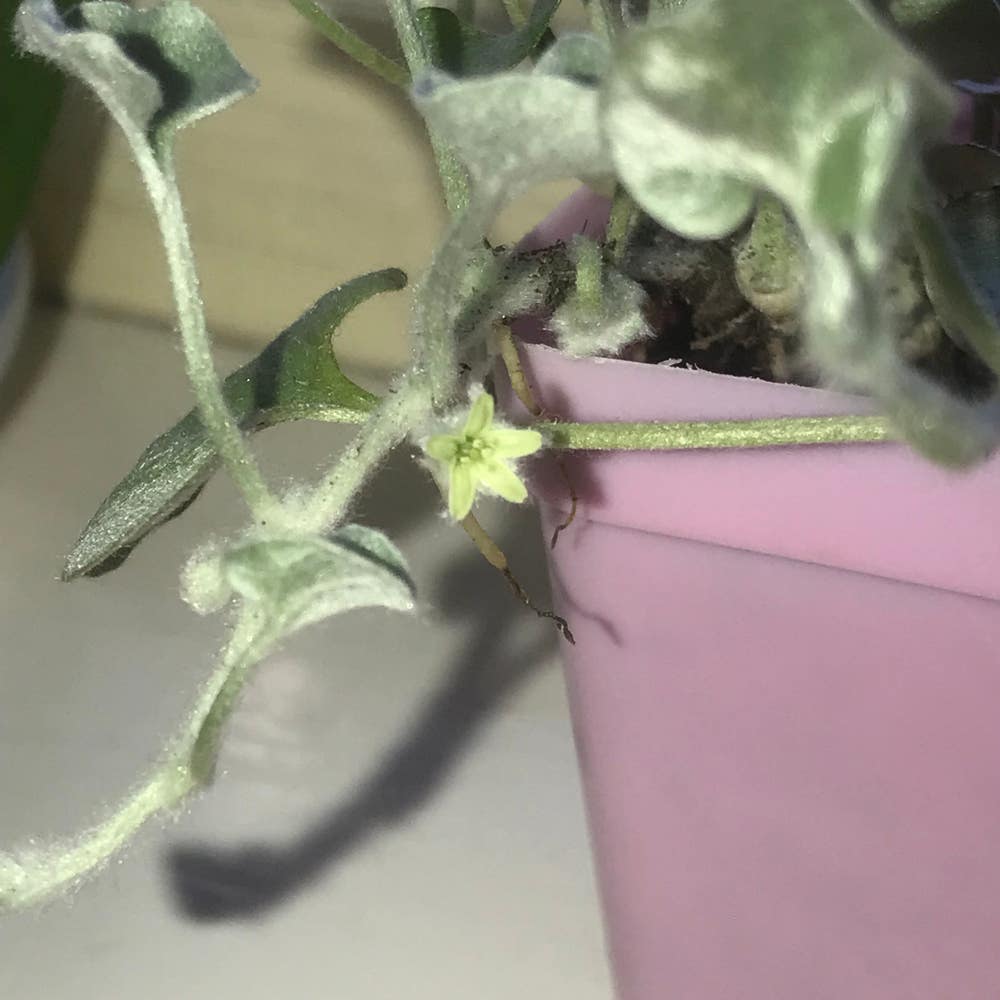
Dichondra repens enters its reproductive cycle with a discreet flowering phase. Unlike showier plants, its flowers are modest, yet they play a crucial role in seed production.
- The flowering process is typically self-pollinating, leading to the development of seeds within the fruiting body.
- Flowering and seed set occur during the warmer months, aligning with the plant's preference for ample sunlight and mild temperatures.
The duration and specifics of seed dispersal are as fascinating as the flowering itself.
- After pollination, seeds mature within the fruit, which eventually dries and opens to release them.
- Dissemination leverages natural elements like wind and water, as well as animal and human activity, to spread the seeds across suitable growing areas.
Understanding Dichondra repens' reproductive cycle is not just about witnessing its growth stages; it's about appreciating the intricate dance of survival and propagation.
Achieving Maturity
Dichondra repens signals its transition into full maturity with distinct changes in its appearance. Here's how you can spot a mature Dichondra:
- Vigorous root system that firmly anchors the plant.
- Dense, lush foliage that covers the ground effectively.
- The onset of flowering, which may take several years, indicating reproductive readiness.
From the moment of germination, expect Dichondra repens to reach maturity within:
- 1 to 2 years in optimal growing conditions.
- Up to 3 years if growth conditions are less than ideal or in cooler climates.
Remember, maturity in Dichondra repens isn't just about size; it's a combination of age, health, and the ability to reproduce that marks a fully grown plant.
Lifespan and Growth Dynamics
Dichondra repens, with its cascading foliage, is more than just a pretty face in the garden; it's a plant with a story of growth and resilience.
🕰️ Average Lifespan and Longevity Factors
The average lifespan of Dichondra repens is a testament to its hardiness, typically thriving for several years with proper care. Factors that influence its longevity include:
- Adequate sunlight exposure
- Proper watering practices
- Soil quality and drainage
- Resistance to pests and diseases
🌱 Growth Rate Specifics
Dichondra repens doesn't sprint to maturity; it prefers a steady jog. Here's what influences its pace:
- Genetics: Just as some people are naturally taller, some Dichondra repens plants are genetically predisposed to grow faster.
- Environment: The right combination of light, water, and nutrients can turn a slow grower into a ground cover champion.
- Seasonal patterns: Growth tends to accelerate in spring and slow down as the plant prepares for cooler months.
🚀 Addressing Growth Speed
"How fast does Dichondra repens grow?" is a question with a variable answer. Generally, you can expect:
- Visible growth within weeks under optimal conditions
- Full coverage in a growing season, depending on the initial planting density and care
Remember, Dichondra repens isn't in a race—it's in it for the long haul, spreading steadily to create a lush, verdant carpet over time.
⚠️ Safety First
This content is for general information and may contain errors, omissions, or outdated details. It is not medical, veterinary advice, or an endorsement of therapeutic claims.
Always consult a qualified healthcare professional before using any plant as food, medicine, or supplement.
Never eat any plant (or feed one to pets) without confirming its identity with at least two trusted sources.
If you suspect poisoning, call Poison Control (800) 222-1222, the Pet Poison Helpline (800) 213-6680, or your local emergency service immediately.
Spotted an error? Please report it here.
Nurture every key stage of your Dichondra repens, from seedling to full ground cover, with Greg's tailored growth tracking 🌿.