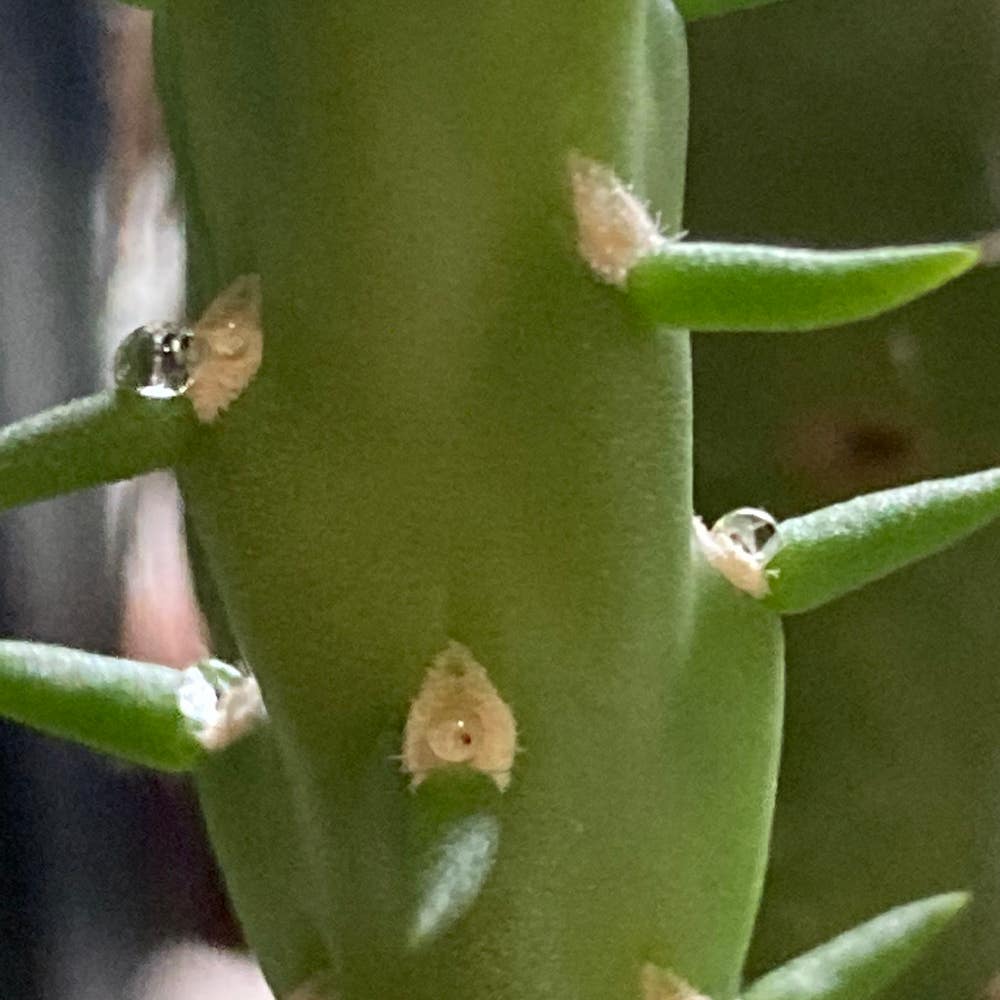
🌵 Why Are There Brown Spots on My Teddy Bear Cholla Leaves?
Cylindropuntia bigelovii
By the Greg Editorial Team
Mar 31, 2024•4 min read
This article was created with the help of AI so we can cover more plants for you. May contain errors. See one? Report it here.
Uncover the urgent message behind your Teddy Bear Cholla's brown spots and save your spiky friend! 🌵🔍
- Brown spots can signal dehydration, overwatering, or disease.
- Adjust light and water to prevent and treat brown spots.
- Use fungicides for fungal infections with yellow halos or rings.
Spotting the Trouble: Identifying Brown Spots
🕵️♂️ Visual Symptoms of Brown Spots
Brown spots on your Teddy Bear Cholla can be alarm bells or false alarms. They vary from tiny specks to large blotches, with edges that may be sharp or fuzzy. The texture is a giveaway: crispy spots often indicate dehydration, while slimy ones suggest overwatering. A yellow halo can mean disease is at play. Location matters too—spots on leaf edges or centers can point to different causes.
🤔 Common Mistakes in Spot Identification
It's easy to mistake brown spots for natural quirks. But when they're random, spreading, and have no clear pattern, it's time to act. Don't confuse them with natural leaf markings or scars. Consistency is key—repetitive patterns are less concerning than widespread, unsystematic discoloration. Regular monitoring helps differentiate between a benign leaf pattern and a cry for help.
Rooting Out the Causes
☀️ Sunburn: When Your Cactus Gets Too Much Sun
Crispy edges and bleached patches are the hallmarks of a sunburned Teddy Bear Cholla. If your cactus is sporting these dry brown spots, it's soaking up more rays than it can handle. Shade is your friend here; consider relocating your cactus or using a sheer curtain to diffuse the light.
💦 Overwatering Woes: Too Much Love Can Hurt
Overwatering leads to brown spots that feel soft and mushy—a clear sign your Cholla is drowning in excess moisture. Check the soil; if it's soggy, it's time to ease up on the watering can. Adjust your routine to let the soil dry out between waterings, ensuring your cactus isn't sitting in a swamp.
🍄 Fungal Frustrations: Battling Infections
Fungal infections sneak up with spots surrounded by yellow halos or concentric rings. If you spot these, it's time to isolate your plant and consider a fungicide. But first, remove the infected areas with a sterile knife to prevent further spread—cleanliness is crucial in the fight against fungus.
Healing Your Cholla: Treatment and Recovery
💡 Adjusting the Environment
Bright, indirect light is your Teddy Bear Cholla's best friend. Too much sun can lead to a cactus sunburn, so consider using sheer curtains or providing shade during peak hours. Nighttime should mimic the desert's cooler temperatures, creating an ideal day-to-night cycle.
🚰 Watering Wisdom
Overwatering is a no-go. Ensure the soil is dry an inch down before even thinking about watering again. Stick to a schedule; erratic watering is the fast track to fungal fiestas and root rot. Remember, a thirsty cactus is better than a drowned one.
🛡️ Fungicide to the Rescue
When brown spots scream 'fungus,' it's time for fungicides. Go for copper-based options and apply as directed. Always isolate the affected plant first to prevent a spore spread. And yes, sterilize your tools before and after pruning away the damage—think of it as surgery for your spiky friend.
Keeping Spots at Bay: Prevention Strategies
🌵 Proactive Plant Parenting
Regular care is crucial for preventing brown spots on your Teddy Bear Cholla. Consistency in your care routine is like the steady beat of a drum, setting the rhythm for your plant's health.
- Water Wisely: Only hydrate when the soil is as dry as a desert dune.
- Nutrition Balance: Fertilize sparingly, because your cactus isn't a glutton.
- Cleanliness: Maintain a tidy space. Fallen debris is a fungi's playground.
👀 Monitoring and Maintenance
Keeping a vigilant eye on your cactus is like being a plant detective on the lookout for the slightest clue of distress.
- Inspect Regularly: Make it as routine as your morning coffee.
- Environment Check: Ensure the light is as gentle as a morning breeze and the humidity as comfortable as your favorite sweater.
- Quarantine New Plants: Newcomers should have a timeout before mingling, like a bouncer checking IDs at the door.
By adopting these strategies, you're not just reacting to problems; you're crafting a fortress of prevention. It's the difference between being a casual cactus owner and a cactus guardian.
⚠️ Safety First
This content is for general information and may contain errors, omissions, or outdated details. It is not medical, veterinary advice, or an endorsement of therapeutic claims.
Always consult a qualified healthcare professional before using any plant as food, medicine, or supplement.
Never eat any plant (or feed one to pets) without confirming its identity with at least two trusted sources.
If you suspect poisoning, call Poison Control (800) 222-1222, the Pet Poison Helpline (800) 213-6680, or your local emergency service immediately.
Spotted an error? Please report it here.
Banish brown spots 🍂 on your Teddy Bear Cholla with Greg's custom care reminders and expert community tips for a healthy, happy cactus!