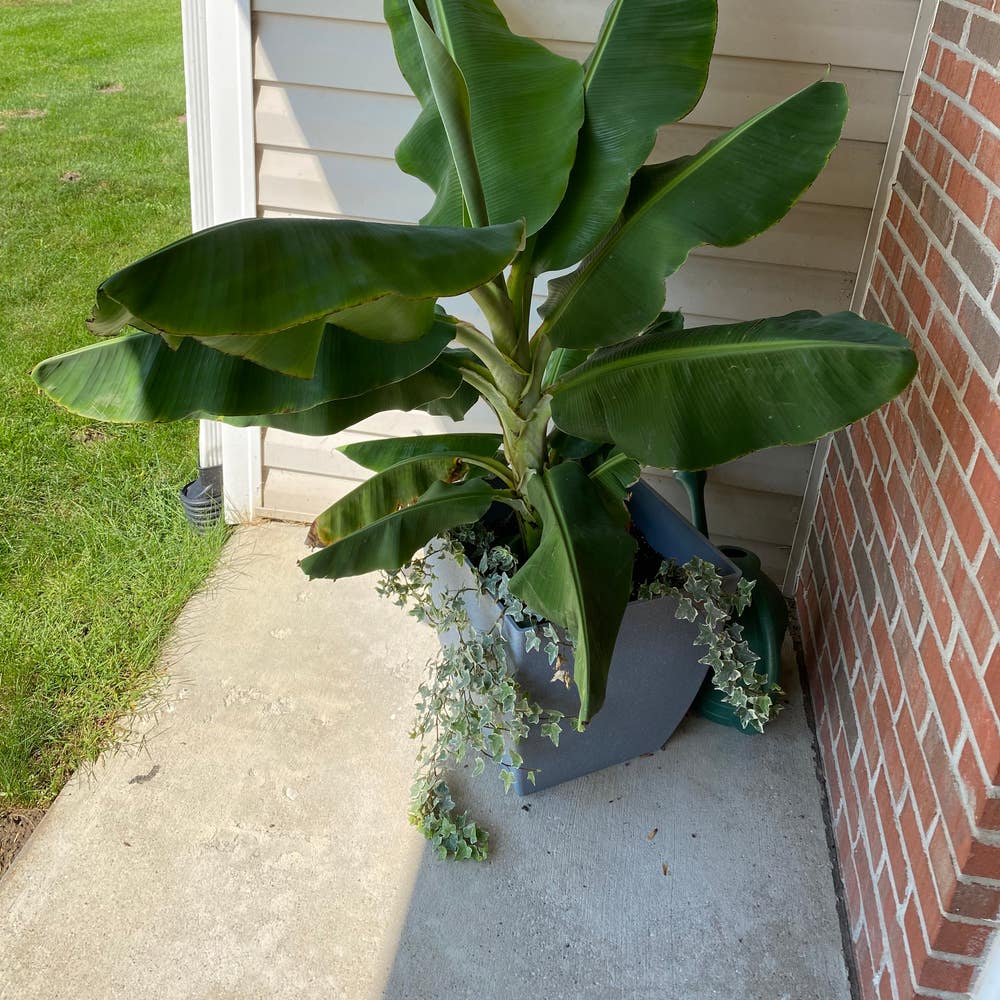
🐛 Black Spots on My Abyssinian Banana Leaves
Ensete ventricosum
By the Greg Editorial Team
Jun 18, 2024•3 min read
This article was created with the help of AI so we can cover more plants for you. May contain errors. See one? Report it here.
Banish black spots on Abyssinian Banana leaves with expert tips for a lush, healthy plant! 🍌🛡️
- Fungal and bacterial infections cause black spots on Abyssinian Banana leaves.
- Use fungicides and adjust watering to treat and prevent black spots.
- Improve drainage and airflow to create an unfavorable environment for pathogens.
Unveiling the Culprits Behind Black Spots
🍄 Fungal Foes
Spotting the signs of anthracnose and other fungal villains is crucial. These fungi invade through spores, thriving in damp conditions and leaving their mark as black spots on your Abyssinian Banana leaves.
🦠 Bacterial Baddies
Bacterial leaf spot sneaks in through wounds or openings, presenting as water-soaked lesions. They're the ninjas of the plant world, turning leaves into canvases for black spots.
🌿 Environmental Stressors
Overwatering and high humidity are like rolling out the red carpet for black spot pathogens. Poor air circulation acts as a silent enabler, allowing moisture to linger and promote the spread of these pesky invaders.

Battling Black Spots: Treatment Tactics
🍄 Fungicide to the Rescue
Timing is critical when deploying fungicides against the fungal foes of your Abyssinian Banana. Initiate a preemptive strike in early stages, when buds break, to prevent black spots from gaining a foothold. Copper-based fungicides are a go-to, but it's not a one-size-fits-all game—diversify your arsenal with options like neem oil for a more organic approach. Remember, the label is your bible here; overuse is a rookie mistake.
💊 Antibacterial Agents
Caught early, bacterial black spots might just surrender to your green thumb. Prune the infected areas—think of it as tough love—and follow up with aloe vera for its soothing, healing properties. If things look grim, refined horticultural oil or insecticidal soap might be your Hail Mary. Keep your tools and environment as clean as your conscience to avoid a bacterial comeback tour.
🌧️ Adjusting the Environment
Overwatering and humidity are like an all-you-can-eat buffet for black spots. Tweak your watering habits—aim for the base of the plant during the early morning, so the sun can work its drying magic. Improve drainage to avoid soggy soil syndrome. A fan or some strategic plant spacing can work wonders for airflow. It's all about balance—too much humidity and you're hosting a fungal rave, too little and you're in a plant desert.

Keeping Black Spots at Bay: Prevention Strategies
🌱 Cultural Best Practices
Watering is the root of the matter. Aim for the base to keep leaves dry, thwarting fungal and bacterial party plans. Soil should drain like a dream, and air should flow like a gentle stream, not a stagnant pond.
🧼 Cleanliness is Key
Sanitize those tools as if they're going into surgery, not just dirt. Remove infected leaves with the precision of a ninja, leaving no trace behind.
🏰 Environmental Mastery
Craft an environment that's more fortress than playground for pathogens. Humidity and airflow should be balanced like a tightrope walker, with no room for error.

⚠️ Safety First
This content is for general information and may contain errors, omissions, or outdated details. It is not medical, veterinary advice, or an endorsement of therapeutic claims.
Always consult a qualified healthcare professional before using any plant as food, medicine, or supplement.
Never eat any plant (or feed one to pets) without confirming its identity with at least two trusted sources.
If you suspect poisoning, call Poison Control (800) 222-1222, the Pet Poison Helpline (800) 213-6680, or your local emergency service immediately.
Spotted an error? Please report it here.
Keep your Abyssinian Banana's leaves spotless 🌿 with Greg's custom watering and airflow tips, ensuring a healthy, thriving plant without the guesswork.