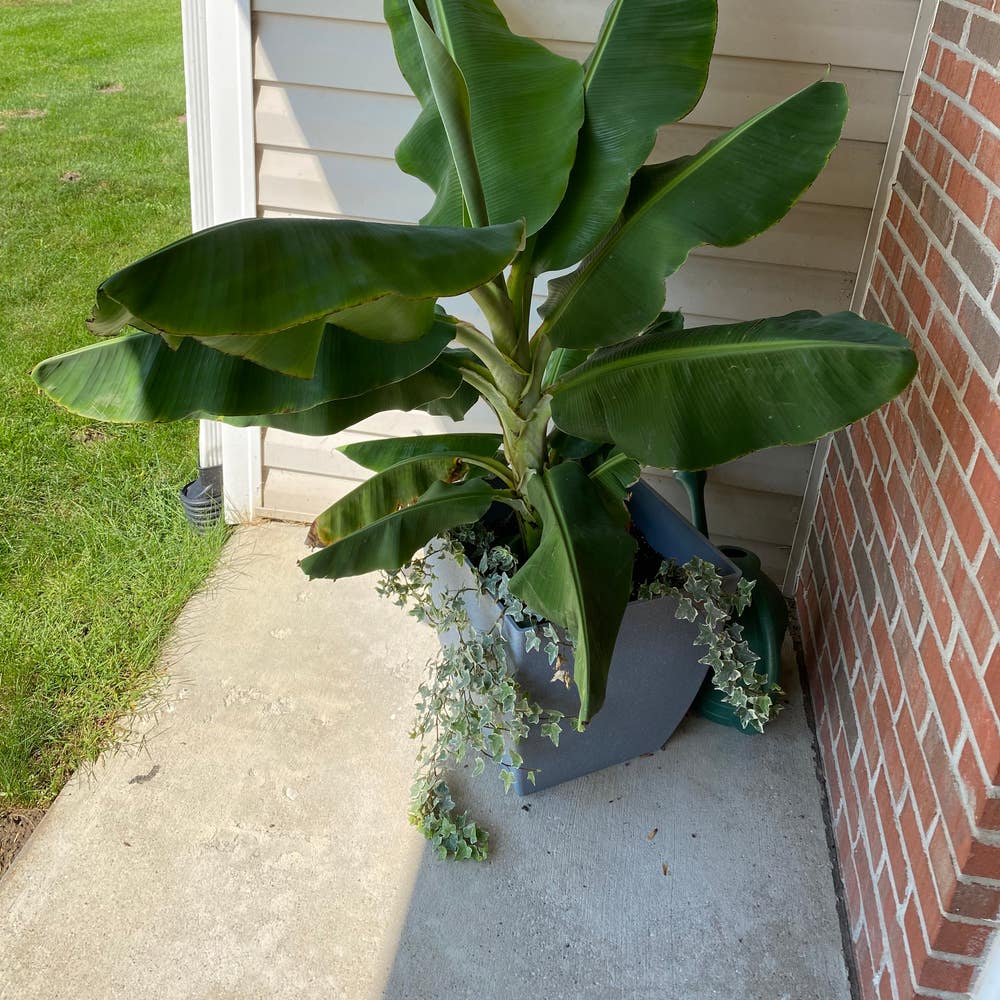
💧 How Much Humidity Does My Abyssinian Banana Need?
Ensete ventricosum
By the Greg Editorial Team
Jun 18, 2024•3 min read
This article was created with the help of AI so we can cover more plants for you. May contain errors. See one? Report it here.
Find the sweet spot 🌡️ for your Abyssinian Banana's humidity and watch it flourish!
- 50-60% humidity ideal for Abyssinian Banana health.
- 🍂 Crispy tips, slow growth? Low humidity alert!
- 🌬️ Mold or rot? Time to reduce humidity.
Spotting the Signs: When Your Abyssinian Banana Talks Humidity
🌵 Telltale Signs of Low Humidity
Crispy leaf tips on your Abyssinian Banana? Brown edges are the plant's version of a parched throat. Slow growth can also signal that your green buddy is gasping for some atmospheric moisture. It's like watching a cactus at a waterpark—out of place and desperately in need of a splash.
🌧 Too Much of a Good Thing: High Humidity Warnings
On the flip side, if your plant's leaves are throwing a mold party or the roots are starting to rot, it's time to tone down the tropical vibes. Excessive humidity is the equivalent of a rain dance inside your home, and trust me, your Abyssinian Banana didn't sign up for a swamp experience.

Nailing the Numbers: Ideal Humidity for Your Abyssinian Banana
🌴 The Sweet Spot
Abyssinian Bananas bask in humidity like a sunbather soaks up rays. Optimal levels for these tropical treasures hover between 50-60%. Any less, and you'll see those lush leaves start to crisp up at the edges; any more, and you're setting the stage for a fungal fanfare.
Relative Humidity and Your Plant
Relative humidity is your plant's bestie—it dictates how much water vapor the air around your plant is holding compared to the max it could contain at that temperature. Temperature and humidity are in a constant dance; when one dips, the other might spike, throwing your plant's vibe off balance. Keep the air around your Abyssinian Banana warm and steady, and you'll keep the humidity in that sweet spot, too.

Local Humidity and Your Abyssinian Banana
🌡️ Measuring Up
Hygrometers are the MVPs of humidity measurement. To keep your Abyssinian Banana from throwing a fit, place one near your plant but out of direct sunlight and away from drafts. Consistency is key, so monitor at various times to capture fluctuations.
Making Adjustments
If your hygrometer readings are screaming "desert," it's time to introduce a humidifier to your plant's life. On the flip side, if you're wading through a swamp, ventilation is your friend. Open a window or set up a fan to get the air moving. Remember, different rooms offer different humidity levels—use this to your advantage and find the perfect spot for your tropical charge.

Humidity Hacks: Boosting and Reducing Techniques
💨 Up the Vapor
To boost humidity for your Abyssinian Banana, start with a humidifier. It's like an all-you-can-drink buffet for your plant's tropical thirst. Humidifiers work wonders, especially when indoor heating turns your home into a desert. For a quieter, more low-tech approach, pebble trays are your go-to. Just fill a tray with pebbles, pour in some water, and let your plant perch on top. As the water evaporates, it's party time for your plant's pores.
🌬️ Clearing the Air
Sometimes, you've got to tone down the tropics. If you're hitting jungle-levels of moisture, bring in a dehumidifier. It's like a bouncer at the club door, keeping excess humidity in check. And don't underestimate the power of a fan or a cracked window. A gentle breeze is enough to keep the air from getting stale and mold from throwing an unwelcome party. Remember, your Abyssinian Banana loves moisture, but it's not auditioning for a role in a swamp scene.
⚠️ Safety First
This content is for general information and may contain errors, omissions, or outdated details. It is not medical, veterinary advice, or an endorsement of therapeutic claims.
Always consult a qualified healthcare professional before using any plant as food, medicine, or supplement.
Never eat any plant (or feed one to pets) without confirming its identity with at least two trusted sources.
If you suspect poisoning, call Poison Control (800) 222-1222, the Pet Poison Helpline (800) 213-6680, or your local emergency service immediately.
Spotted an error? Please report it here.
Achieve the ideal 50-60% humidity for your Abyssinian Banana and prevent crispy tips 🍃 with Greg's environmental tracking and custom care reminders.