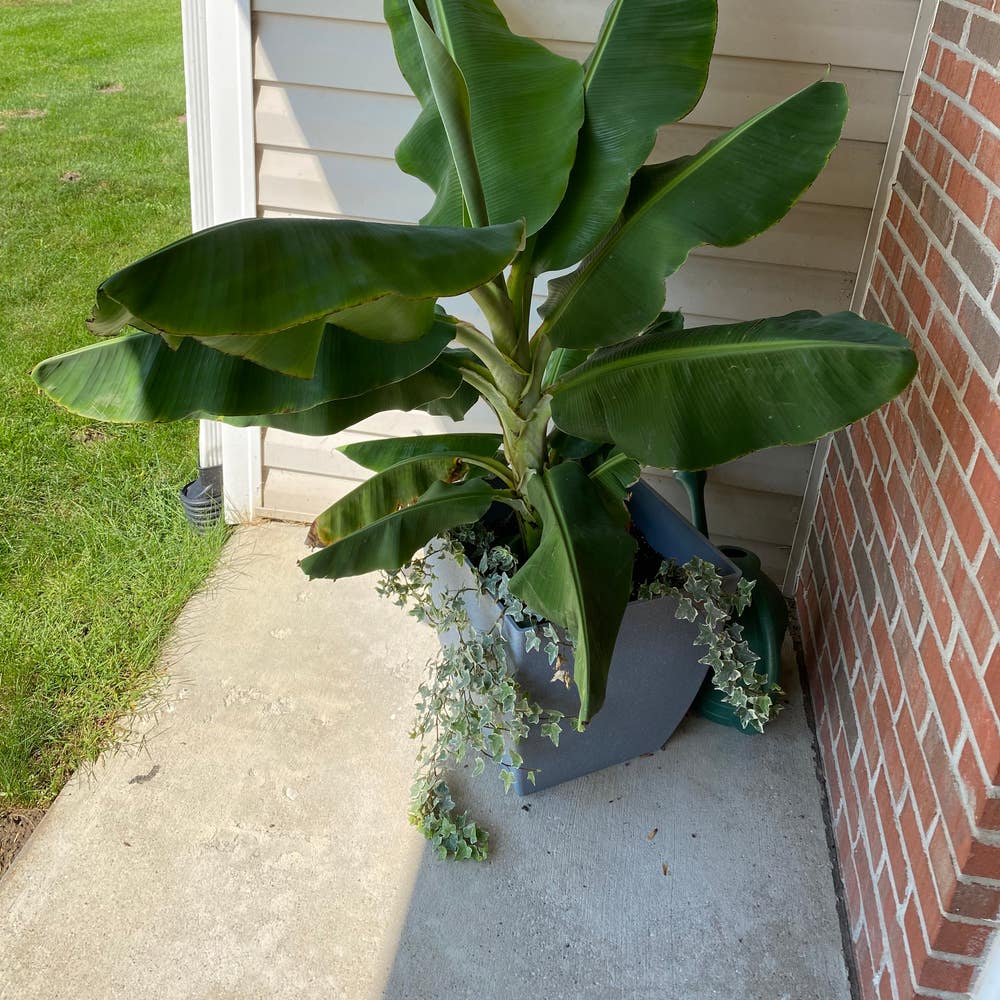
How to Know When to Repot an Abyssinian Banana?
Ensete ventricosum
By the Greg Editorial Team
Jun 18, 2024•4 min read
This article was created with the help of AI so we can cover more plants for you. May contain errors. See one? Report it here.
Discover the secret to a flourishing Abyssinian Banana 🍌 by spotting the perfect repotting moment!
- Roots peeking out? Time to repot your Abyssinian Banana.
- Choose terracotta pots for breathability and to prevent root rot.
- Repot gently and water wisely to ensure a smooth transition.
Spotting the Telltale Signs to Repot
🌱 Roots on the Run
Roots making a break for it out of the drainage holes? That's your Abyssinian Banana's version of a white flag. It's cramped in there, and it's time for a change of scenery.
🏠 The Tight Squeeze
When your plant's living quarters seem more like a straightjacket than a pot, it's a clear signal. If the plant looks like it's wearing a pot that's two sizes too small, it's time to upsize.
💧 Water Woes
Notice water running through the pot like it's racing to the finish line? That's bad news. Your plant's soil should be a sponge, not a sieve. If the soil feels more like a desert than a moist cake, your watering efforts are in vain.

Choosing Your Champion Pot
🌱 Size Matters
When repotting your Abyssinian Banana, size is key. Opt for a pot that's 1-2 inches larger in diameter than the current one. This provides enough room for growth without the risk of water retention, which can lead to root rot. It's a delicate balance – too large, and you're courting disaster with soggy soil; too small, and your plant's roots will be cramped.
🏺 Material World
Terracotta pots are the unsung heroes for Abyssinian Bananas, offering breathability that's like a fresh breeze for your plant's roots. They're also heavy enough to anchor your sizable green friend. Plastic pots, on the other hand, are lightweight champions – easy to move but prone to tipping over. They retain moisture longer, which can be a blessing for thirsty plants or a curse if overwatering is your vice. Ceramic pots strike a middle ground, less porous than terracotta but still offering some air flow, and they come in a myriad of designs to suit your style. Choose wisely; your Abyssinian Banana's health depends on it.

The Repotting Rundown
🌱 Pre-Repot Prep
Selecting the right soil mix is like choosing the best fuel for your car—it's vital. For the Abyssinian Banana, a well-draining potting mix is non-negotiable. Think of mixes with perlite, peat, and vermiculite. Before you dive in, ensure your workspace is clear. Lay out newspaper or a tarp to catch any mess, and have your tools on standby—a trowel, gloves, and your watering can.
🌿 Gentle Giant
When it's time to repot, think of yourself as a plant surgeon. Ease the plant out of its current pot with care, avoiding a tug-of-war with the roots. If they're circling the pot, gently tease them apart. This isn't a race; it's a ritual. Place a layer of fresh mix in the new pot, then position your green giant so it's neither sunken nor perched too high. Fill in the gaps with more mix, pressing down lightly to secure the plant without compacting the soil.
💧 Post-Repot Care
After the transplant, your plant will need some TLC. Water thoroughly to settle the soil around the roots, but don't drown it in enthusiasm. Keep the soil moist but not soggy, and place the pot in a spot with indirect light to help it acclimate. Resist fertilizing for at least a month—let your plant enjoy its new home without the pressure of a housewarming party. Keep an eye out for signs of stress and adjust care as needed. Remember, stability is key for your plant's post-repot honeymoon phase.

Pot Material Showdown
🌱 Breathability and Drainage
Terracotta is the all-star of pot materials for the Abyssinian Banana, and here's why: breathability. These pots allow air and water to pass through their walls, which is crucial for preventing overwatering and the dreaded root rot. They're like the MVP of pots, wicking away moisture and keeping those roots happy.
🚱 Watch Out for Waterlogging
If you want to avoid turning your plant's roots into a swampy mess, steer clear of non-porous materials. Plastic might be light on your wallet and easy to move around, but it's a champ at holding onto water, which is not what you want. And while ceramic pots can look sleek, make sure they have drainage holes; otherwise, they're just stylish bowls of potential plant peril.
⚠️ Safety First
This content is for general information and may contain errors, omissions, or outdated details. It is not medical, veterinary advice, or an endorsement of therapeutic claims.
Always consult a qualified healthcare professional before using any plant as food, medicine, or supplement.
Never eat any plant (or feed one to pets) without confirming its identity with at least two trusted sources.
If you suspect poisoning, call Poison Control (800) 222-1222, the Pet Poison Helpline (800) 213-6680, or your local emergency service immediately.
Spotted an error? Please report it here.
Ensure your Abyssinian Banana thrives in its new home by tracking growth 🌱 with Greg's reminders for when it's time to repot and how to do it right.