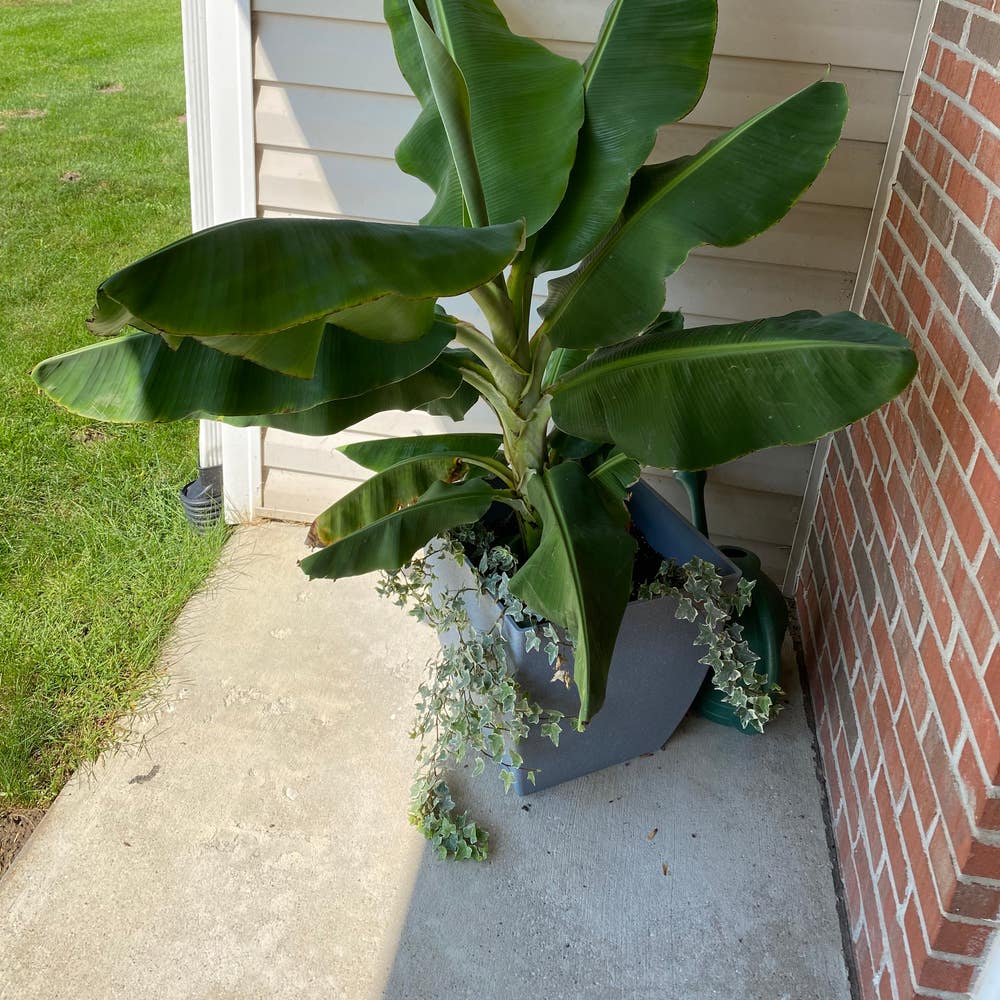
Am I Starving My Abyssinian Banana? Fertilizing 101
Ensete ventricosum
By the Greg Editorial Team
Jun 18, 2024•3 min read
This article was created with the help of AI so we can cover more plants for you. May contain errors. See one? Report it here.
Nourish your Abyssinian Banana to lush perfection with this must-know fertilizing wisdom 🌿.
- N-P-K and micronutrients are key to Abyssinian Banana health.
- Monthly fertilizing in growing season, less in winter.
- Avoid over-fertilization; look for white crust, stunted growth.
Feeding Your Abyssinian Banana Right
💪 Decoding the Nutrient Mix
Nitrogen is the leafy green's best friend, ensuring your Abyssinian Banana's leaves stay lush and its stem robust. Phosphorus is the root whisperer, bolstering the underground network that's essential during flowering. Potassium is the all-rounder, giving young shoots a pep talk and hastening the fruit to ripen with gusto.
Micronutrients might be tiny, but they're mighty, acting as the secret sauce for your plant's health. They're like the unsung heroes, ensuring your Abyssinian Banana doesn't miss a beat.
🌱 Choosing Your Fertilizer
Organic or synthetic? It's the gardener's conundrum. Organic options, like the Dr. Earth Exotic Blend, promise a non-GMO feast for your plant. Synthetics offer a quick-fix meal. Both have their place at the table.
Slow-release granules are the crockpot of plant nutrition—steady and reliable. Liquid fertilizers? They're the espresso shot—quick and potent. Choose based on how hands-on you want to be and how fast you want to see your Abyssinian Banana strut its stuff.

Timing is Everything: When to Fertilize
🌱 Growing Season Galore
In the spring, your Abyssinian Banana is like a bear coming out of hibernation: hungry and ready to grow. Fertilize monthly from spring through fall, aligning with the plant's natural growth spurt. This isn't just throwing food at your plant; it's giving it a buffet when it's actually ready to eat.
❄️ Winter Woes
Come winter, your plant's metabolism slows down like traffic at 5 pm on a Friday. It's time to ease up on the fertilizing frenzy. Think of it as respecting your plant's need for a little R&R. If you're itching to do something, just back off and let it chill.

The How-To of Fertilizing Abyssinian Banana
💡 Soil Application Smarts
Technique is key when it comes to nourishing your Abyssinian Banana's roots without causing harm. Distribute the fertilizer evenly around the soil to avoid root burn and ensure all roots get their share of nutrients. For potted plants, halve the dose to prevent overfeeding.
Remember, less can be more. Overzealous fertilization is a one-way ticket to sad plant syndrome. If you're using pellet fertilizer, work it into the topsoil layer and water it down to reach the deeper roots.
💡 Foliar Feeding Finesse
Leaves need love too, and foliar feeding is like a spa treatment for your Abyssinian Banana. Spray diluted fertilizer directly onto the leaves during the growing season for that extra boost. Just ensure it's a mild solution to avoid leaf burn and apply it in the early morning or late afternoon to prevent the sun from turning your plant into a crispy critter.

Oops, Too Much! Dealing with Over-Fertilization
🚨 Spotting the Telltale Signs
White crust on the soil? That's your plant waving a flag of distress, signaling a nutrient overload. If your Abyssinian Banana's growth has hit a wall or its leaves are browning at the tips, it's time to rethink your fertilizing strategy.
🛠️ The Recovery Roadmap
First, stop the fertilizer. Your plant's had its fill; more will only worsen the situation. Next, flush the soil with water to wash away excess salts—think of it as a cleanse for your plant's system. If you see a visible crust of fertilizer, carefully remove it without disrupting too much soil.
Prune away any wilted or burned leaves; they're beyond saving and will only sap energy from the recovery process. Hold off on any further fertilization for at least a month to give your plant a breather. Remember, with fertilizer, the mantra is "less is more." Too much, and you're just seasoning your plant like a steak, not feeding it.
⚠️ Safety First
This content is for general information and may contain errors, omissions, or outdated details. It is not medical, veterinary advice, or an endorsement of therapeutic claims.
Always consult a qualified healthcare professional before using any plant as food, medicine, or supplement.
Never eat any plant (or feed one to pets) without confirming its identity with at least two trusted sources.
If you suspect poisoning, call Poison Control (800) 222-1222, the Pet Poison Helpline (800) 213-6680, or your local emergency service immediately.
Spotted an error? Please report it here.
Keep your Abyssinian Banana in peak health 🍌 with Greg's tailored fertilizing reminders, ensuring you hit the right nutrient balance every season.