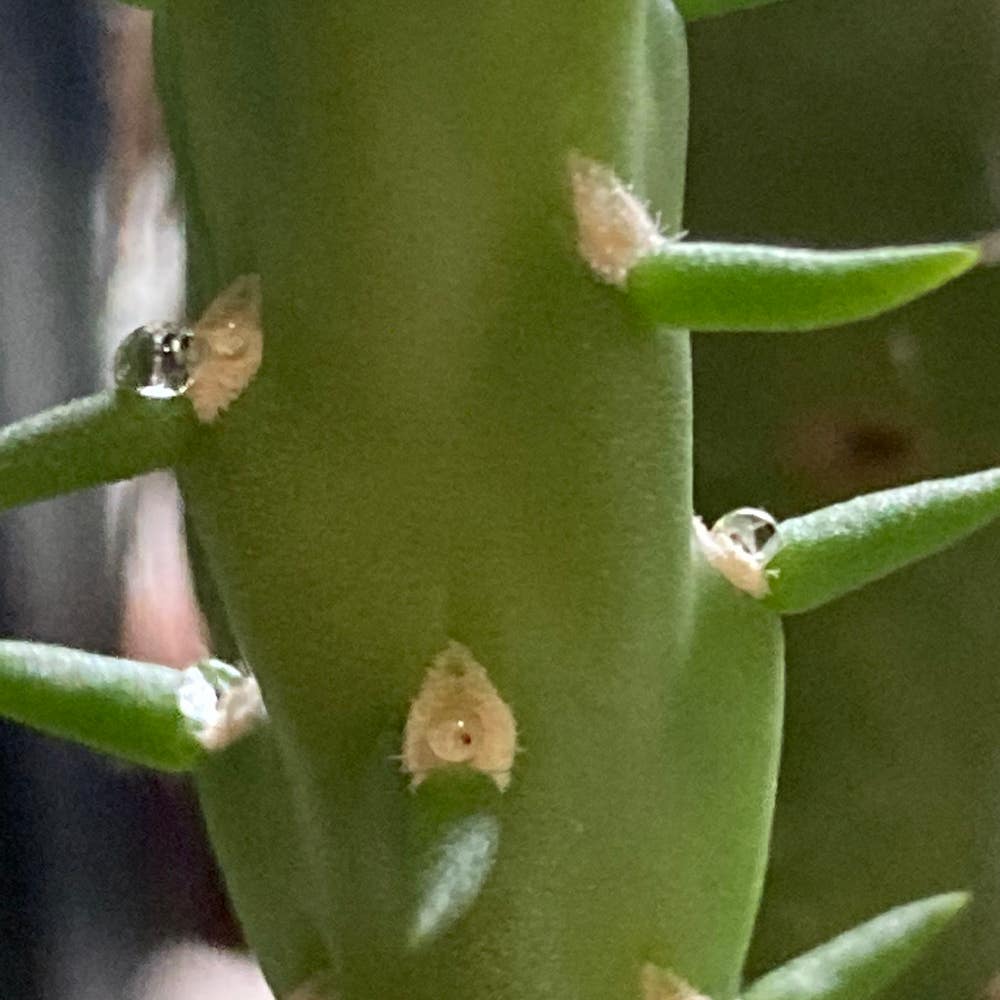
🌵 Why Are My Teddy Bear Cholla Leaves Droopy?
Cylindropuntia bigelovii
By the Greg Editorial Team
Mar 31, 2024•3 min read
This article was created with the help of AI so we can cover more plants for you. May contain errors. See one? Report it here.
Prevent Teddy Bear Cholla despair with key insights to tackle droopy leaves 🌵 and ensure plant vigor.
- Droopy leaves signal distress; intervention may be necessary.
- Balance water and light for a perky Teddy Bear Cholla.
- Mimic desert conditions with a consistent environment and watering rhythm.
Spotting the Signs of Distress
🌵 Recognizing Droopy Leaves
Droopy leaves on a Teddy Bear Cholla are like a plant's white flag. Look for stems that sag or bend, a clear departure from their usual robust stance. A gentle poke should reveal whether they're firm or have given up the ghost.
🚨 Other Symptoms to Watch For
Beyond the droop, keep an eye out for discoloration or spots—these are your Cholla's distress flares. Yellowing tips or browning branches aren't just aesthetic issues; they're urgent signs that your spiky buddy needs intervention.
Rooting Out the Causes
💧 Thirsty or Drowning? Understanding Water Needs
Underwatering your Teddy Bear Cholla can lead to droopy leaves, signaling a desperate need for a drink. Check the soil's top inch; if it feels like a dry desert, it's time to water. Conversely, if the pot feels unusually heavy and the soil is soggy, you're likely dealing with overwatering. Yellowing leaves and a mushy base are telltale signs of too much love in the form of H2O.
🔥 Feeling the Heat: Temperature Stress
Teddy Bear Cholla thrives in consistent warmth, but not in extremes. Temperature stress from too hot or too cold environments can make your plant's leaves lose their rigidity. Keep your cactus away from drafts and direct heat sources to avoid turning it into a plant popsicle or a cactus crisp.
☀️ Light Levels: Finding the Sweet Spot
Lighting is crucial. Too little light, and your Teddy Bear Cholla will droop in search of sunbeams. Too much, and it might wilt under the harsh glare. Aim for bright, indirect light to keep your plant's leaves perky and photosynthesizing happily.
Bringing Leaves Back to Life
💧 Fine-Tuning Your Watering Technique
Watering your Teddy Bear Cholla is more art than science. Begin with the touch test: if the soil's top inch feels like a desert, it's time to quench its thirst. Water deeply, ensuring moisture reaches the roots, then let the soil dry completely. This mimics the natural desert rainfall pattern your Cholla craves.
🌞 Creating a Comfort Zone
Your Cholla's comfort is your mission. Bright, indirect light is its best friend, simulating the dappled desert sun. Temperature-wise, think warm days and cool nights—your Cholla doesn't appreciate surprises. Keep the environment consistent, and you'll have a perky plant in no time.
Keeping Your Cholla Perky
💧 Establishing a Watering Rhythm
Crafting a watering schedule for your Teddy Bear Cholla is like setting a metronome for a pianist—it ensures consistency. Water deeply when the soil feels dry an inch below the surface, then let it dry out completely before the next watering. This mimics the natural desert rains followed by dry spells, which your Cholla is accustomed to.
🌵 Tailoring the Environment
Stable temperatures and bright, indirect light are the cornerstones of a happy Cholla habitat. Aim to provide a warm day and cooler night, replicating the desert's diurnal cycle. Monitor humidity closely; if your air is drier than a comedian's humor, consider a pebble tray or occasional misting. But don't overdo it—your Cholla isn't looking for a tropical vacation.
⚠️ Safety First
This content is for general information and may contain errors, omissions, or outdated details. It is not medical, veterinary advice, or an endorsement of therapeutic claims.
Always consult a qualified healthcare professional before using any plant as food, medicine, or supplement.
Never eat any plant (or feed one to pets) without confirming its identity with at least two trusted sources.
If you suspect poisoning, call Poison Control (800) 222-1222, the Pet Poison Helpline (800) 213-6680, or your local emergency service immediately.
Spotted an error? Please report it here.
Ensure your Teddy Bear Cholla stands proud and perky 🌵 with Greg's tailored watering reminders that mimic the desert's natural rhythms.