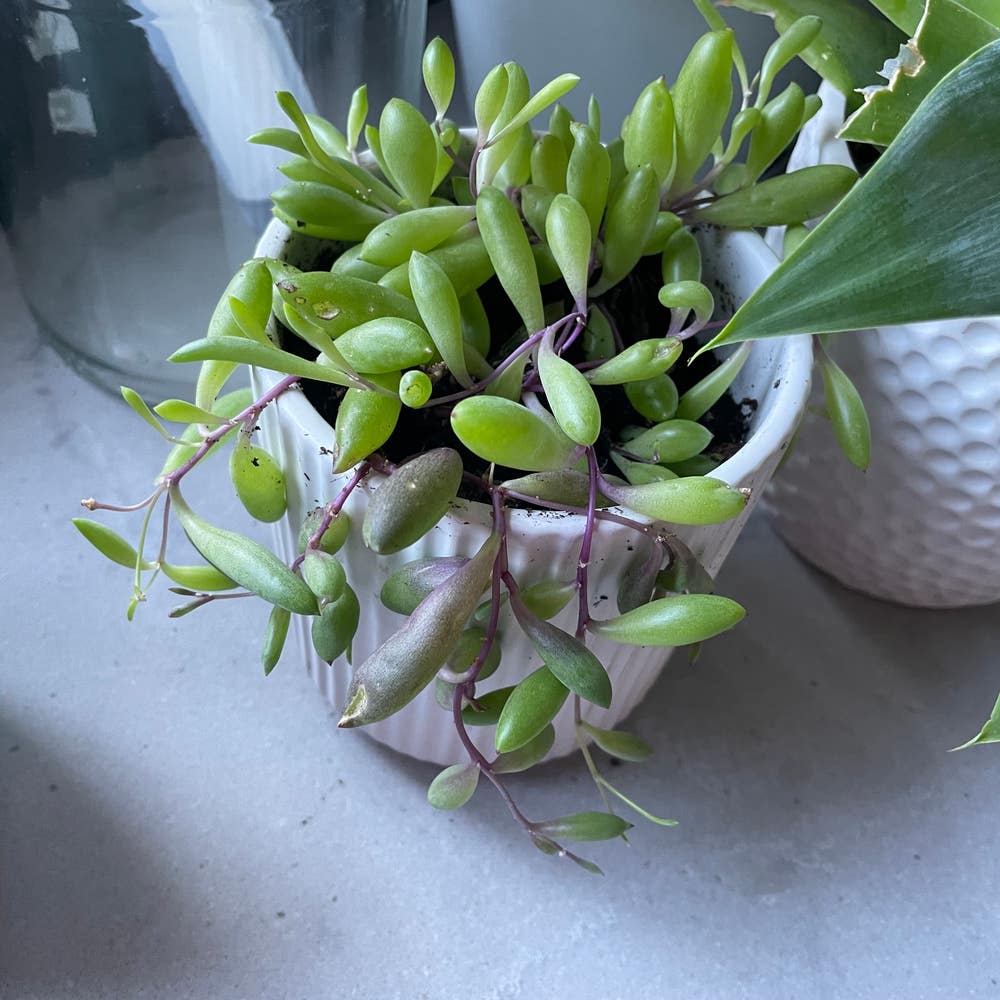
🧅 Why Are the Leaves on My String of Pickles Turning Yellow?
Crassothonna capensis
By the Greg Editorial Team
Jun 18, 2024•4 min read
This article was created with the help of AI so we can cover more plants for you. May contain errors. See one? Report it here.
Unravel the mystery behind your String of Pickles' yellow leaves and turn things green again! 🌿🔍
- Over/underwatering? Adjust watering when top inch of soil is dry.
- Nutrient deficiencies cause yellowing; use balanced N-P-K fertilizer.
- Sunlight balance is key; too much or too little can cause yellow leaves.
Spotting the Signs: Yellow Leaves on Your String of Pickles
💧 Identifying Overwatering and Its Fixes
Yellowing leaves and wilting are your String of Pickles' way of saying, "Ease up on the H2O, buddy." If you're greeted with a mushy stem or leaves that look like they've been through a sauna, it's time to reassess your watering game. Spotted brown or yellow around the edges? That's your plant waving a distress flag. And if you spot fungus partying on the soil, you've waited too long to intervene.
To fix your overzealous watering, let the soil dry out before giving your plant another drink. Think of it as a hangover cure for your green friend – hydration in moderation.
🏜️ Underwatering: Recognizing and Rectifying
Conversely, if your String of Pickles has leaves that are more crispy than a fresh bag of chips, you're in underwatering territory. The soil will feel like a desert – bone dry and uninviting.
The sweet spot? Water when the top inch of soil feels dry. It's like finding the perfect volume on your stereo – not too loud, not too soft, just right to keep the party going.
🚰 Drainage Dilemmas: Ensuring Proper Water Flow
Good drainage isn't just a nice-to-have; it's a must-have. Without it, you're setting up your String of Pickles for a Titanic situation – and we all know how that ended.
To improve soil drainage, mix in some perlite or sand. And always, always use a pot with drainage holes. It's like giving your plant its own personal escape route for excess water. No more waterlogged roots, no more yellow leaves.

Feeding Your String of Pickles: Nutrient Needs and Deficiencies
💡 Spotting Nutrient Deficiencies
Yellow leaves on your String of Pickles can be a red flag for nutrient deficiencies. Nitrogen, phosphorus, and potassium are the big three, but don't forget about calcium, magnesium, and sulfur. Micronutrients like iron and manganese also play crucial roles, albeit in smaller doses. Look for small, yellowing leaves or growth that seems stunted—these are your plant's way of saying it's missing something vital.
🍽️ Fertilizing Fundamentals
Choosing the right fertilizer is like picking a meal for a picky eater—it's got to be just right. Go for a balanced N-P-K mix, and don't overdo it. Over-fertilization can cause as much damage as neglect. Stick to the recommended schedule, and always apply to moist soil to prevent root burn. Think of fertilizing like seasoning a dish—a little can go a long way. If you're unsure, a soil test can be your best friend, helping you tailor your plant's diet to its exact needs.

Let There Be Light: Finding the Perfect Balance
🌞 Too Much Sun
Your String of Pickles could be getting too toasty if its leaves are yellowing. It's a sign of sunburn, akin to a plant's cry for shade.
Move it to a spot with bright, indirect light. Think of it as a cozy retreat from the harsh sun. A sheer curtain can work wonders, acting like sunscreen for your plant.
🌥️ Not Enough Light
Conversely, if the leaves are dull and the plant's growth is stunted, it's craving more light.
To remedy this, relocate your String of Pickles closer to a window, but not one where the sun's full wrath is felt. East or north-facing windows are usually ideal. If natural light is scarce, consider a grow light to brighten things up without overdoing it.

Turning Things Around: Remedial and Preventative Actions
🔄 Adjusting Your Care Routine
Creating a balanced care schedule is crucial for keeping your String of Pickles' leaves a vibrant green. Regularly assess the plant's watering needs, ensuring the soil is neither a swamp nor a desert. Fertilize with a light touch; more is not always better.
👀 Keeping an Eye Out: Regular Monitoring
Vigilance is your plant's best friend. Make it a habit to inspect your String of Pickles for any changes in leaf color or texture. Adjust care routines promptly to address any signs of distress.
🛡️ Proactive Measures
At the first hint of yellowing, spring into action. Check for overwatering, inadequate light, or nutrient deficiencies. Remember, the plant world's equivalent of a stitch in time saves nine.
⚠️ Safety First
This content is for general information and may contain errors, omissions, or outdated details. It is not medical, veterinary advice, or an endorsement of therapeutic claims.
Always consult a qualified healthcare professional before using any plant as food, medicine, or supplement.
Never eat any plant (or feed one to pets) without confirming its identity with at least two trusted sources.
If you suspect poisoning, call Poison Control (800) 222-1222, the Pet Poison Helpline (800) 213-6680, or your local emergency service immediately.
Spotted an error? Please report it here.
Keep your String of Pickles thriving, not just surviving 🌱, with Greg's tailored reminders that prevent yellow leaves by ensuring just-right watering and care.