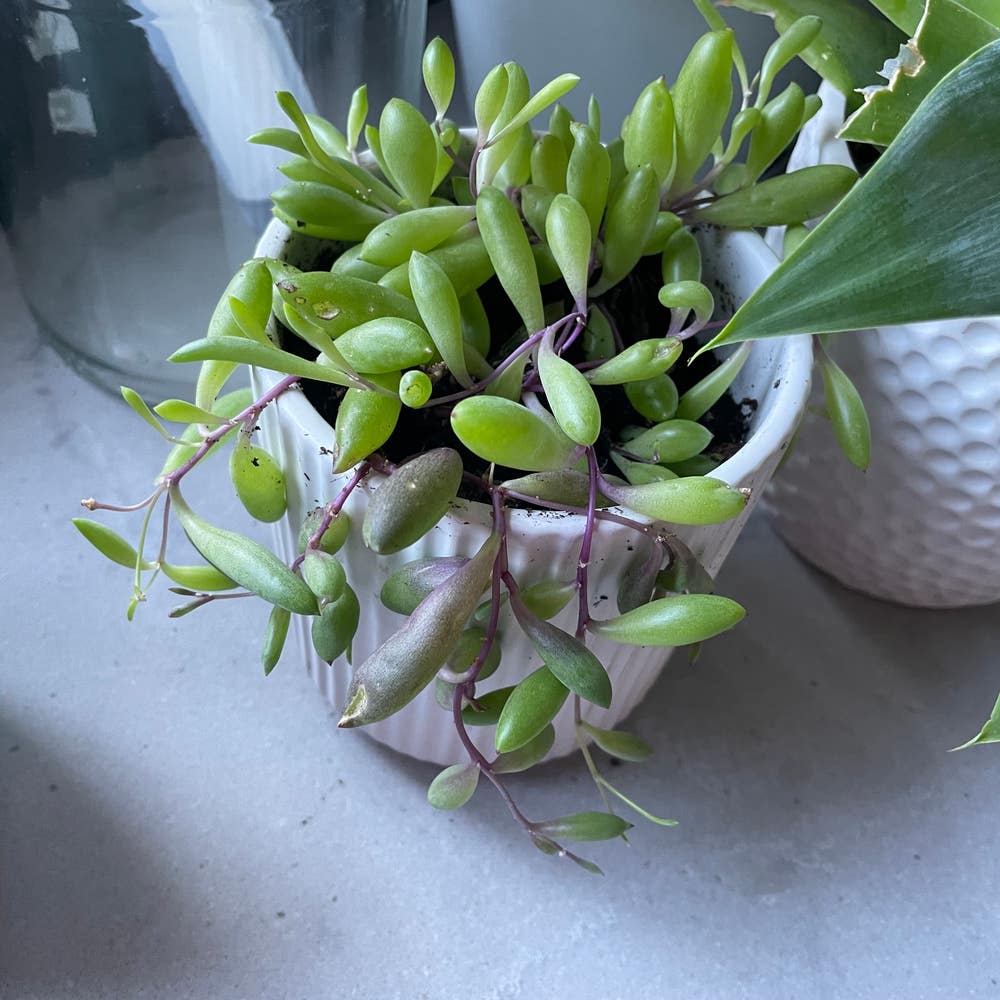
🥒 How and When Should I Cut Back My String of Pickles?
Crassothonna capensis
By the Greg Editorial Team
Jun 18, 2024•5 min read
This article was created with the help of AI so we can cover more plants for you. May contain errors. See one? Report it here.
Prune your String of Pickles 🌿 for health and fullness—spring into action now!
- Spring or early summer pruning promotes healing and new growth.
- Use sharp, sterilized shears for clean cuts and disease prevention.
- Post-prune care: Adjust watering and monitor for regrowth.
Best Times to Give Your String of Pickles a Haircut
🌱 Seasonal Timing for Pruning
Spring into action when the growing season kicks off. Pruning your String of Pickles (not to be confused with actual pickles) is best done in the spring or early summer. This timing allows the plant to heal and push out new growth in its prime growing conditions. Think of it as setting the stage for a summer blockbuster starring your succulent.
🌵 Plant Lifecycle Considerations
Understanding your plant's life cycle is like decoding its personal diary. The String of Pickles, a quirky succulent, has a growth spurt in the warmer months. Prune when you notice active growth, or when it starts to look more like a string of mess than pickles. This could be when the stems get leggy, or just when you think it could use a bit of a shape-up. Remember, timing is everything – like catching the bus just before it leaves or grabbing a coffee right before the morning rush.

Tools of the Trade: What You'll Need to Prune
🔪 Choosing Your Pruning Tools
Pruning your String of Pickles isn't rocket science, but it does require the right tools. Sharp pruning shears are your best friend here, capable of making clean cuts without mangling those delicate tendrils. Keep a sharp utility knife or scissors on hand for the finer work. And let's not forget about hygiene – sterilize your tools with alcohol before and after use to keep your green buddies safe from nasty infections.
🛠 Preparing Your Workspace
Before you dive into the foliage, set up a workspace that won't look like a crime scene post-pruning. Lay down some newspaper or a tarp to catch the fallout. Keep Ziploc bags or containers ready for any cuttings you want to propagate. And seriously, wear gloves unless you're fond of sap-stained hands. A clean, organized space will make the whole process a breeze and save you from a tedious cleanup.

The Pruning Process: A Step-by-Step Guide
✂️ Identifying What to Cut
Pruning your String of Pickles isn't rocket science, but it does require a keen eye. Leggy stems? They've got to go. Overgrowth that's turning your plant into a jungle? Time to tame it. And those damaged leaves? They're not doing your plant any favors. Spot these offenders for a well-deserved trim.
🌿 Making the Cut
Now, let's get down to business. Grab your sterilized shears and aim just above a node at a 45-degree angle. This isn't a hack job; precision is key. Cutting back vigorous vines might seem harsh, but it's like a pep talk for your plant, spurring it to grow back fuller and healthier. Remember, you're the stylist here, and your String of Pickles is counting on you for that fresh, ready-to-flourish look.

Pruning with Purpose: Health and Beauty
🌱 Encouraging Fuller Growth
Pruning isn't just a haircut for your String of Pickles; it's a strategic intervention. By snipping away at overgrown tendrils, you're not being cruel, you're being kind. Fuller growth is the prize, and pruning is your ticket there. Aim for the leggy stems that have outgrown their welcome, and cut back to just above a leaf node. This is where new shoots will spring to life, giving your plant a lush, enviable density.
🩺 Preventing Disease and Promoting Vigor
Let's get real: plants get sick, and clutter is a breeding ground for trouble. Pruning is like playing doctor and housekeeper all at once. By removing dead or diseased foliage, you're preventing disease and promoting vigor. It's a proactive move to keep your green buddy in tip-top shape. Plus, with more air circulation and light reaching the inner recesses of your plant, you're setting the stage for a robust, vibrant String of Pickles. Remember, a clean cut is a healthy cut, so keep those shears sharp and disinfect them between snips to avoid spreading any plant pathogens.
After the Snip: Post-Pruning Care
💧 Watering and Feeding
After pruning your String of Pickles, adjust your watering habits. The plant will need less water as it has fewer leaves to support. Wait until the top inch of soil is dry before watering again. Overzealous watering can lead to root rot, especially when the plant is healing.
Fertilizing should be approached with caution. Use a diluted solution of balanced liquid fertilizer to gently encourage recovery without overwhelming your plant. This is not the time for a full-strength feed; think of it as a light snack rather than a feast.
Monitoring for Regrowth
Post-pruning, keep a sharp eye out for new growth. This is a sign that your plant is bouncing back. Look for fresh, green tendrils emerging from the cut stems. If you see any, give yourself a pat on the back; you've done well.
Conversely, be on the lookout for signs of distress, such as yellowing leaves or stunted growth. These could indicate that your care routine needs tweaking. Remember, your String of Pickles doesn't need a helicopter parent—just a vigilant one.
⚠️ Safety First
This content is for general information and may contain errors, omissions, or outdated details. It is not medical, veterinary advice, or an endorsement of therapeutic claims.
Always consult a qualified healthcare professional before using any plant as food, medicine, or supplement.
Never eat any plant (or feed one to pets) without confirming its identity with at least two trusted sources.
If you suspect poisoning, call Poison Control (800) 222-1222, the Pet Poison Helpline (800) 213-6680, or your local emergency service immediately.
Spotted an error? Please report it here.
Trim your String of Pickles to lush perfection 🥒 with Greg's timely pruning reminders, ensuring a healthier and fuller plant from spring's start to summer's peak.