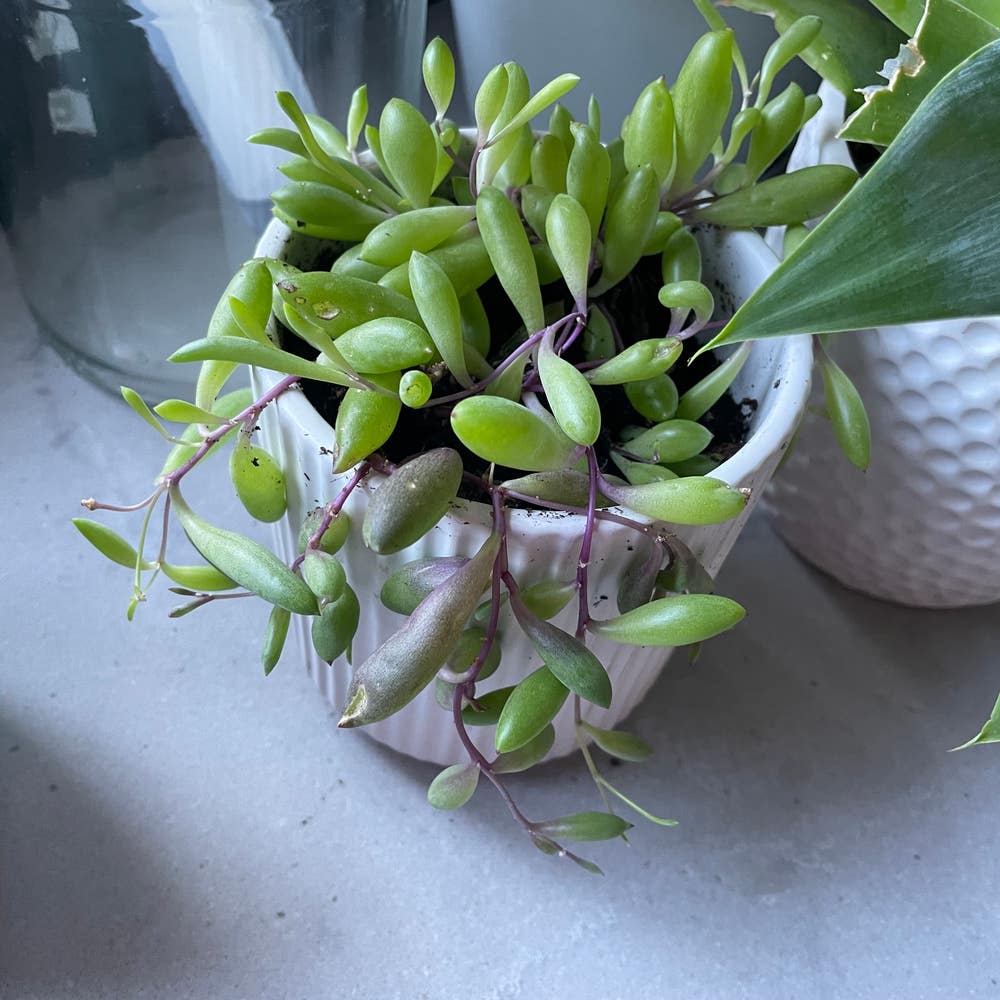
Why Are There Brown Spots on My String of Pickles?
Crassothonna capensis
By the Greg Editorial Team
Jun 18, 2024•4 min read
This article was created with the help of AI so we can cover more plants for you. May contain errors. See one? Report it here.
Banish brown spots 🍂 and keep your String of Pickles thriving with our expert care guide!
- Overwatering, sunburn, and fungi cause brown spots on String of Pickles.
- 🌱 Adjust watering and light to prevent and heal brown spots.
- Regular inspections and hygiene are key for early detection and prevention.
Spotting the Trouble: Identifying Brown Spots
🍪 What do brown spots look like on String of Pickles?
Brown spots on your String of Pickles can be as subtle as a freckle or as blatant as a blotch. They might appear dry and crispy or have a squishy, waterlogged feel. Each spot tells a story, and it's your job to listen.
🤔 Common mix-ups: Brown Spots vs. other leaf blemishes
Don't get it twisted; not all leaf blemishes are brown spots. Some might be natural variegations or harmless scars. But true brown spots? They're the SOS signals of your plant. Texture is a telltale sign—crackly spots often mean too much sun, while mushy ones scream overwatering. And if you see a spot with a halo, it's time to think about fungal uninvited guests.
Remember, brown spots are more than just a cosmetic issue—they're a cry for help from your leafy friend.

The Usual Suspects: Causes of Brown Spots
💦 Overwatering Woes
Overwatering is the equivalent of giving your plants an unwanted bath. It's the top reason your String of Pickles might sport those unattractive brown spots. The telltale signs? Leaves that feel as if they've been soaked in a puddle and soil that's more swamp than desert.
- Spotting signs of overwatering: Leaves with a mushy texture and a darker hue are waving red flags at you. If the pot feels like you're lifting a kettlebell, it's time to ease up on the H2O.
☀️ Too Much Sun Can Burn
Just like us, your String of Pickles can get a nasty sunburn. Brown spots from too much light look like they've been kissed by a flame—dry, crispy, and sometimes with a faded color around the edges.
- The delicate balance of light for these succulent vines is crucial. They love the sun but think of it as a strong spice—just the right amount does wonders, but too much ruins the dish.
🍄 Fungal Foes
Fungi are the uninvited party crashers, leaving a trail of brown spots in their wake. These spots can vary in appearance, sometimes looking like a polka-dot pattern gone rogue on your plant's foliage.
- The conditions that invite fungal guests: High humidity and poor air circulation are their favorite playgrounds. If your plant's leaves feel like they're hosting a miniature art exhibit of spots, it's time to reassess your plant's environment.

Nipping Brown Spots in the Bud: Remedies and Care
💧 Fine-Tuning Watering Habits
Watering your String of Pickles is less about sticking to a strict schedule and more about adapting to its needs. Check the topsoil; if it's dry, it's time to water. Use tools like moisture meters or your trusty finger to avoid guesswork. Remember, these succulents prefer a drought over a flood.
🌳 Creating a Shady Retreat
Your plant's not sunbathing; it's trying to survive. Find that light sweet spot—bright, indirect sunlight is the goal. If your String of Pickles has already taken a solar hit, move it to a shadier location and watch for recovery signs.
🍄 Fungus Among Us: Treatment and Prevention
Fungus is no fun for anyone, especially your String of Pickles. Natural remedies like neem oil can be effective, but sometimes you need the big guns—fungicides. Keep air circulating; it's like giving your plant its personal space. And spacing? Don't crowd your plants; they're not fans of mosh pits.

Keeping It Spotless: Long-Term Prevention Strategies
🌱 The Right Home: Soil and Pot Selection
Soil mix is your String of Pickles' secret weapon against disease. Opt for a well-draining concoction to keep those roots from drowning in excess moisture. Think of it as the plant equivalent of breathable workout gear—essential for preventing fungal parties.
When it comes to pots, size and drainage are the dynamic duo. Choose a pot that's just right—not too spacious, not too snug. And yes, drainage holes are non-negotiable. They're like escape routes for unwanted water, keeping root rot at bay.
🔍 Routine Checks and Balances
Incorporate a regular inspection routine to catch any signs of trouble early. It's like a monthly check-up for your plant—non-invasive but thorough. Look for unwelcome guests or suspicious spots that could spell trouble.
Plant hygiene isn't just a fancy term; it's a cornerstone of prevention. Clean your tools with a zeal that would make a surgeon proud. Dirty tools are like double agents for disease, spreading chaos with every cut. Keep everything as tidy as your living room during a surprise visit from judgmental relatives.
⚠️ Safety First
This content is for general information and may contain errors, omissions, or outdated details. It is not medical, veterinary advice, or an endorsement of therapeutic claims.
Always consult a qualified healthcare professional before using any plant as food, medicine, or supplement.
Never eat any plant (or feed one to pets) without confirming its identity with at least two trusted sources.
If you suspect poisoning, call Poison Control (800) 222-1222, the Pet Poison Helpline (800) 213-6680, or your local emergency service immediately.
Spotted an error? Please report it here.
Eradicate those mysterious brown spots 🍂 on your String of Pickles with Greg's tailored care reminders for a perfectly pampered plant.