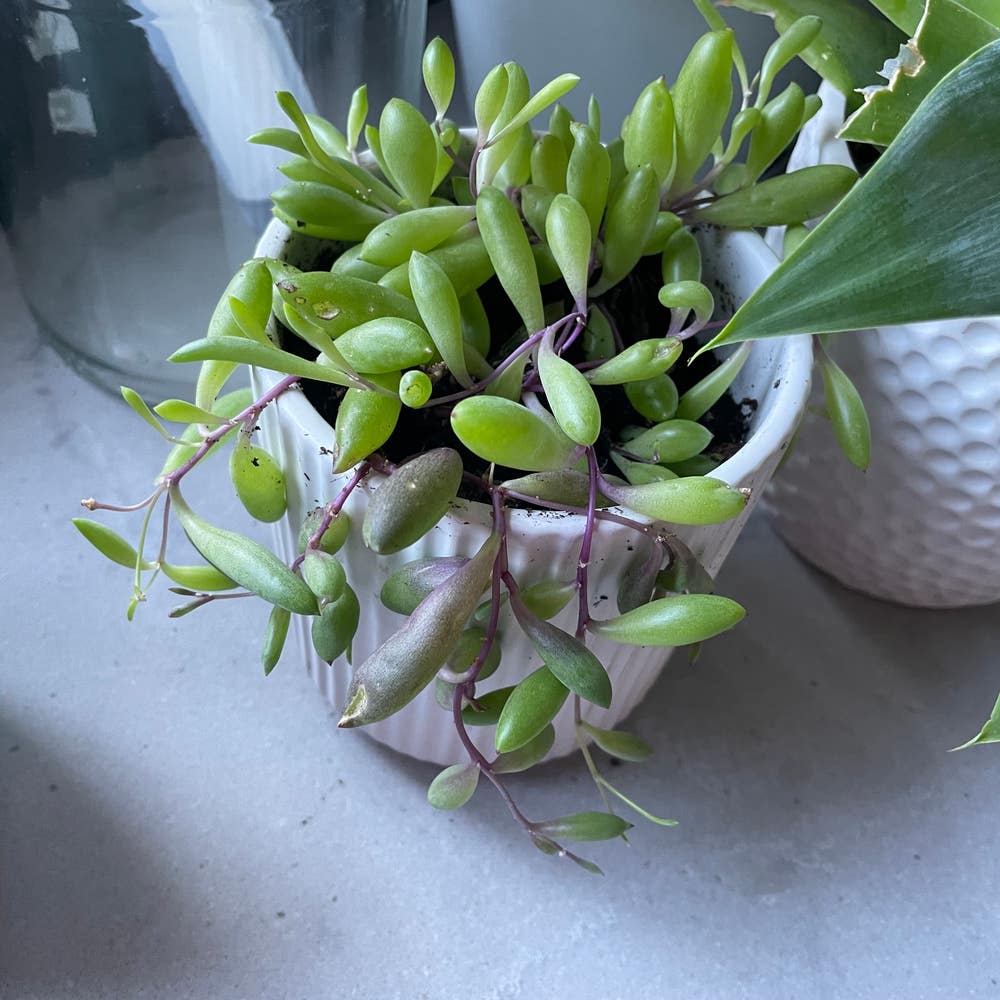
What Temperature Should My String of Pickles Be Kept At?
Crassothonna capensis
By the Greg Editorial Team
Jun 18, 2024•5 min read
This article was created with the help of AI so we can cover more plants for you. May contain errors. See one? Report it here.
Keep your String of Pickles perfectly cozy 🌡️ between 65°F and 80°F for a happy, healthy plant life! 🌿
- 65°F to 80°F is ideal for String of Pickles' health and growth.
- 🌡️ Watch for leaf distress as a sign of temperature stress.
- Seasonal care adjustments are crucial for maintaining proper temperature.
Dialing in the Perfect Temperature
🌡️ The Sweet Spot: 65°F to 80°F
Your String of Pickles craves consistency. The sweet spot for this succulent is between 65°F and 80°F. It's not just about comfort; it's about survival. Too hot, and your plant's as stressed as a commuter in a traffic jam. Too cold, and it's shivering more than a polar bear without a coat.
What Happens Outside the Comfort Zone
When the mercury rises above 80°F, your String of Pickles might start to sweat. Okay, not literally, but it will show signs of stress like a marathon runner at the finish line. Below 65°F, think of it as being put on ice—growth slows down, and vitality wanes.
🌬️ Winter Woes and Summer Scorchers
Seasons change, and so should your plant care strategy. Winter's chill and summer's blaze require you to be as attentive as a cat on a mouse hunt.
Adjusting Care During Seasonal Temperature Changes
In winter, shield your plant from drafts as if you're protecting it from an arctic blast. Come summer, move it away from that scorching window ledge like you're saving it from a beach sunburn.
Quick Tips for Temperature Regulation Indoors
To keep temperatures as stable as a librarian's daily routine, use climate control. A reliable thermostat can be your best ally, like a sidekick in a superhero movie. And remember, no sudden temperature moves—your plant dislikes surprises more than a cat dislikes baths.

Spotting the Signs of a Temperature Tantrum
🚨 Visual SOS: Leaves Tell the Tale
When your String of Pickles starts looking more like a string of discolored beads, it's time to pay attention. Leaf discoloration is the plant's way of waving a red flag. Yellow leaves might be crying out from the heat, while brown spots signal a cold distress call.
Wilting is the plant's dramatic way of saying, "I'm overwhelmed!"—a clear response to temperature extremes. And if you're witnessing a leaf drop-off, it's not just shedding weight; it's sending an SOS.
The Plant's Perspective
Imagine your String of Pickles as a tiny green actor on a stage—the spotlight of too much heat or the chill of an unexpected draft can force it into a stressful performance. It reacts to temperature stress with a physical change, a visual cue for you to take action.
Leaves that start to look like they've been through a rough rehearsal could be hinting at a temperature issue in disguise. No dramatic shaking or shivering required for these subtle signs of a plant quietly suffering from the cold.

Keeping the Chill and Heat at Bay
🌡️ Common Culprits of Temperature Trouble
Drafts and direct sunlight are the archenemies of your String of Pickles' temperature utopia. They're sneaky, unpredictable, and can throw your plant's comfort out the window—literally.
Avoid placing your succulent near open windows, air conditioners, or heaters. These spots can ambush your plant with sudden temperature changes, faster than you can say "photosynthesis."
🛡️ Proactive Plant Parenting
Consistency is your mantra when it comes to temperature. Your String of Pickles doesn't want to ride a thermal rollercoaster.
Monitor the room with a thermostat to keep the climate steady. If your abode is more drafty than a castle, consider insulation tricks like draft stoppers or heavier curtains.
Embrace technology. A simple thermometer can be your guide to ensuring your green buddy isn't baking or freezing. If the mercury rises, a fan or a shade cloth can be a lifesaver.
When the cold bites, don't just crank up the heat. Move your plant to a cozier spot or use a plant cloche for that extra layer of warmth. Remember, your String of Pickles prefers a stable environment over a tropical getaway or an arctic retreat.

Temperature's Sidekick: A Quick Humidity Highlight
Humidity is the invisible partner to temperature in the dance of indoor plant care. For the String of Pickles, striking a balance between the two is crucial.
💧 Humidity Sweet Spot
The String of Pickles thrives in an environment with low humidity. It's a succulent that doesn't demand a rainforest atmosphere; in fact, too much moisture can invite fungal party crashers. Aim for humidity levels that mimic its native arid conditions.
🛠 Humidity Control Tools
Hygrometers are your secret weapon. These gadgets are like personal trainers for plant parents, helping you monitor the air's moisture content. No need to second-guess; the hygrometer lays it out straight.
🌬 Humidity Hacks
If your home feels like a desert, a cool-mist humidifier can add a touch of oasis. Conversely, a dehumidifier can rescue your plant from a muggy swamp situation. Remember, moderation is key—too much of either extreme and your String of Pickles might throw a fit.
🎯 Pro Tips
- Grouping plants can create a microclimate with more stable humidity.
- Avoid placing your String of Pickles near drafts or direct heat sources, as these can disrupt the humidity balance.
- Consider the seasonal shifts; indoor air tends to be drier in winter and more humid in summer. Adjust your humidity strategies accordingly.
🌡 The Humidity-Temperature Tango
Warm air can hold more moisture, so a room at 80°F might feel more humid than one at 60°F. Keep this in mind as you juggle the thermostat and humidity levels to maintain that perfect balance for your String of Pickles.
⚠️ Safety First
This content is for general information and may contain errors, omissions, or outdated details. It is not medical, veterinary advice, or an endorsement of therapeutic claims.
Always consult a qualified healthcare professional before using any plant as food, medicine, or supplement.
Never eat any plant (or feed one to pets) without confirming its identity with at least two trusted sources.
If you suspect poisoning, call Poison Control (800) 222-1222, the Pet Poison Helpline (800) 213-6680, or your local emergency service immediately.
Spotted an error? Please report it here.
Ensure your String of Pickles enjoys consistent comfort 🌡 with Greg, effortlessly adapting to the seasons and your home's climate for a happier plant.