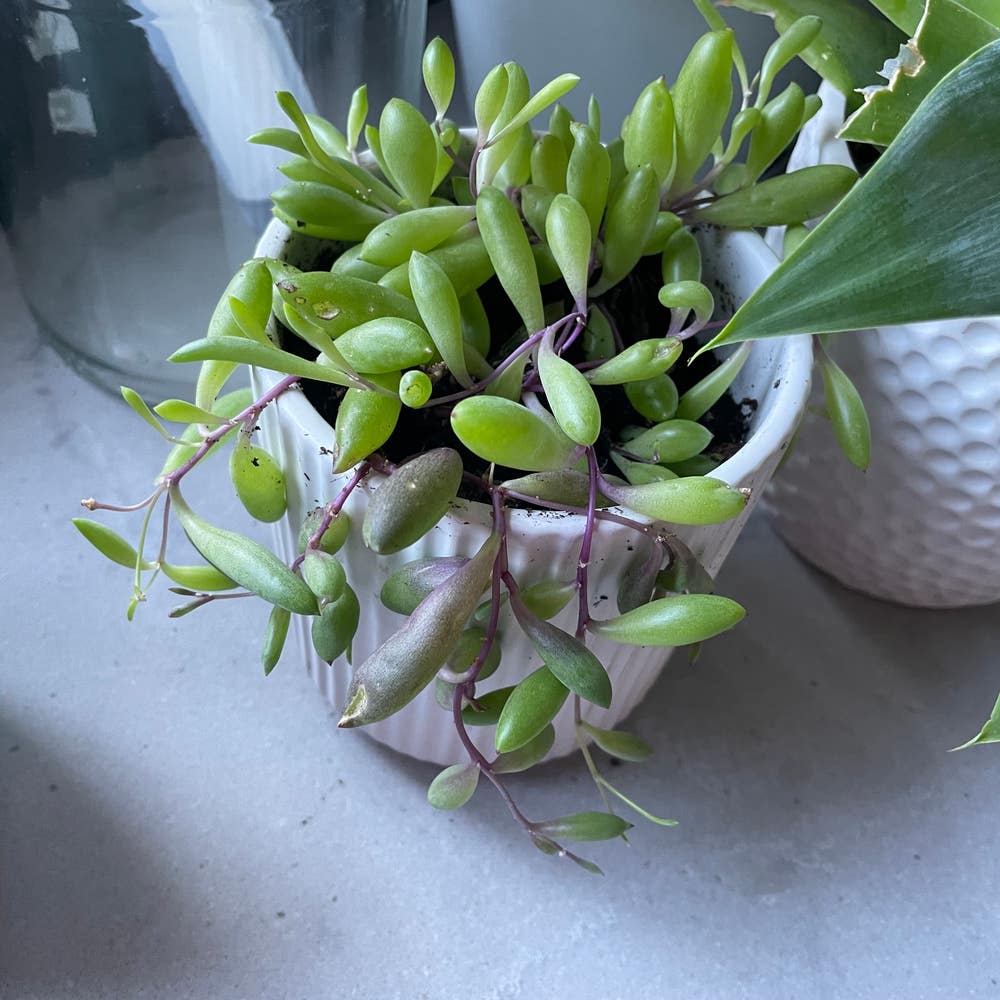
Why Are My String of Pickles Leaves Curling?
Crassothonna capensis
By the Greg Editorial Team
Jun 18, 2024•5 min read
This article was created with the help of AI so we can cover more plants for you. May contain errors. See one? Report it here.
Unravel the mystery behind your String of Pickles' leaf curl and revive its spiraled splendor! 🌀🌿
- 🌱 Curling leaves signal distress; seek balance in watering and light.
- 💧 Consistent watering and soil checks prevent over/underwatering issues.
- ☀️🌡️ Maintain steady light and temperature to keep leaves uncurled.
Spotting the Signs of Distress
🌿 Identifying Curling Leaves: What to Look For
Curling leaves on your String of Pickles are not a quirk; they're a red flag. Crispy edges and a scroll-like appearance are your plant's version of Morse code for "SOS." If the leaves are curling up or getting crunchy, think of it as a plant panic button—something's amiss.
🚨 Beyond the Curl: Other Symptoms of Stress in String of Pickles
But wait, there's more. Yellowing leaves scream "nutrient deficiency" or "I'm stressed!" like a college student during finals week. Soft, squishy leaves? Your plant might be drowning in its own drink. Firm is the goal—a happy medium between a rock and a sponge. Don't overlook brown spots or a general look of despair; these are your cues to play plant detective. Weak, buckling stems could be whispering tales of root rot, while pests turn your plant into a buffet. Keep an eye out for these signs; they're as subtle as a fire alarm.

Thirsty or Drowning? Balancing Water Needs
🏜️ The Underwatering Conundrum: Signs and Solutions
Underwatering your String of Pickles is akin to sending it on a desert trek with no water bottle. Curling leaves may signal your plant's silent plea for hydration. To remedy this, introduce a consistent watering schedule—think of it as a regular coffee break for your plant's roots. Check the soil's moisture by feeling an inch below the surface; if it's dry, it's time to water. Aim for a soil texture that's moist, like a wrung-out sponge, to avoid the perils of overhydration.
🚰 Overwatering Woes: Detecting and Fixing the Overindulgence
Conversely, overwatering is like throwing your plant an unwanted pool party. Yellowing leaves and a musty odor are distress flares indicating too much water love. If you've been overzealous with the watering can, take a step back. Let the soil dry out a bit before your next watering session. Consider a well-draining soil mix to prevent future waterlogging. Remember, your String of Pickles isn't a fan of soggy feet. Keep an eye on the drainage and adjust your watering to match the plant's needs, not your schedule.

Let There Be (The Right Amount of) Light
🌞 Too Much Sun: Recognizing and Mitigating Light Stress
Scorched leaves are the telltale sign your String of Pickles has had too much sun. The leaves might look bleached or have a crispy texture. To mitigate this, relocate your plant to an area with bright, indirect light. Consider using a sheer curtain to diffuse direct sunlight, preventing further damage.
🌑 In the Shadows: Dealing with Low Light and Encouraging Unfurling
Conversely, leaves stretching out or appearing darker than usual could indicate a light deficit. If your String of Pickles is reaching for the light like a zombie for brains, it's time to move it closer to a light source. Rotate the plant regularly to ensure all sides receive equal lighting, preventing lopsided growth. Remember, gradual changes are better to avoid shocking your plant into a state of despair.

Keeping the Temperature Just Right
🌡️ Heat Stress: How to Cool Down Your String of Pickles
Heat stress can turn your String of Pickles into a wilted mess. If your plant's leaves are curling and dry, it's time to take action. Move the plant away from direct sunlight, especially during the scorching afternoon hours. A spot with bright, indirect light is ideal. Consider using a shade cloth to block intense rays, but remember, your String of Pickles still craves light—just not the heat that often comes with it.
🥶 Chilly Problems: Warming Up Your Plant Without the Toast
Conversely, if your home turns into a refrigerator, your String of Pickles might start to look more like a String of Popsicles. Avoid drafts and keep the plant in a room that maintains a steady temperature—ideally between 65-80°F. If you're using heaters, keep them at a distance. Direct heat can be just as damaging as the cold. And please, no snuggling your plant with a blanket; it's cute but not effective.
Maintaining the Ideal Temperature Range
Consistency is your plant's best friend. Wild temperature swings are more confusing than a plot twist in a telenovela. Use a thermostat to monitor the room's temperature and make adjustments as needed. If you're dealing with a heatwave or a cold snap, be patient. Most plants, including your String of Pickles, are resilient and will bounce back once conditions stabilize. Just keep an eye on them and adjust their care accordingly.
The Long-Term Care Plan
💧 Watering Wisdom: Establishing a Foolproof Routine
Consistency is your String of Pickles' best friend when it comes to watering. Establish a routine that keeps the soil perfectly parched—moist but never soggy. Before watering, check if the top inch of soil feels like a dry martini—crisp and dry. If so, it's time to water. Use room temperature water to avoid shocking your plant's delicate roots. Overwatering is the fast track to a mushy mess, so resist the urge to douse on a whim.
🌞 Light and Temperature Harmony: Tips for Consistent Care
Your String of Pickles craves stability like a cat basking in a sunbeam. Avoid drastic changes in light and temperature to prevent leaf curling drama. If your memory is as short as a goldfish's, set reminders to keep your plant care on track. As the seasons change, adjust your care tactics—less water in the cool winter, more in the balmy summer. Keep the light consistent; too much and your plant will fry, too little and it'll sulk. Use timers if you must, to mimic the sun's schedule.
Regularly dive into the root zone to ensure the soil isn't as compacted as a packed elevator. Loosen it up with organic matter to show your plant some love. And remember, a stable environment is more comforting to your String of Pickles than a fuzzy blanket on a chilly evening.
⚠️ Safety First
This content is for general information and may contain errors, omissions, or outdated details. It is not medical, veterinary advice, or an endorsement of therapeutic claims.
Always consult a qualified healthcare professional before using any plant as food, medicine, or supplement.
Never eat any plant (or feed one to pets) without confirming its identity with at least two trusted sources.
If you suspect poisoning, call Poison Control (800) 222-1222, the Pet Poison Helpline (800) 213-6680, or your local emergency service immediately.
Spotted an error? Please report it here.
Solve your String of Pickles' leaf-curling conundrum and achieve perfect plant health 🌿 with Greg's tailored watering reminders and habitat checks.