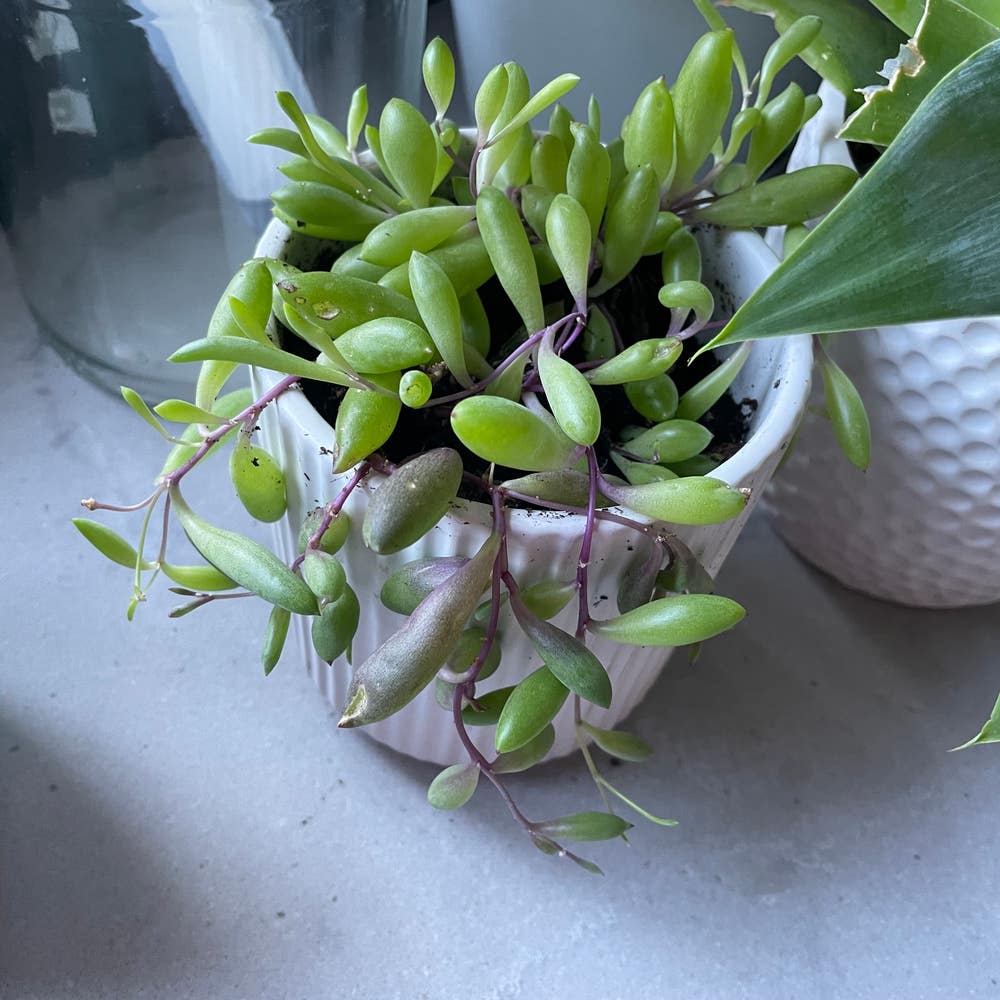
🌞 Is My String of Pickles Getting Too Much Direct Sunlight?
Crassothonna capensis
By the Greg Editorial Team
Jun 18, 2024•4 min read
This article was created with the help of AI so we can cover more plants for you. May contain errors. See one? Report it here.
Safeguard your String of Pickles 🌱 from sunburn and ensure a thriving, vibrant green haven.
- 🌞 Direct sunlight can sunburn your String of Pickles, causing damage.
- East or North-facing windows are best for gentle, indirect light.
- Use sheer curtains or artificial lights to protect and supplement sunlight.
Sunlight Basics for String of Pickles
🌞 What is Direct Sunlight?
Direct sunlight is the unfiltered, full-strength solar embrace that reaches your plant without any barriers. It's the sun in its most intense form, like a spotlight on a stage. Indirect sunlight, however, is the diffused, gentler cousin, providing a soft glow without the potential harshness.
🎯 How Much Sun Does Your String of Pickles Need?
Your String of Pickles craves a balance of light. It's a bit of a Goldilocks scenario—not too much, not too little. The sweet spot is bright, indirect sunlight. Think of a place where the light is plentiful but softened, perhaps by a sheer curtain or a strategically placed shade. Too much direct sun, and you're looking at a crispy plant; too little, and it might start to look more like a string of peas than pickles. Aim for about 6 hours of this happy medium light daily to keep your String of Pickles thriving.

Spotting Signs of Too Much Sun
🌞 Telltale Symptoms of Sun Stress
Your String of Pickles may be screaming for shade if you notice the following:
- Curled leaves attempting to shield themselves from the harsh rays.
- Burned edges or spots, a clear SOS signal.
- Bleached colors across the foliage, indicating a loss of vibrancy.
- Wilting despite adequate watering, a sign of sun-induced fatigue.
🚑 Immediate Steps to Help Your Sun-Struck Plant
When your String of Pickles has had too much sun, it's time for some triage:
- Relocate the plant to a shadier spot immediately.
- Water it thoroughly to cool down the soil and roots.
- Prune any severely damaged leaves to prevent further stress.
- Monitor the plant for recovery, adjusting care as needed.
Remember, the goal is to create a comfortable environment for your plant, not a solar death ray scenario.

Perfect Placement for Happy Pickles
🌞 Understanding Window Directions
Windows are your String of Pickles' personal sun managers. East-facing windows dish out a milder morning light, making them a prime spot for your plant to wake up without the shock of intense rays. West-facing windows, on the other hand, are the afternoon sun party—great for plants that crave more light, but potentially a scorcher for your delicate Pickles. North-facing windows are the cool kids, offering consistent, gentle light that won't overwhelm your green friend.
🌍 Hemisphere Hints
Your hemisphere plays a role in the sun care regime of your String of Pickles. In the Northern Hemisphere, a south-facing window is a sun hub, while in the Southern Hemisphere, it's the north-facing windows that take the crown. Remember, it's all about the angle of the sun's caress—too direct, and you're in sunburn territory; too shy, and your Pickles might as well be in hibernation. Adjust your plant's position with the seasons—what's a sunbath in summer could be a shadow retreat in winter. Keep your eyes peeled and shuffle your Pickles around for that just-right light.

Protecting Your String of Pickles from Sunburn
🕶️ Creating a Safe Sunlight Environment
Shielding your String of Pickles from the harshness of direct sunlight is crucial. Think of it as giving your plant a pair of sunglasses for those bright days.
- Sheer curtains: They're the sunscreen of the window world, filtering out the intensity while still letting in that glow.
- Shade cloth: Not just for greenhouses, this mesh fabric can be a game-changer for your indoor jungle, too.
- Strategic placement: Play musical chairs with your plants. Move them around to avoid the midday glare that can turn leaves into plant jerky.
- Reflective mulch: A disco ball for pests, this shiny ground cover also bounces back some of the sun's rays, keeping the soil and roots cooler.
💡 When to Consider Artificial Lighting
Sometimes, the sun plays hard to get, and you need to bring in the big guns—artificial lighting.
- LEDs and fluorescents: These are the stage crew, setting the scene without the drama of overheating. They're the understudies ready to step in when natural light isn't enough.
- Light distance: Keep it indirect. Too close and you're back to square one with sunburn. Too far and your plant might as well be in the dark.
- Timing: Like a good night's rest, plants need their downtime. Ensure lights are on a timer to mimic the natural rise and set of the sun.
Remember, your String of Pickles doesn't need a tan. It's all about that gentle glow.
⚠️ Safety First
This content is for general information and may contain errors, omissions, or outdated details. It is not medical, veterinary advice, or an endorsement of therapeutic claims.
Always consult a qualified healthcare professional before using any plant as food, medicine, or supplement.
Never eat any plant (or feed one to pets) without confirming its identity with at least two trusted sources.
If you suspect poisoning, call Poison Control (800) 222-1222, the Pet Poison Helpline (800) 213-6680, or your local emergency service immediately.
Spotted an error? Please report it here.
Keep your String of Pickles 🥒 perfectly sun-kissed by letting Greg measure the light and remind you when it's time to shift its spot with the seasons!