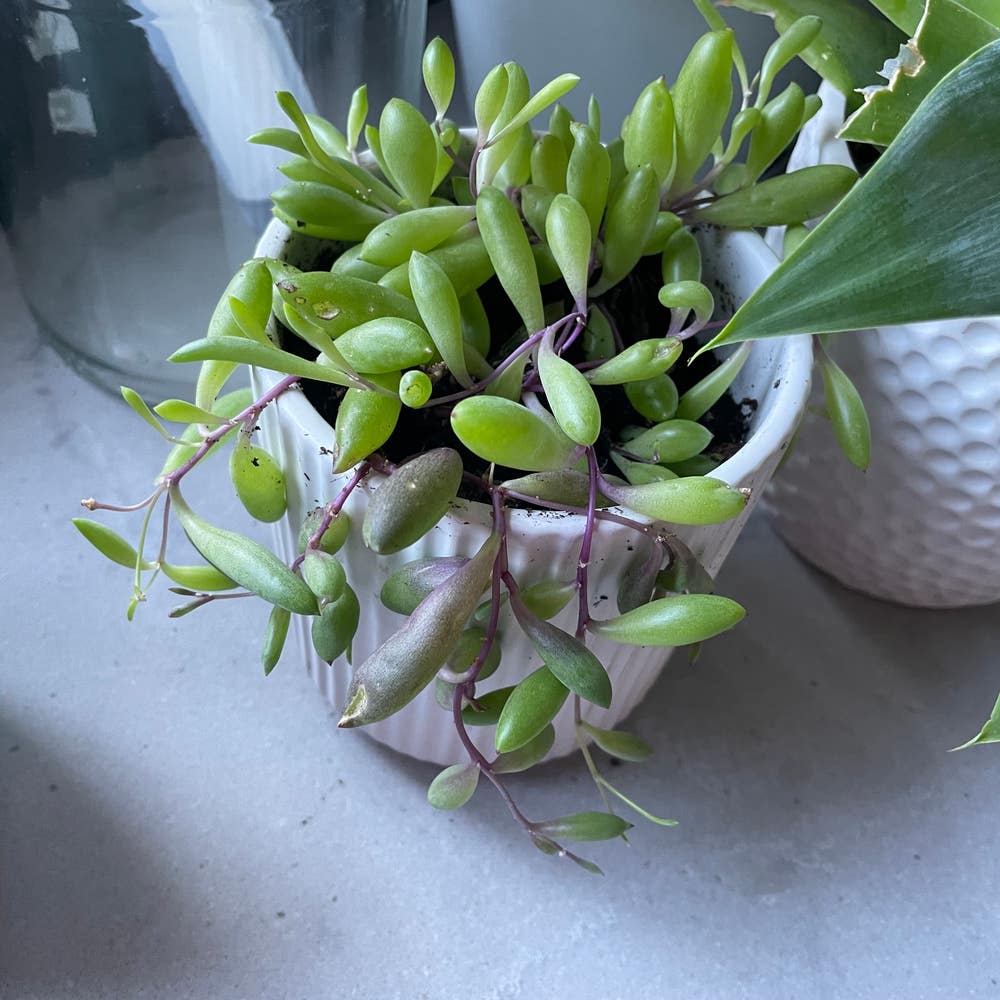
Why Are My String of Pickles Leaves Falling Over?
Crassothonna capensis
By the Greg Editorial Team
Jun 18, 2024•5 min read
This article was created with the help of AI so we can cover more plants for you. May contain errors. See one? Report it here.
Stop the flop 🌿—learn to fix and prevent your String of Pickles' droopy leaves with key care tips!
- Overwatering and underwatering both lead to droopy String of Pickles leaves.
- Insufficient light weakens stems, causing leaves to fall over.
- Repotting and proper lighting can revive and strengthen your plant.
Spotting the Signs: When Your String of Pickles Needs Help
🚰 Telltale Symptoms of Distress
Overwatering signs in your String of Pickles include yellow, swollen leaves that might burst open like overfilled water balloons. If the leaves fall off with a gentle nudge, it's a classic cry for help.
Underwatering symptoms are the plant's version of a drought broadcast. Leaves will look shriveled and feel as crispy as autumn leaves underfoot. Soil pulling away from the pot's edge is a silent scream for hydration.
Insufficient light will have your plant's stems stretching out like they're trying to escape to a sunnier spot. Weak, elongated growth is a sign that your plant is literally reaching for more light.
🕵️ Quick Checks for Immediate Insight
To assess soil moisture, stick your finger into the soil up to the second knuckle. If it feels like a dry desert, it's time to water. If it's a soggy swamp, hold off on the H2O.
Evaluating light conditions is straightforward. If your plant is in a dim corner, it's time to move it to a brighter spot with indirect sunlight. The right light can make or break your plant's posture.
Inspecting for root-bound issues is like checking if your shoes are too tight. If roots are circling the pot's bottom like a conga line, it's time to give your plant more room to dance. Repotting may be in order.

Getting to the Root: Uncovering the Causes
💧 The Perils of Overwatering
Overwatering is like giving your plant an unwanted bath. Root rot sets in when your String of Pickles' feet stay wet for too long. Leaves fall over as if they're waving a white flag in surrender to the soggy conditions. A well-draining soil mix is your first line of defense, preventing the dreaded squishy, translucent leaves that spell trouble.
🏜️ The Thirst Quandary: Underwatering Woes
Conversely, underwatering turns your String of Pickles into a plant version of a parched desert wanderer. Leaves droop, losing their plumpness, as they desperately conserve what little moisture they have. Weak foliage is a cry for help, signaling that it's time to quench your plant's thirst more regularly.
🌞 Light Deprivation: A Recipe for Weak Stems
Poor lighting conditions make your plant's stems as feeble as overcooked spaghetti. Without enough light, they can't hold up the weight of the leaves, leading to a sad, droopy appearance. Your String of Pickles needs that golden glow, but not too much—think bright but indirect light to keep it standing tall.
🌱 Cramped Quarters: When Pot Size Matters
Imagine wearing shoes two sizes too small—that's how your String of Pickles feels in a cramped pot. Inadequate space stunts root growth, which in turn affects the plant's ability to support itself. Upsizing the pot gives roots room to spread out and support a perky plant posture.

Immediate Interventions: First Aid for Your Plant
🚑 Rescuing Overwatered Plants
Stop watering immediately. Move your plant to a shady spot, even if it's a sun worshipper. Remove any soggy soil and check for a clogged drainage hole—clear it if necessary. If the soil is drenched, consider gently removing the plant and trimming any rotten roots. Repot with fresh, dry soil and resist watering until the top inch feels dry.
💧 Rehydrating the Dehydrated
For plants that have been neglected on the hydration front, it's time to water wisely. Use room-temperature water to avoid shocking the roots. Water slowly, allowing the moisture to seep in without overwhelming the plant. If the soil has shrunk away from the pot sides, you've gone too far—rehydrate gradually.
💡 Let There Be Light: Strengthening Your Plant
If your plant is stretching out like it's trying to escape, it's probably craving more light. Relocate it to a brighter spot, but avoid direct, harsh sunlight that can scorch its leaves. For a more consistent solution, consider a grow light to give your green buddy the lumens it longs for.
🌱 Repotting for Relief
When roots are packed tighter than a rush-hour subway, it's time for a new pot. Choose one that's slightly larger with ample drainage. Gently tease out the roots if they're circling the bottom, and introduce them to their new abode with a blend of soil that's just right—not too dense, not too sandy. Remember, this isn't just a new pot; it's a fresh start.

Long-Term Care: Preventing Future Flops
💧 Watering Wisdom: Finding the Sweet Spot
Creating a tailored watering schedule is crucial for the String of Pickles plant. It's not about drenching on a whim; it's about observing and responding to your plant's thirst cues. Monitor the soil—if it's dry an inch down, it's time to water. In winter, ease up on the frequency. Your plant isn't hitting the gym; it doesn't need as much to drink.
☀️ Lighting the Way: Ensuring Adequate Sunlight
Adequate lighting is non-negotiable. Rotate your plant to ensure even growth and prevent it from reaching for the light like a kid for candy. If natural light is as scarce as hen's teeth, consider grow lights. They're like a sun substitute, keeping your plant's photosynthesis game strong.
🌱 Room to Grow: Regular Repotting Routines
When your plant's roots are as cramped as sardines, it's time to repot. Upsizing should be done with the precision of a chess move—choose a pot that's one size larger. Too big, and you risk waterlogging; too small, and you're back to square one. Fresh soil is like a spa treatment for your plant, rejuvenating and providing new nutrients.
⚠️ Safety First
This content is for general information and may contain errors, omissions, or outdated details. It is not medical, veterinary advice, or an endorsement of therapeutic claims.
Always consult a qualified healthcare professional before using any plant as food, medicine, or supplement.
Never eat any plant (or feed one to pets) without confirming its identity with at least two trusted sources.
If you suspect poisoning, call Poison Control (800) 222-1222, the Pet Poison Helpline (800) 213-6680, or your local emergency service immediately.
Spotted an error? Please report it here.
Keep your String of Pickles plant upright and thriving 🌿 with Greg's custom watering schedules and light condition monitoring to prevent droopy leaves.