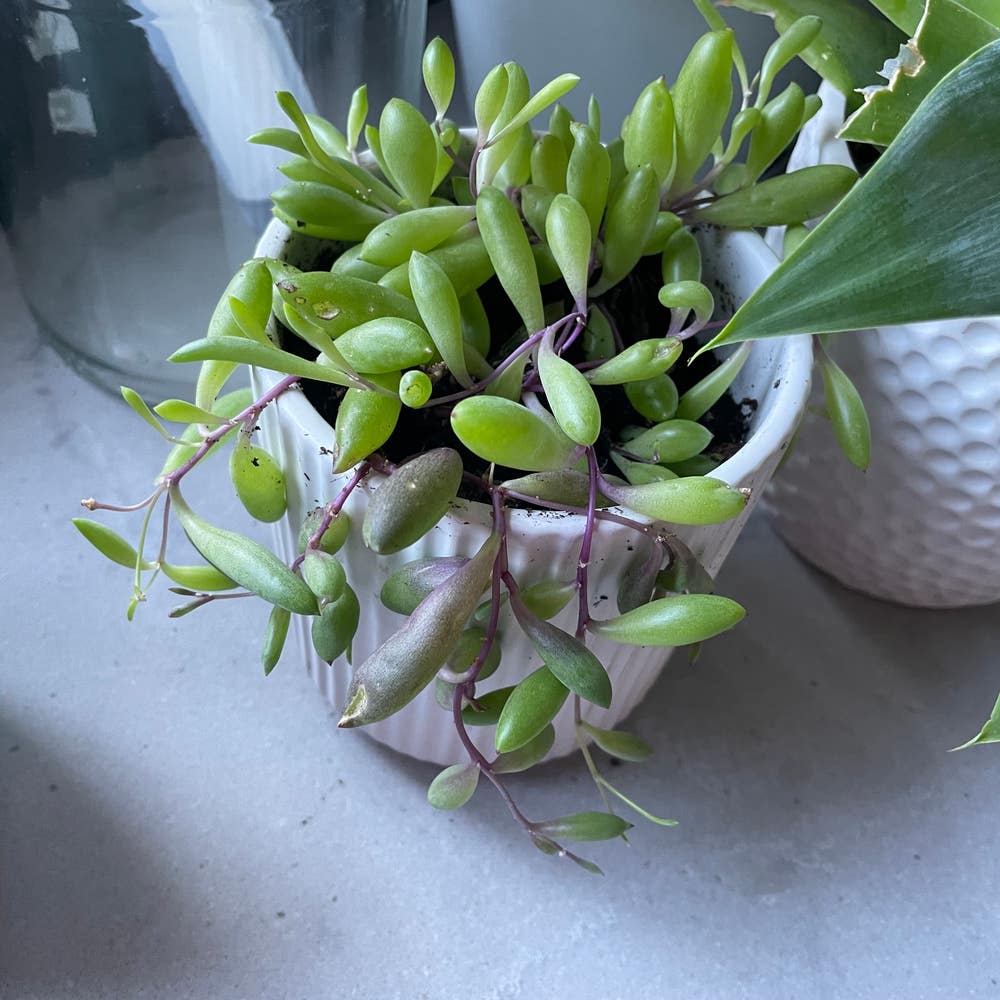
How Do I Fix String of Pickles Root Rot?
Crassothonna capensis
By the Greg Editorial Team
Jun 18, 2024•4 min read
This article was created with the help of AI so we can cover more plants for you. May contain errors. See one? Report it here.
Rescue your String of Pickles from root rot's clutches and restore plant health with this life-saving guide! 🌿🚑
- Yellow leaves, mushy stems, mold, and stench signal root rot.
- Trim rotted roots and repot with well-draining soil and clean pot.
- Water wisely and manage environment to prevent future root rot.
Spotting the Trouble: Identifying Root Rot in Your String of Pickles
🚩 Visual Red Flags
Yellowing leaves on your String of Pickles can be a distress signal. If the stems have gone from firm to mushy, it's time to pay attention. Mold creeping in? That's the soil screaming "I'm too wet!" and a clear sign of overwatering or poor drainage. And if your nose wrinkles at a funky stench when you get close, that's the aroma of decay, not success.
🕵️ Confirming Your Suspicions
To confirm root rot, you'll need to play plant detective. Unpot your String of Pickles with care and examine the roots. Healthy roots should be white and firm, like a fresh stick of celery. If they're dark, squishy, and smell worse than last week's forgotten leftovers, you've got a case of root rot. Remember, catching root rot early is like catching a typo before you hit send – it saves a lot of trouble.

First Aid for Your Plant: Immediate Steps to Address Root Rot
✂️ Snip and Trim
Root rot doesn't have to be a death sentence for your String of Pickles plant. First, yank that sucker out of its pot with a sense of purpose. Brush off the soil and prepare for a bit of garden surgery. Healthy roots are firm and white, while the goners are mushy and discolored. Grab some sterilized scissors and cut away the bad parts with the precision of a bonsai master.
The Repotting Process
Now, let's talk about giving your plant a fresh start. Choosing the right soil is like picking a mattress for yourself – it needs to be comfortable and supportive. Go for a well-draining mix; think of it as the plant equivalent of breathable cotton sheets.
Step-by-Step Repotting Guide
- Clean the pot like you're prepping for surgery or, if it's a lost cause, get a new one with drainage holes that don't mess around.
- Fill the bottom with your premium soil mix.
- Place your plant in the center, gently spreading the roots like you're tucking it into bed.
- Add soil around the roots, careful not to pack it like you're stuffing a turkey. Just enough to hold it upright.
- Give it a week of peace and quiet – no water, just contemplation and recovery.
Remember, this isn't just a chore, it's an intervention. Your String of Pickles is counting on you to not repeat the soggy sins of the past.

Water Wisdom: Balancing Moisture to Avoid Future Woes
💧 Perfecting Your Watering Technique
Watering your String of Pickles is not a guessing game. It's about precision. Check the soil before you water—dry an inch down means go for it. Use daylight hours to your advantage; this allows moisture to evaporate, dodging the dreaded root rot.
🌱 The Role of Pots and Soil
Choose wisely—your plant's life depends on it. A pot with proper drainage holes is non-negotiable. It's the difference between a cozy home and a swamp for your plant's roots. And the soil? Aim for the Usain Bolt type—fast-draining and no lingering wetness.

Creating a Thriving Environment
💡 Light and Airflow
Adjusting your String of Pickles' light exposure is crucial for its recovery from root rot. Position it in a spot where it can bask in bright, indirect sunlight. Think of it as the plant's personal spa—enough light to rejuvenate without the burn.
Air circulation is equally important. Keep the air moving with a gentle fan or by placing the plant in a well-ventilated area. Stagnant air is like a stagnant life—nothing good grows there.
🌡️ Temperature and Humidity Know-How
The right temperature and humidity levels are the bedrock of a healthy String of Pickles. Aim for a consistent temperature between 68-80°F (20-27°C)—too much fluctuation is like a rollercoaster ride no one signed up for.
Humidity is a balancing act. Too much, and you're back to square one with root rot. Too little, and your plant might as well be in a desert. Aim for that sweet spot where the air feels like a mild, spring morning all year round. Use a dehumidifier if you're living in a cloud, or a pebble tray to up the humidity if you're in the Sahara.
⚠️ Safety First
This content is for general information and may contain errors, omissions, or outdated details. It is not medical, veterinary advice, or an endorsement of therapeutic claims.
Always consult a qualified healthcare professional before using any plant as food, medicine, or supplement.
Never eat any plant (or feed one to pets) without confirming its identity with at least two trusted sources.
If you suspect poisoning, call Poison Control (800) 222-1222, the Pet Poison Helpline (800) 213-6680, or your local emergency service immediately.
Spotted an error? Please report it here.
Trim the rot, repot, and then prevent future woes 🛡️ with Greg's precision watering reminders tailored to your String of Pickles' needs.