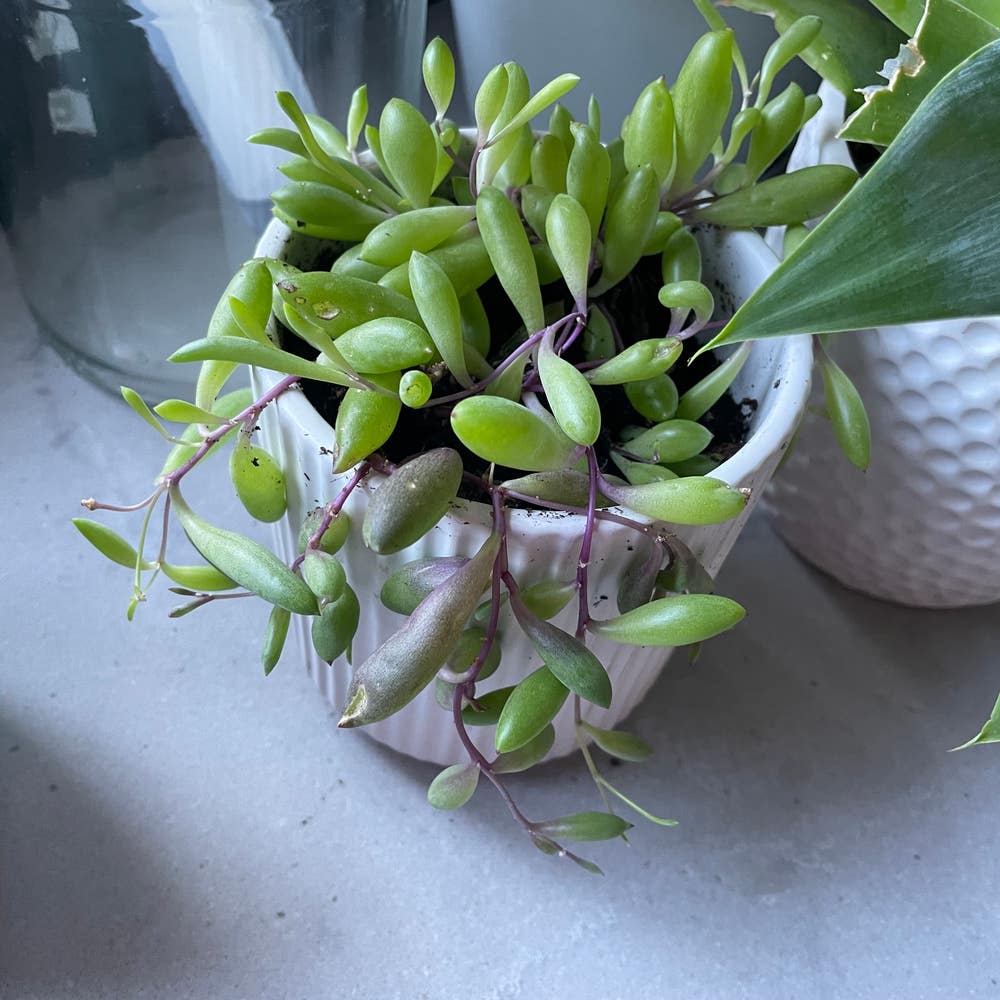
How Frequently Should I Water My String of Pickles?
Crassothonna capensis
By the Greg Editorial Team
Jun 18, 2024•4 min read
This article was created with the help of AI so we can cover more plants for you. May contain errors. See one? Report it here.
Nail the watering schedule for your String of Pickles 🌱 and avoid the dreaded over or under-watering pitfalls 💦.
- 🌵 Shriveled leaves mean thirst; yellow, mushy leaves signal overwatering.
- Adjust watering with seasons, pot size, and soil type.
- Deep watering beats spritzing; use finger test or moisture meter.
When Thirst Strikes: Spotting the Signs
🥤 Shriveled Leaves: A Cry for Water
Shriveled leaves are the string of pickles' version of a parched throat. If you spot this, it's a clear signal your plant is thirsty. Before you water, though, do a quick soil check. If the top inch feels like a dry desert, it's time to hydrate.
💧 Yellowing Leaves: The Overwatering Omen
Yellow leaves can be deceiving; they might indicate too much love with the watering can. If the leaves are yellow and feel mushy or swollen, it's time to back off and let the soil dry out. Remember, your string of pickles isn't a fan of soggy feet.
🕵️ Root Check: The Underground Story
Don't be afraid to do a little digging. Gently check the roots; if they're brown and mushy, overwatering is the likely culprit. Healthy roots should be firm and white. If they're brittle or look like they've been through a drought, it's a sign you've been holding back on the water.

The Perfect Sip: Watering Frequency Factors
🌱 Pot Size and Drainage: Finding the Balance
Pot size matters more than you might think. Small pots dry out faster, so they need watering more often. On the flip side, large pots retain moisture longer, which means less frequent watering. Drainage is crucial too; ensure your pot has holes to prevent water from pooling and causing root rot. Remember to empty the saucer after watering to keep those roots from swimming instead of sipping.
🏜️ Soil Type and Its Thirst Quenching Properties
The type of soil you use can make or break your watering routine. Sandy soils are thirsty, draining quickly and requiring more frequent watering. Clay soils, however, are like sponges, holding onto water for longer periods. Choose a well-draining potting mix and consider adding perlite or vermiculite for that extra drainage oomph.
🌞 Seasonal Shifts: Adapting to the Plant's Rhythms
As the seasons change, so does your plant's thirst. During the active growth phase in spring and summer, your string of pickles might be chugging water. Come winter, it's more about the occasional sip. Pay attention to your plant's behavior and the local weather patterns to adjust your watering schedule accordingly. And don't forget, air circulation is your secret weapon for even soil drying and keeping those fungal foes at bay.

The Touch Test: Soil Moisture and When to Water
🖐️ The Finger Dip: Old-School Moisture Testing
Dive in with the finger test. Submerge your finger about an inch deep into the soil. If it feels like a barren desert, it's time to water. But if it's damp, hold your horses to prevent overwatering.
💦 Moisture Meters: High-Tech Hydration Helpers
Moisture meters are the gadget gurus of garden hydration. They give you a digital readout, taking the guesswork out of the equation. Just remember, if your soil's salty, take the meter's advice with a grain of... well, salt.
⚖️ The Weight Method: Lifting to Gauge Wetness
The heft test is all about lifting. Pick up the pot. Feels like you're hoisting a boulder? Skip the watering. Light as a feather? Your string of pickles is parched.

Watering Wisdom: Best Practices for String of Pickles
💧 Deep Watering vs. Light Spritzing: What Works Best
Deep watering is the champion for string of pickles. It encourages roots to grow deeper, making the plant more resilient. Light spritzing merely dampens the surface, which can lead to shallow root systems and weaker plants. Aim for a thorough soak that reaches the bottom of the pot, then let the soil dry out before the next watering session.
🌧 The Drought and Drench Cycle: Mimicking Natural Patterns
String of pickles thrives on a drought and drench cycle. In their native habitat, they're accustomed to periods of dryness followed by heavy rain. Replicate this by allowing the soil to become dry to the touch before drenching thoroughly. This cycle promotes a healthy root system and prevents waterlogging, which could spell disaster.
🚱 Water Quality: What to Pour for Your Pickles
Not all water is created equal. Tap water can contain minerals and chemicals that might not be best for your string of pickles. If possible, use filtered, distilled, or rainwater to avoid buildup that can harm your plant. Letting tap water sit out for 24 hours before use can also help evaporate some of the chlorine, a simple trick for healthier hydration.
⚠️ Safety First
This content is for general information and may contain errors, omissions, or outdated details. It is not medical, veterinary advice, or an endorsement of therapeutic claims.
Always consult a qualified healthcare professional before using any plant as food, medicine, or supplement.
Never eat any plant (or feed one to pets) without confirming its identity with at least two trusted sources.
If you suspect poisoning, call Poison Control (800) 222-1222, the Pet Poison Helpline (800) 213-6680, or your local emergency service immediately.
Spotted an error? Please report it here.
Keep your String of Pickles 🥒 thriving with Greg's custom watering reminders, ensuring just the right amount of moisture based on your home's unique conditions!