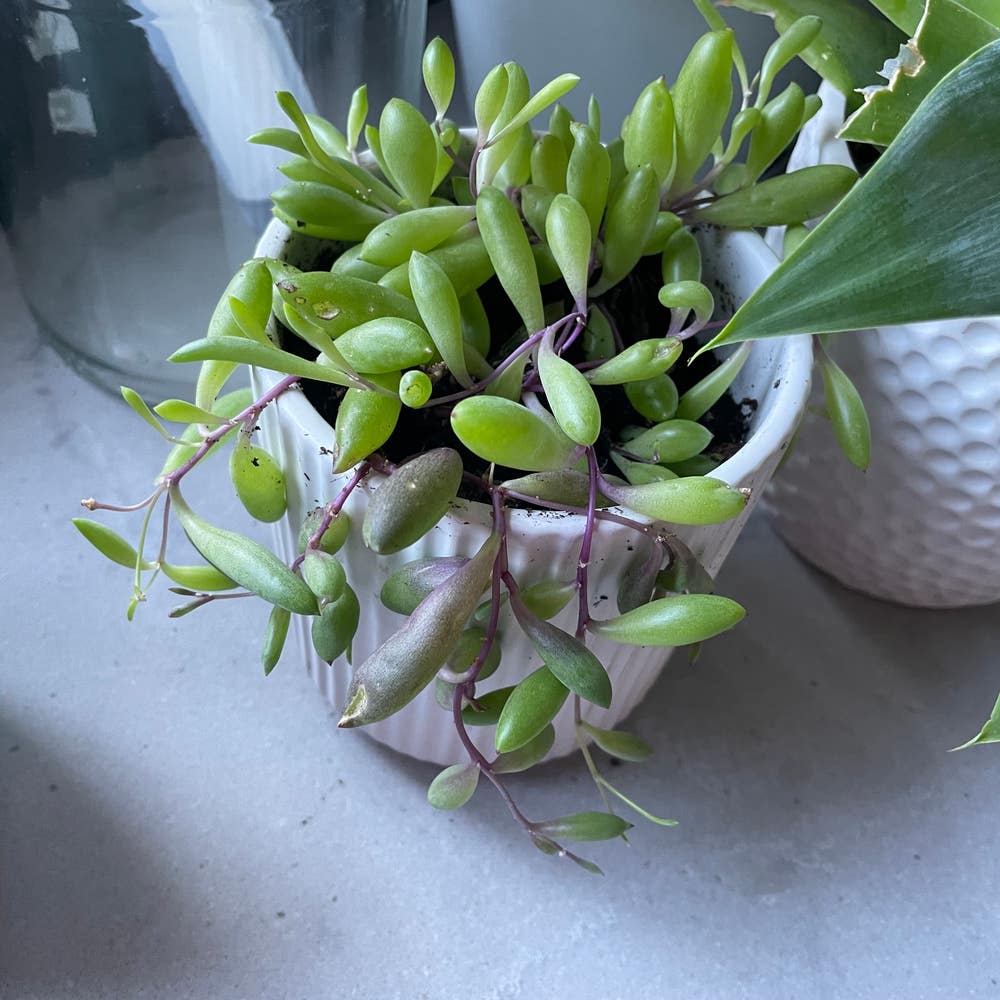
Should I Repot My String of Pickles?
Crassothonna capensis
By the Greg Editorial Team
Jun 18, 2024•5 min read
This article was created with the help of AI so we can cover more plants for you. May contain errors. See one? Report it here.
Learn when your String of Pickles 🥒 needs repotting and the secrets to a stress-free transition! 🌿
- Roots peeking out? Time to repot your String of Pickles.
- Terracotta, plastic, or ceramic: Choose the right pot material.
- Post-repot care: Water well, then find a bright, indirect light spot.
Spotting the Telltale Signs Your Plant Needs a New Home
🌱 Root-Bound: The Plant's Cry for Help
Roots escaping through drainage holes or circling the topsoil are your String of Pickles' way of saying, "I need more space!" Like a hermit crab outgrowing its shell, your plant can't stay confined forever.
💧 Water Woes: More Than Just Thirst
When water races through the pot, it's not your plant being high-maintenance; it's a sign the soil can't hold moisture due to root overcrowding. Your plant's not just thirsty—it's parched.
🌱 Sluggish Growth: The Stunted Reality
If your String of Pickles hasn't changed size since the last season of your favorite show, it's not lazy—it's root-bound. Growth should be a constant, not a memory.
👀 Visual Cues: Seeing is Believing
Visible roots and a pot that looks like it's under pressure are not just aesthetic quirks—they're red flags. It's time for a new pot, not a new Instagram post.
🍽️ The Silent Plea for Nutrients
If your green buddy is looking dull despite your TLC, it's probably not getting enough nutrients. Think of it as trying to have a feast with a toothpick—not quite satisfying.
🕵️♂️ Root Check: The Unseen Signal
Don't ignore roots peeking out like shy groundhogs. They're not just curious; they're cramped. A quick peek inside the pot can reveal a tangled mess in need of liberation.
🍂 Overcooked Leaves: The Ominous Sign
Leaves resembling overcooked spinach are the plant equivalent of sending an SOS. It's not a new leaf trend; it's a cry for help.
⚖️ The Weight Test: A Hefty Hint
Lift the pot post-watering. A well-watered plant should feel like it's had a good meal, not a light snack. If it's too light, your plant's roots might be hogging all the space, leaving no room for water retention.
🏚️ Cracks in the Pot: The Structural Scream
A cracked pot isn't just an aesthetic issue; it's your plant's way of saying, "I'm breaking free!" Don't wait for the pot to shatter—act now.
Remember, your String of Pickles isn't just being dramatic. These signs are genuine pleas for a bigger home.

Choosing the Right Pot: Material Matters
🏺 Terracotta vs. Plastic vs. Ceramic
Terracotta pots, the earthy choice, are porous and wick away excess moisture, making them a top pick for the String of Pickles, which despises soggy feet. However, they're weighty and may need more frequent watering due to their breathability.
Plastic pots are the lightweights of the pot world. Easy to shuffle around, they retain moisture longer, which can be a double-edged sword depending on your watering habits. If you're prone to over-love with water, these might not be your best bet.
Ceramic pots strike a balance. Less porous than terracotta but more breathable than plastic, they offer a middle ground. They're also style chameleons, available in a plethora of designs to suit your fancy.
❌ Why to Steer Clear of Metal and Glass Pots
Metal pots can be sleek, but they're like mini ovens for roots, potentially cooking your String of Pickles with their heat-retentive properties. And rust? It's a real possibility, turning chic to shabby in no time.
Glass pots might show off your plant's roots, but they offer zero breathability. It's a visual feast but a functional famine, with overwatering risks skyrocketing. Plus, breakage is just one clumsy move away. Stick to terracotta, plastic, or ceramic to keep your String of Pickles smiling.

The Repotting Rundown: A Step-by-Step Guide
🛠️ Prepping Your Tools and Workspace
Gather your gear: you'll need a new pot, fresh potting mix, a trowel, and something to cover the drainage holes—netting or gauze should do the trick. A watering can is a must. Lay down some newspaper to catch the mess, and consider gloves if you're not one for dirt under the nails.
🔄 Out with the Old
Ease it out: Tilt the pot and coax your String of Pickles free. If it's stubborn, a chopstick can help nudge the root ball out. Worst case scenario: you might have to break the pot. It's a small price for your plant's happiness.
🔄 In with the New
Layer up: Put a base layer of potting mix in the new pot. Just enough to prop the root ball to the right level—no more, no less. Place your plant in the center and gently add more soil around it. Press lightly to eliminate air pockets but don't compact the soil—roots need to breathe. Water thoroughly to settle the soil and give the roots a nice drink. Avoid the temptation to overdo it; soggy isn't the goal.
Remember, your String of Pickles doesn't care for drama. Keep it simple and straightforward, and you'll both be happier for it.

Immediate Aftercare: Helping Your String of Pickles Settle In
💧 The First Watering: How Much Is Just Right?
Water is the essence of life, but too much can drown your String of Pickles' spirits. After repotting, give it a solid drink to help it feel at home. Then, back off. Let the top inch of soil dry out completely before you even think about watering again. Overwatering is the helicopter parenting of plant care—well-intentioned but suffocating.
🌞 Location, Location, Location: Finding the Perfect Spot Post-Repot
Your String of Pickles craves a spot that's just right—not too hot, not too cold, but a Goldilocks zone of bright, indirect light. Avoid the temptation to thrust it back into its old haunt immediately. Instead, let it acclimate to its new digs in a slightly shaded area. After a few days, gradually reintroduce it to its favorite sunny spot, avoiding any harsh, direct rays that could cause a sunburnt tantrum.
⚠️ Safety First
This content is for general information and may contain errors, omissions, or outdated details. It is not medical, veterinary advice, or an endorsement of therapeutic claims.
Always consult a qualified healthcare professional before using any plant as food, medicine, or supplement.
Never eat any plant (or feed one to pets) without confirming its identity with at least two trusted sources.
If you suspect poisoning, call Poison Control (800) 222-1222, the Pet Poison Helpline (800) 213-6680, or your local emergency service immediately.
Spotted an error? Please report it here.
Ensure your String of Pickles flourishes after repotting by relying on Greg's tailored care reminders 🌿, making plant parenthood blissfully simple.