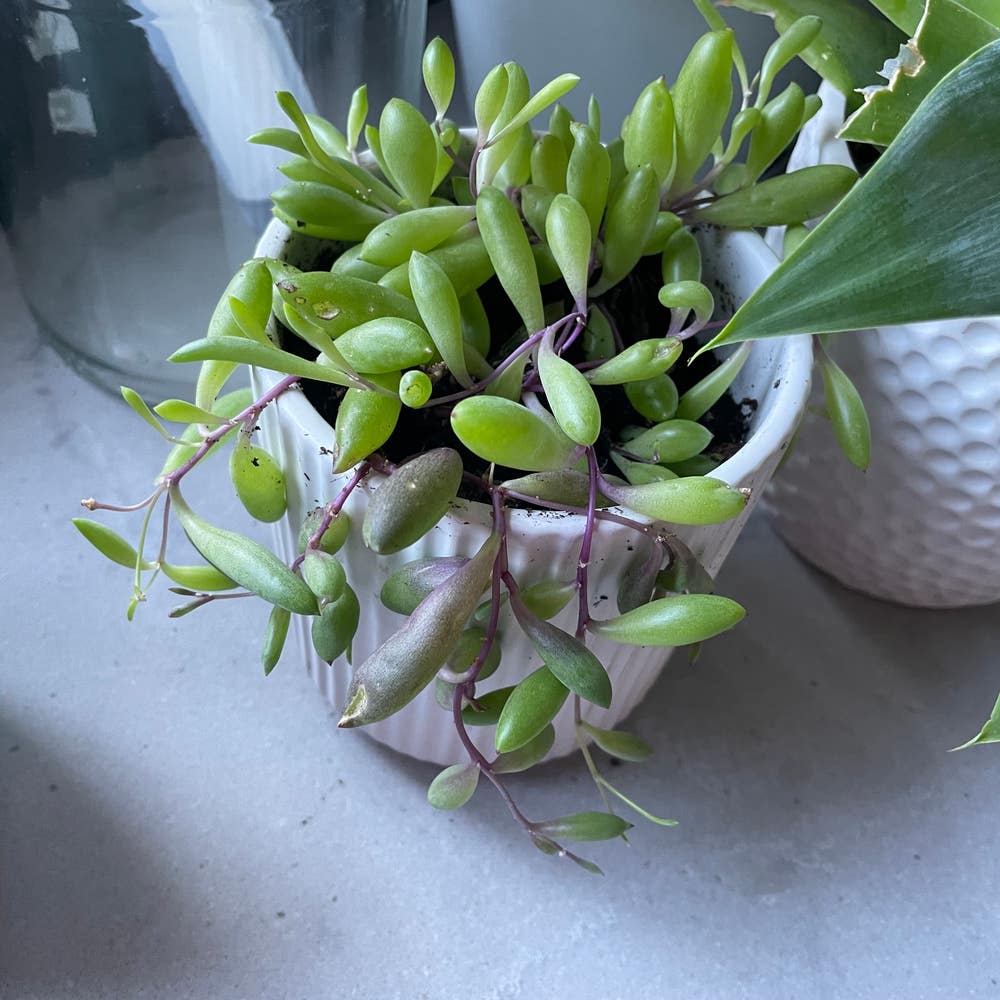
Best Soil Potting Mix for String of Pickles 🧅
Crassothonna capensis
By the Greg Editorial Team
Jun 18, 2024•5 min read
This article was created with the help of AI so we can cover more plants for you. May contain errors. See one? Report it here.
Transform your String of Pickles into a lush cascade 🌿 with the perfect soil mix recipe for peak health!
- Mold and root rot? Scoop out mold, improve drainage, and let sunlight in.
- Ideal mix: Perlite, coarse sand, peat moss for String of Pickles' health.
- Repot when needed in spring or autumn for growth and stability.
Spotting and Fixing Unhappy Soil
🚨 Recognizing the SOS signals from your soil
🍄 Moldy mayhem: spotting mold and its dangers
If your String of Pickles soil is starting to resemble a B-movie horror set, mold is likely the villain. White, yellow, or brown fuzzy invaders signal too much moisture. A swampy stench? That's the aroma of decay, and your plant's roots are probably not throwing a thank-you party.
💧 Water woes: signs of overwatering and poor drainage
When water lingers like an unwanted house guest, it's a sign your soil is too clingy. If your plant's leaves are throwing a yellow flag, or the soil feels like a wet sponge, it's time for an intervention. Root rot doesn't RSVP; it crashes the party when the soil's too soggy.
🔄 Turnaround tactics for troubled soil
🍄 Mold mitigation: steps to eradicate mold
To show mold the door, scoop it out like last week's leftovers. Let the sunlight in to scare away the remaining spooks. Remember, it's not just about treating the symptoms; you need to fix the environment that allowed the mold to set up shop in the first place.
🚰 Drainage dilemmas: improving soil structure for better water flow
If your pot's drainage is as effective as a screen door on a submarine, it's time to upgrade. Ensure your pot has drainage holes; they're like emergency exits for excess water. Consider a soil mix that's more sieve than sponge, and remember, when it comes to watering, think moderation, not monsoon.

The Ideal Soil Mix: What's in the Magic Potion?
🌱 The must-haves in your String of Pickles soil mix
Perlite, coarse sand, and peat moss are the holy trinity for your String of Pickles' soil mix. Perlite ensures aeration, letting those roots breathe. Coarse sand is all about drainage, keeping things just dry enough. And peat moss? It's your moisture maestro, holding onto water without turning your pot into a swamp.
💧 Balancing aeration and moisture: why it matters
Your String of Pickles craves a balance between oxygen and hydration. Too much water, and you're sending an invite to root rot. Too little, and your plant's thirstier than a tourist in the desert. Strike that perfect balance, and you'll have a plant that's not just surviving, but thriving.
🌿 Pre-mixed or DIY: Choosing your champion
Top commercial contenders for String of Pickles
Commercial mixes can be a godsend. They're the ready-to-go meals of the plant world. Look for options that boast a blend of perlite, peat moss, and other drainage-friendly ingredients. Hoffman’s Organic Cactus and Succulent Soil Mix is a crowd-pleaser, while Premium Indoor Plant Soil offers a gourmet feast for your green buddy.
When to consider a homemade mix
But maybe you're the type who likes to get your hands dirty. DIY mixes let you play mad scientist, tweaking until you've got the perfect concoction. Start with equal parts potting soil, coarse sand, and perlite. Feel free to jazz it up with some coco coir or pumice if you're feeling fancy. Just remember, with great power comes great responsibility—don't go overboard.

Crafting Your Own String of Pickles Soil Mix
🌱 The recipe for success: ingredients and proportions
Creating your own soil mix for String of Pickles isn't rocket science, but it does require some precision. Think of it as a culinary recipe for your plant's health.
- One part potting soil: This is the bread and butter of your mix, providing structure and nutrients.
- One part coarse sand: It's like adding rice to a burrito, giving that necessary grit for proper drainage.
- One part perlite: Consider this the popcorn of your mix, ensuring your soil is well-aerated and fluffy.
🥄 Mixing the perfect batch: a step-by-step guide
- Gather your ingredients: Make sure they're high quality, like picking the ripest avocado for your guac.
- Sterilize: If you're using compost, bake it to avoid unwanted microbial mosh pits.
- Mix thoroughly: Combine all parts evenly, like blending a smoothie to perfection.
🌿 Ingredient alternatives: when you need a plan B
- Coco coir can step in for peat moss, acting like a sponge for moisture without the drama of waterlogging.
- Orchid bark can replace coarse sand, adding texture and aeration like croutons in a salad.
- Worm castings: Toss in a handful for a nutrient boost, like a dash of seasoning to taste.
Remember, observe your plant's response and be ready to tweak the recipe. After all, gardening is part art, part science, and all love.

When to Repot with Fresh Soil
⏰ Timing is everything: signs it's time for a change
When your String of Pickles starts acting out—like a teenager demanding a room makeover—it's time to repot. Roots making a break for it out of the drainage holes or circling the pot's surface are your cue. If growth has stalled, it's not your plant being lazy; it's silently pleading for more space.
🌱 Growth spurts and pot-bound roots: when your plant is telling you it's time
A root-bound plant is like a big fish in a small pond; it's done all it can in the space it's got. When the soil dries out faster than a smartphone battery or the plant becomes top-heavy and prone to tipping, it's not just quirky—it's cramped.
🍂 Seasonal shifts: the best times of year for a soil refresh
Spring and autumn are the prime times for repotting. These seasons are like nature's green light, signaling your String of Pickles to get ready for a growth spurt or to hunker down for rest. Avoid the extremes of summer and winter to spare your plant unnecessary stress.
⚠️ Safety First
This content is for general information and may contain errors, omissions, or outdated details. It is not medical, veterinary advice, or an endorsement of therapeutic claims.
Always consult a qualified healthcare professional before using any plant as food, medicine, or supplement.
Never eat any plant (or feed one to pets) without confirming its identity with at least two trusted sources.
If you suspect poisoning, call Poison Control (800) 222-1222, the Pet Poison Helpline (800) 213-6680, or your local emergency service immediately.
Spotted an error? Please report it here.
Avoid the dreaded root rot and mold in your String of Pickles with Greg's custom watering schedules 💧, ensuring the perfect soil moisture balance for your plant's health.