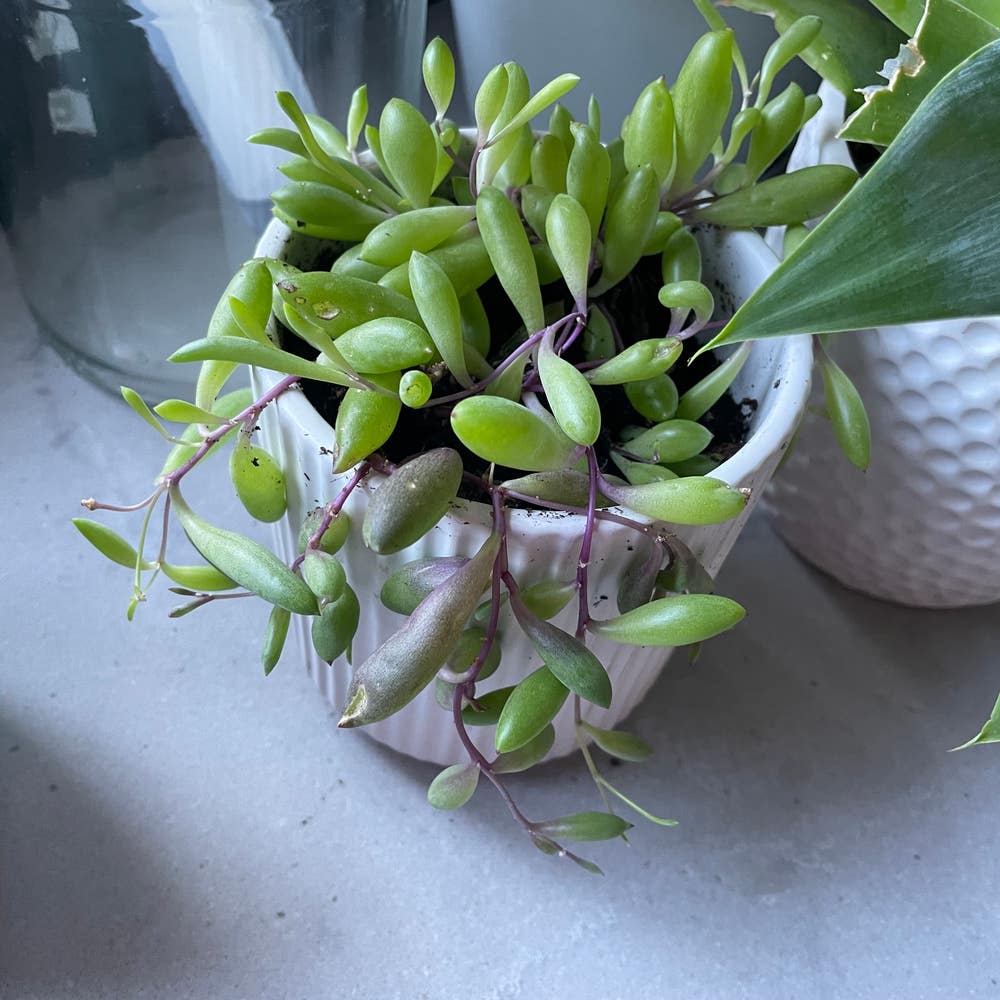
How Much Humidity Does My String of Pickles Need?
Crassothonna capensis
By the Greg Editorial Team
Jun 18, 2024•3 min read
This article was created with the help of AI so we can cover more plants for you. May contain errors. See one? Report it here.
Ensure your String of Pickles flourishes 🌿 by mastering its ideal humidity range!
- 🌱 Crispy or limp leaves? Your String of Pickles signals incorrect humidity.
- 💧 Ideal humidity range: 40-50% for healthy growth.
- 🌬️ Ventilation and humidifiers help manage humidity levels effectively.
Spotting the Signs: When Your String of Pickles Tells You It's Unhappy
🌵 Signs of Low Humidity
Crispy Leaves
If your String of Pickles sports crispy leaves, it's not trying to be crunchy. It's parched. This succulent's leaves should be plump, not resemble potato chips.
Slowed Growth
A growth pace that's slower than a snail's crawl? Low humidity could be the silent culprit behind this sluggishness.
💦 Signs of High Humidity
Limp Leaves
When leaves go limp, it's not a sign of relaxation. It's a distress signal. High humidity is making your plant too soft, literally.
Discoloration
Leaves should be a vibrant green, not a sickly yellow. If they look like they've seen a ghost, it's time to dial down the dampness.
Potential for Rot
Root rot smells worse than forgotten laundry. If the soil is more swamp than desert, your String of Pickles is waving a red flag. Too much moisture is a no-go.

Getting It Just Right: Ideal Humidity for String of Pickles
🎶 The Sweet Spot
Finding the ideal humidity for your String of Pickles is like tuning an instrument—get it right, and the plant sings. Aim for a humidity level of around 40% to 50%. This range strikes the perfect chord between too dry and too moist, allowing your String of Pickles to flourish without the risk of turning into a soggy mess.
Why It Matters
Humidity doesn't just hang in the air; it dances with temperature to create a comfortable environment for your String of Pickles. Too much humidity paired with high temperatures can lead to a plant sauna, while low humidity makes for a desert-like drought. Keep the temperature stable, and your String of Pickles will thank you with healthy, plump leaves.

Humidity Helpers: Boosting Moisture for Your Plant Buddy
💡 DIY Tricks
Pebble trays: a classic hack. Fill a tray with pebbles, pour in some water, and let your plant perch on top. The water evaporates, wrapping your String of Pickles in a humidity hug—just make sure the pot's not taking a dip.
Misting: think of it as your plant's caffeine shot. It's a quick moisture boost but doesn't last long. Overdo it, and you're flirting with leaf rot, so keep it light and occasional.
💡 Tech to the Rescue
Humidifiers: the MVP for consistent humidity. Set it up, tweak as needed, and let your String of Pickles bask in the moisture. It's like a thermostat, but for water vapor—find your sweet spot and let your plant thrive.
Remember, it's about balance. Too much misting is a no-go, and pebble trays are great but don't let your plant swim. Humidifiers are a solid bet for steady humidity—just don't turn your living room into a sauna.

Too Much of a Good Thing: Lowering Humidity When Necessary
💨 Ventilation and Airflow
Fresh air is crucial for keeping humidity levels in check. Without it, your String of Pickles might as well be trying to breathe underwater. Cracking a window or employing a fan can prevent your plant from living in its own personal rainforest. It's about giving those leaves the breeze they need to avoid moisture overload.
🌬️ Dehumidify Your Green Space
Sometimes, nature needs a nudge. If your plant's environment feels more like a sauna than a living room, it's time to bring in a dehumidifier. This isn't just about comfort; it's about survival. High humidity can usher in a silent but deadly cocktail of mold and rot, turning your green haven into a no-go zone. Keep an eye on the humidity levels, and don't be afraid to turn to technology to keep your String of Pickles in its happy place.
⚠️ Safety First
This content is for general information and may contain errors, omissions, or outdated details. It is not medical, veterinary advice, or an endorsement of therapeutic claims.
Always consult a qualified healthcare professional before using any plant as food, medicine, or supplement.
Never eat any plant (or feed one to pets) without confirming its identity with at least two trusted sources.
If you suspect poisoning, call Poison Control (800) 222-1222, the Pet Poison Helpline (800) 213-6680, or your local emergency service immediately.
Spotted an error? Please report it here.
Ensure your String of Pickles thrives with just the right humidity 💧 by relying on Greg's custom care reminders to keep the atmosphere perfect.