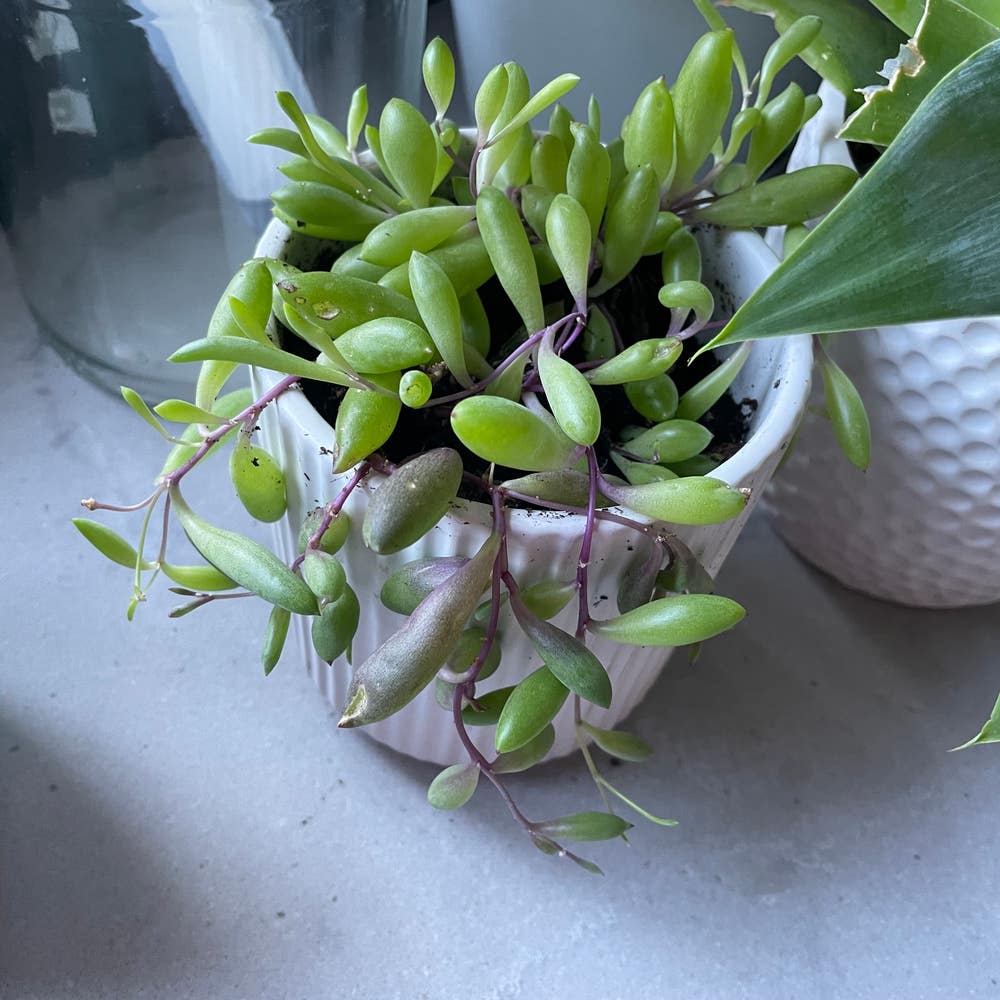
Why Is My String of Pickles Dropping Leaves? 🥒
Crassothonna capensis
By the Greg Editorial Team
Jun 18, 2024•5 min read
This article was created with the help of AI so we can cover more plants for you. May contain errors. See one? Report it here.
Halt the leaf-drop heartbreak 💔 of your String of Pickles with these life-saving plant care secrets. 🌿
- Over/underwatering causes leaf issues: Adjust watering to prevent yellowing and wilting.
- Bright, indirect light is key: Protect from sunburn and maintain consistent lighting.
- Regular health checks are crucial: Spot early signs of distress like curling or crunchy leaves.
Spotting the Signs: When Your String of Pickles Is Unhappy
🚨 Telltale Symptoms of Distress
Leaf drop in your String of Pickles can be as subtle as a missed text message or as glaring as a red light at an intersection. Yellowing leaves are the plant's way of waving a white flag, signaling potential nutrient deficiencies or environmental stress. If you find leaves curling up or getting crunchy, it's a clear distress signal, often related to inconsistent watering or a possible fungal invasion.
🏥 Quick Health Check
Conducting a quick health check on your String of Pickles is like a routine doctor's visit; it's all about prevention and early detection. Start by examining the soil moisture—is it too wet, too dry, or just right? Next, assess the leaf condition: are they plump and happy or wilting like neglected laundry? Don't forget to check for uninvited guests, such as mealybugs or nematodes, which can turn your plant's leaves into a yellow mess. Finally, take a peek at the roots—if they're mushy or smell like a swamp, you might be dealing with root rot.

The Usual Suspects: Pinpointing the Cause
🌊 Too Much Love: Overwatering Woes
Overwatering is the helicopter parent of plant problems; it means well but often does more harm than good. Yellowing leaves and a mushy base are telltale signs that your String of Pickles is drowning in affection. To fix this, let the soil dry out completely before you even think about watering again. If the plant's in too deep, repot it into fresh, well-draining soil and snip off any rot you find.
🏜️ Thirsty Plant Problems: The Underwatering Equation
On the flip side, a parched String of Pickles will sport wilting leaves and a bone-dry potting mix. It's begging for a drink. When the top inch of soil feels like a desert, it's time to water. But remember, moderation is key—think of it as a refreshing sip, not a full-on gulp.
🌞 Let There Be Light: Finding the Sweet Spot
Lighting for your String of Pickles should be like a cozy, shaded nook, not a beach at noon. Bright, indirect light is the sweet spot. Too much sun and your plant will start to look like it's been sunbathing without sunscreen. Adjust your plant's location to avoid the harsh rays and keep those leaves happy.
🔥 Feeling the Heat: Temperature and Humidity Factors
Temperature and humidity are the silent players in your plant's health. Keep the mercury steady, avoiding sudden changes like you're acclimating a fish. Aim for a humidity level around 40-50%—it's the comfort zone for your String of Pickles. Too humid and you risk laziness in the form of droopy leaves; too dry and they'll start to crisp up.

First Aid for Your Plant: Immediate Actions to Take
🩹 Rescuing Root Rot Victims
When root rot strikes, it's surgery time for your String of Pickles. Here's the battle plan:
- Evict your plant from its pot with urgency—this is no time for dawdling.
- Wash the roots under running water to banish the offending soil.
- Snip the soggy, rotten roots with shears that are cleaner than your conscience.
- Repot in fresh, well-draining soil that's as welcoming as a hug from grandma.
💧 Rehydrating Right
If your String of Pickles is thirstier than a marathon runner, here's how to quench it without overdoing it:
- Wait for the topsoil to dry out like a desert before even thinking about watering.
- Water thoroughly, but remember you're not trying to recreate the Great Flood.
- Hold off on the fertilizer—your plant's not ready for a full course meal just yet.

Keeping the Peace: Long-Term Care and Prevention
💧 Watering Wisdom: Striking the Balance
Creating a watering schedule that respects your String of Pickles' preferences is like finding the holy grail of plant care. Too much hydration and you're drowning it in love; too little and you're leaving it in a desert of neglect.
- Consistency is your plant's best friend. Stick to a routine that takes into account the plant's natural cycles and the changing seasons.
- Use a well-draining potting mix and check the soil moisture before watering—your plant will thank you for not making assumptions.
🌞 Light and Location: Setting Up for Success
The perfect spot for your String of Pickles isn't just about aesthetics; it's about survival.
- Bright, indirect light is the sweet spot. Too much direct sunlight and you're practically frying it; too little and it's stumbling around in the dark.
- Adjust the location as the seasons change to ensure your plant gets the right amount of light year-round.
🌡 Climate Control: Keeping Conditions Consistent
Maintaining a stable environment isn't just for wine cellars; your String of Pickles craves it too.
- Temperature swings are a no-go. Keep your plant away from drafts and sources of heat like radiators or air conditioners.
- Humidity levels should be just right—not too muggy, not too arid. A consistent environment prevents stress and the dreaded leaf drop.
⚠️ Safety First
This content is for general information and may contain errors, omissions, or outdated details. It is not medical, veterinary advice, or an endorsement of therapeutic claims.
Always consult a qualified healthcare professional before using any plant as food, medicine, or supplement.
Never eat any plant (or feed one to pets) without confirming its identity with at least two trusted sources.
If you suspect poisoning, call Poison Control (800) 222-1222, the Pet Poison Helpline (800) 213-6680, or your local emergency service immediately.
Spotted an error? Please report it here.
Ensure your String of Pickles avoids leaf drop by leveraging Greg's 🌿 environmental monitoring and tailored watering reminders, keeping your plant in peak condition.