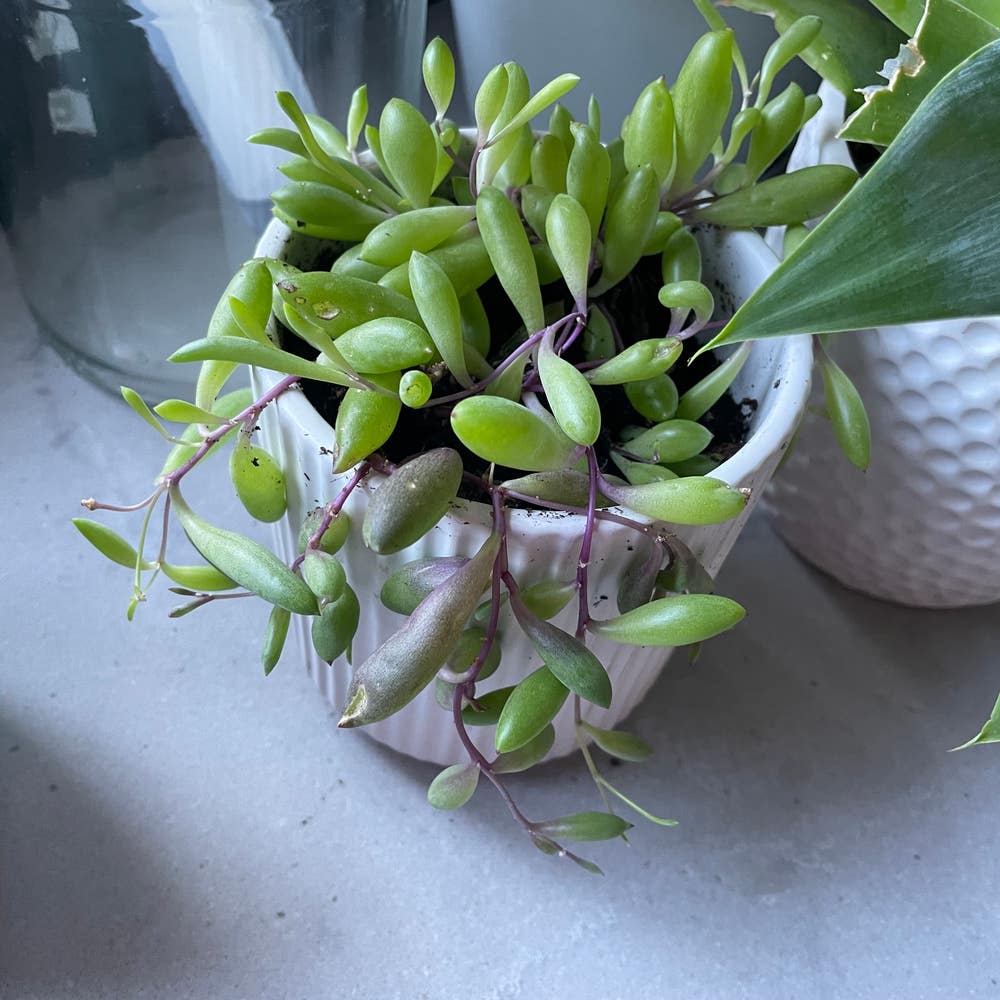
Common String of Pickles Problems
Crassothonna capensis
By the Greg Editorial Team
Jun 18, 2024•4 min read
This article was created with the help of AI so we can cover more plants for you. May contain errors. See one? Report it here.
Solve your String of Pickles' SOS 🚨 and keep them flourishing with these essential care tips.
- Yellow leaves and mushy stems signal overwatering and potential root rot.
- Crispy leaves mean thirst; water deeply yet infrequently to quench.
- Bright, indirect light and consistent temps keep your String of Pickles happy.
When Water Woes Strike
💧 Too Much H2O
Yellow leaves and mushy stems are the plant's way of saying it's had too much to drink. Overwatering can lead to a host of issues, including root rot and fungal growth – think of it as the plant version of waterlogged feet.
🚱 Drying Out: Steps to Rescue an Overwatered Plant
- Stop watering and let the soil dry out.
- Check for root rot; trim any black or mushy roots.
- Replace soggy soil with fresh, dry mix to help the roots breathe.
- Ensure proper drainage; consider a pot with better airflow.
- Resume watering with caution, only when the top inch of soil is dry.
🏜️ Not Enough Water
Crispy leaves are a telltale sign that your String of Pickles is parched. Underwatering leaves plants dehydrated, much like you'd feel after a marathon in the desert without a water bottle.
💦 Hydration Help: Finding the Watering Sweet Spot
- Check the soil moisture; if the top inch is dry, it's time to water.
- Water deeply but infrequently, allowing water to reach the roots.
- Observe the plant's response; adjust the schedule to meet its needs.
- Consider environmental factors such as light and humidity.
- Use a pot with drainage holes to prevent water from pooling at the bottom.

Light and Temperature Tango
🌞 Getting the Light Right
Leggy plants and faded leaves are your String of Pickles crying out for better light. They're not trying to reach the heavens, just the right amount of sun.
To fix this, relocate your plant to a spot with bright, indirect light. Think of it as the plant's personal lounge area—sunny but not scorching.
🌡️ Temperature Tantrums
When your String of Pickles gets too cold, it's like it's stuck outside without a jacket. Droopy leaves and slowed growth are signs it's shivering.
Keep the temperature consistent; your plant hates change more than a teenager's mood swings. Avoid drafts and direct heat sources to prevent your plant from catching a chill.

The Unseen Enemies: Pests and Diseases
🐜 Pests: The Tiny Terrors
Your String of Pickles might be under stealth attack by pests. Spider mites and mealybugs are the usual suspects, often leaving behind webbing or white cottony deposits. If you spot these, it's time for action.
Natural remedies like neem oil or insecticidal soap can be effective first strikes against these invaders. For severe infestations, you might need to escalate to chemical pesticides, but use them as a last resort to avoid collateral damage to beneficial insects.
🍄 Fungal Foes and Mold
Mold and mildew can sneak up on your plant, presenting as a fuzzy or powdery coating. This is a red flag for poor air circulation or overly moist conditions.
To combat these fungal foes, improve air flow around your plant and ensure the soil dries out between waterings. For persistent issues, consider a fungicide, but remember that prevention is always the best medicine. Keep an eye out for early signs of trouble to keep your String of Pickles in fighting form.

Root Rot: The Silent Killer
Root rot is a stealthy adversary, attacking the unseen parts of your String of Pickles plant. This condition is notorious for claiming the lives of many succulents, often going unnoticed until it's too late.
🕵️♂️ Sniffing out Root Rot
Odor is a giveaway. A whiff of something foul from the soil is a red flag. Gently unearth your plant, and inspect the roots. Healthy roots are firm and white; if they're brown, mushy, or smell bad, you've got root rot on your hands.
🌱 Root Revival
Act fast to save your plant. Remove it from its pot and clear away the soil to assess the damage. Snip off the affected roots with sterilized shears. Repot in fresh, well-draining soil and adjust your watering habits. Prevention is key—ensure proper drainage and avoid overwatering to keep root rot at bay.
⚠️ Safety First
This content is for general information and may contain errors, omissions, or outdated details. It is not medical, veterinary advice, or an endorsement of therapeutic claims.
Always consult a qualified healthcare professional before using any plant as food, medicine, or supplement.
Never eat any plant (or feed one to pets) without confirming its identity with at least two trusted sources.
If you suspect poisoning, call Poison Control (800) 222-1222, the Pet Poison Helpline (800) 213-6680, or your local emergency service immediately.
Spotted an error? Please report it here.
Avoid the pitfalls of plant care and ensure your String of Pickles remains perky and pest-free 🌿 with Greg's tailored watering reminders and expert community advice.