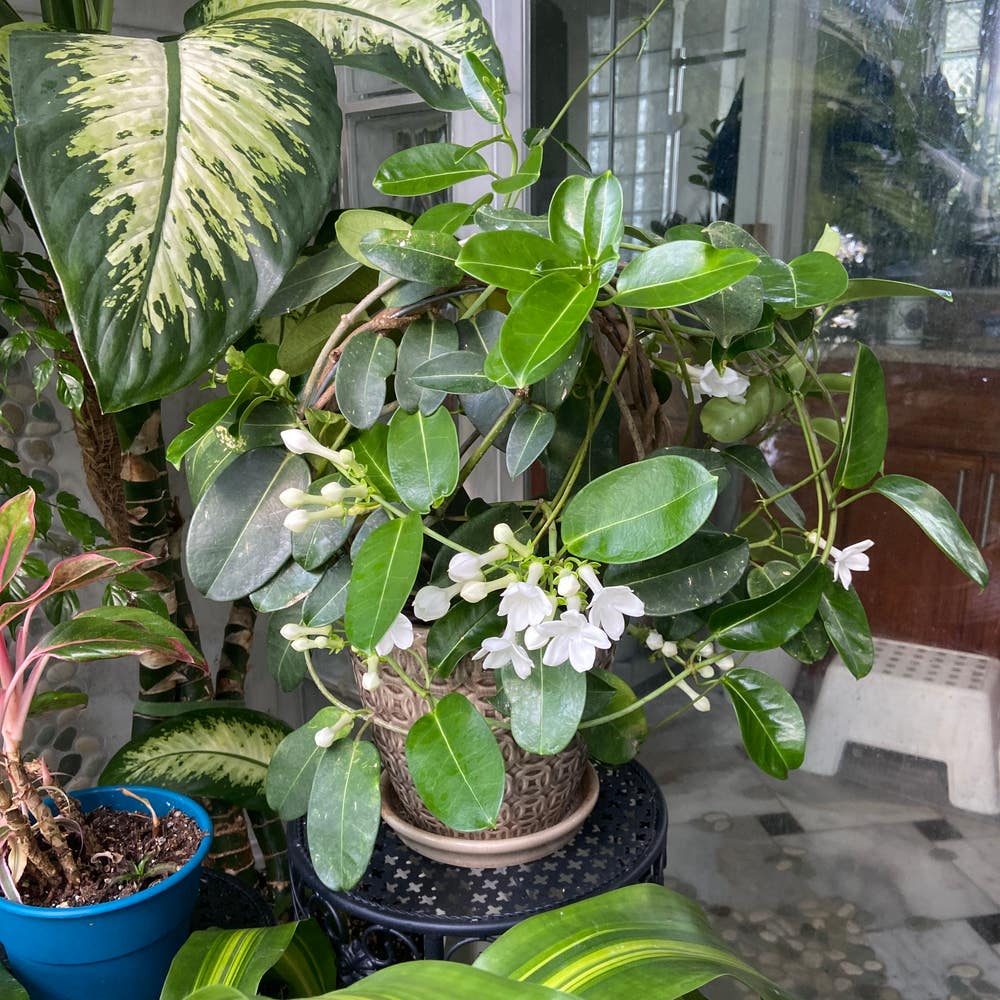
How to Get a Stephanotis to Bloom
Stephanotis floribunda
By the Greg Editorial Team
Jun 18, 2024•4 min read
This article was created with the help of AI so we can cover more plants for you. May contain errors. See one? Report it here.
- Bright, indirect sunlight and 68-80°F with 40-80% humidity for blooms.
- Fertilize with phosphorus and water weekly for healthy Stephanotis flowering.
- Prune in spring and remove spent flowers to encourage new growth and blooms.
Creating the Perfect Environment for Stephanotis Blooms
🌼 Light: The Sweet Spot for Flowering
Stephanotis plants are like the Goldilocks of the flora world, seeking that just-right amount of light. They flourish in bright, indirect sunlight—think of a spot that's sunny but shielded, where the rays are filtered through a sheer curtain or a leafy tree outside the window. Direct sunlight? That's a no-go, as it can scorch the delicate leaves and sabotage your bloom ambitions.
Positioning your Stephanotis to catch the ideal light is a bit of an art. East or west-facing windows can be prime real estate, offering the plant its sun quota without the harsh midday glare. If your windows aren't cutting it, consider a grow light to fake it till you make it—just remember to keep it a cozy 6-12 inches away from the plant.
🌡️ Temperature and Humidity: Setting the Stage for Flowers
When it comes to temperature, Stephanotis is a bit of a diva, preferring a consistent range between 68-80°F (20-27°C). Think of it as creating a microclimate that mimics a balmy day on a tropical island. If your indoor space swings from Sahara to Siberia, it's time to stabilize. A steady temperature encourages the plant to focus on blooming rather than survival.
Humidity is the secret sauce for Stephanotis blooms. These plants are humidity hogs, thriving in an environment that's more jungle than desert. Aim for a humidity level that would make your hair frizz—around 40-80%. Achieve this by misting the plant with tepid water, setting it on a tray of moist pebbles, or using a humidifier. Just don't overdo it; you want to avoid creating a mini rainforest in your living room.

Feeding Your Stephanotis for Fabulous Flowers
💡 The Right Nutrients for Blooms
Fertilization is key to Stephanotis blooms. A balanced diet for your plant means a fertilizer with a higher phosphorus content—look for a higher middle number in the N-P-K ratio. This encourages flowering without promoting excessive leaf growth. Apply a half-strength solution of liquid flower plant fertilizer every two weeks during the growing season. Remember, overfeeding is just as bad as underfeeding.
🚰 Watering Wisely During the Blooming Season
Watering your Stephanotis is a delicate dance. The goal is to maintain moist soil without causing root rot. A weekly watering is often sufficient, but always perform the Finger Test—if the top inch of soil is dry, it's time to water. When blooms are imminent, maintain consistent moisture to support flower development. Adjust your routine as needed, but avoid the extremes of drought and drench.

Pruning and Grooming: Shaping Your Stephanotis for Maximum Blooms
✂️ When and How to Prune
Pruning is essential for a Stephanotis that's bursting with blooms. Springtime is your cue to get snipping, shaping your plant for size and vigor. Cut above a leaf node to encourage new growth, and be mindful not to overdo it—over-pruning can backfire, leaving you with a bloom-less plant.
💅 Grooming Tips
Regular grooming goes beyond aesthetics; it's about plant health. Remove spent flowers to spur new ones and keep your Stephanotis looking sharp. A tidy plant is a happy plant, and happy plants are more likely to reward you with those coveted flowers.

Troubleshooting Blooming Challenges
🥀 Bud Drop and Lack of Flowers
Bud drop feels like a personal affront, doesn't it? Stephanotis can be a drama queen, dropping buds at the slightest discomfort. If you're nodding to a scenario of buds shriveling or carpeting the floor, let's troubleshoot. Inconsistent watering is a common culprit; it's like serving a feast and then a famine. Keep the soil moisture steady, like your favorite comfort food. Also, check for temperature tantrums. Stephanotis despises a drafty windowsill or a sudden chill. Keep it cozy and stable.
😓 Dealing with Premature Flower Wilting
Wilting flowers before their time is like a half-told joke—frustratingly anticlimactic. If your Stephanotis blooms are wilting prematurely, it's time to play plant detective. Could be the plant's swan song, signaling the end of its blooming cycle. Or, it might be crying out against a too-sunny spot or a dry spell. Move it to indirect light and consider a humidity boost—group it with other plants or introduce a humidifier to the scene. Remember, it's about creating a spa-like haven for those delicate blooms.
⚠️ Safety First
This content is for general information and may contain errors, omissions, or outdated details. It is not medical, veterinary advice, or an endorsement of therapeutic claims.
Always consult a qualified healthcare professional before using any plant as food, medicine, or supplement.
Never eat any plant (or feed one to pets) without confirming its identity with at least two trusted sources.
If you suspect poisoning, call Poison Control (800) 222-1222, the Pet Poison Helpline (800) 213-6680, or your local emergency service immediately.
Spotted an error? Please report it here.
Ensure your Stephanotis flourishes with bountiful blooms 🌼 by using Greg to maintain ideal light, humidity, and feeding schedules, while avoiding bud drop and wilting.