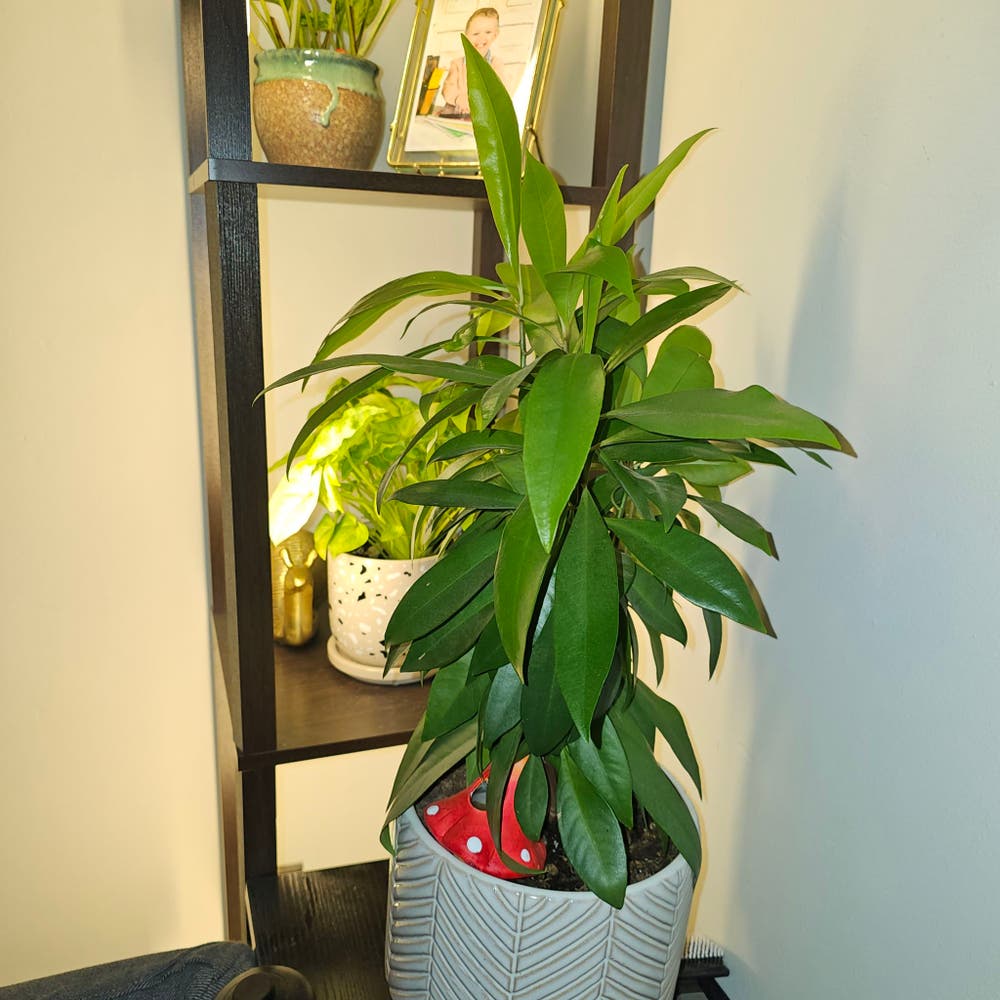
Why Are My Shoebutton Leaves Dropping?
Ardisia elliptica
By the Greg Editorial Team
Jun 17, 2024•4 min read
This article was created with the help of AI so we can cover more plants for you. May contain errors. See one? Report it here.
Halt the Shoebutton sorrow 🍂 by cracking the leaf-drop case with these simple plant care solutions!
- Overwatering and underwatering both lead to leaf drop; adjust watering habits.
- Light and temperature are crucial; provide bright, indirect light and stable temperatures.
- Nutrient balance is key; use soil tests and adjust fertilization accordingly.
When Too Much Love Hurts: Overwatering Woes
💧 Spotting the Signs of Overwatering
Yellowing leaves and soggy soil are classic signs you might be loving your Shoebutton plant a bit too much with water. If you're seeing a mushy stem or leaves dropping like there's no tomorrow, it's time to reassess your watering habits. Notice any brown spots or a yellow halo on leaf edges? Your plant's sending an SOS. And if you spot fungus or mold on the soil, consider it the red flag waving high.
🚰 Rescuing Your Plant from Drowning
First, adjust your watering routine. If you've been giving your plant a daily drink, it's time to pump the brakes. Let the soil dry out a bit between waterings. Next, ensure proper drainage. If water's pooling at the bottom of the pot like a mini swimming pool, your plant's roots are basically wearing waterlogged boots—uncomfortable and harmful. Consider a pot with better drainage holes or adding a layer of gravel at the bottom to keep those roots breathing easy.

Thirsty for Attention: The Underwatering Problem
🚰 Recognizing Underwatering Symptoms
When your Shoebutton plant's leaves start to look like they've been through a desert trek, dry soil and wilting leaves are the first red flags. If the edges of the leaves could double as fall foliage, you've got a classic case of underwatering.
Quenching Your Plant's Thirst
To find the watering sweet spot, think of your plant as a subtle communicator. It's not going to scream when it's thirsty, but those droopy leaves are pretty close to a whisper for help. Use soil moisture as your hydration guide—stick a finger in the soil; if it feels like a dry martini, it's time to water.

A Light Issue: Finding the Sweet Spot
⛅️ Symptoms of Light Starvation
When your Shoebutton resembles a spindly, pale imitation of its former glory, it's likely suffering from light starvation. Leggy growth and leaf drop are the plant's plea for more lumens, while pale leaves and weak stems signal a chlorophyll production breakdown due to insufficient light.
💡 Let There Be Light
Determining the best light conditions for your Shoebutton isn't rocket science, but it does require observation. These plants crave bright, indirect sunlight—think of it as their non-negotiable spa requirement. Adjusting plant placement to a spot that mimics this environment can prevent your green buddy from stretching out like it's trying to escape its pot. And when the sun plays hard to get, don't shy away from artificial lights; they can be the winter blues antidote for your leafy friend.

Weathering the Storm: Temperature and Humidity Fluctuations
🌡️ The Chills and Fevers of Your Shoebutton
Your Shoebutton Ardisia doesn't take kindly to temperature tantrums. When it's too cold, leaves might darken and wilt, signaling distress. Conversely, heat can cause leaves to shrink or stretch in a silent protest. Humidity acts as a buffer, so maintaining it can prevent these dramatic episodes.
🏠 Creating a Cozy Environment
To stabilize your plant's climate, aim for a steady temperature between 60-85°F (15-29°C). Think of your home as a plant's personal thermostat. Use humidity trays or misting to up the moisture, but don't overdo it—too much can lead to a fungal free-for-all. Keep an eye on your plant; it's a living barometer that will tell you more about your room's climate than any weather app.
Feeding Finesse: Nutrient Balance and Leaf Health
🌿 The Telltale Signs of Nutrient Issues
Yellowing leaves waving the white flag? They might be screaming for nitrogen. New growth looking more feeble than a newborn kitten? Potassium could be playing hard to get. Nutrient deficiencies are like cryptic messages from your plant; it's your job to crack the code.
💧 Nourishing Your Plant Properly
Think of fertilizing like seasoning a steak – a pinch too much and you've ruined a good thing. Adjusting your fertilizer game is crucial. It's not just about slapping on some plant food and calling it a day. Use soil tests to get the dirt on what's missing, and tailor your approach. Remember, it's a dance, not a sprint. Keep an eye on the response and tweak as necessary – your plant will thank you with a standing ovation of lush leaves.
⚠️ Safety First
This content is for general information and may contain errors, omissions, or outdated details. It is not medical, veterinary advice, or an endorsement of therapeutic claims.
Always consult a qualified healthcare professional before using any plant as food, medicine, or supplement.
Never eat any plant (or feed one to pets) without confirming its identity with at least two trusted sources.
If you suspect poisoning, call Poison Control (800) 222-1222, the Pet Poison Helpline (800) 213-6680, or your local emergency service immediately.
Spotted an error? Please report it here.
Combat your Shoebutton's leaf drop by adjusting 🌱 your care routine with Greg's custom watering and lighting plans, tailored to your plant's needs and your home's conditions.