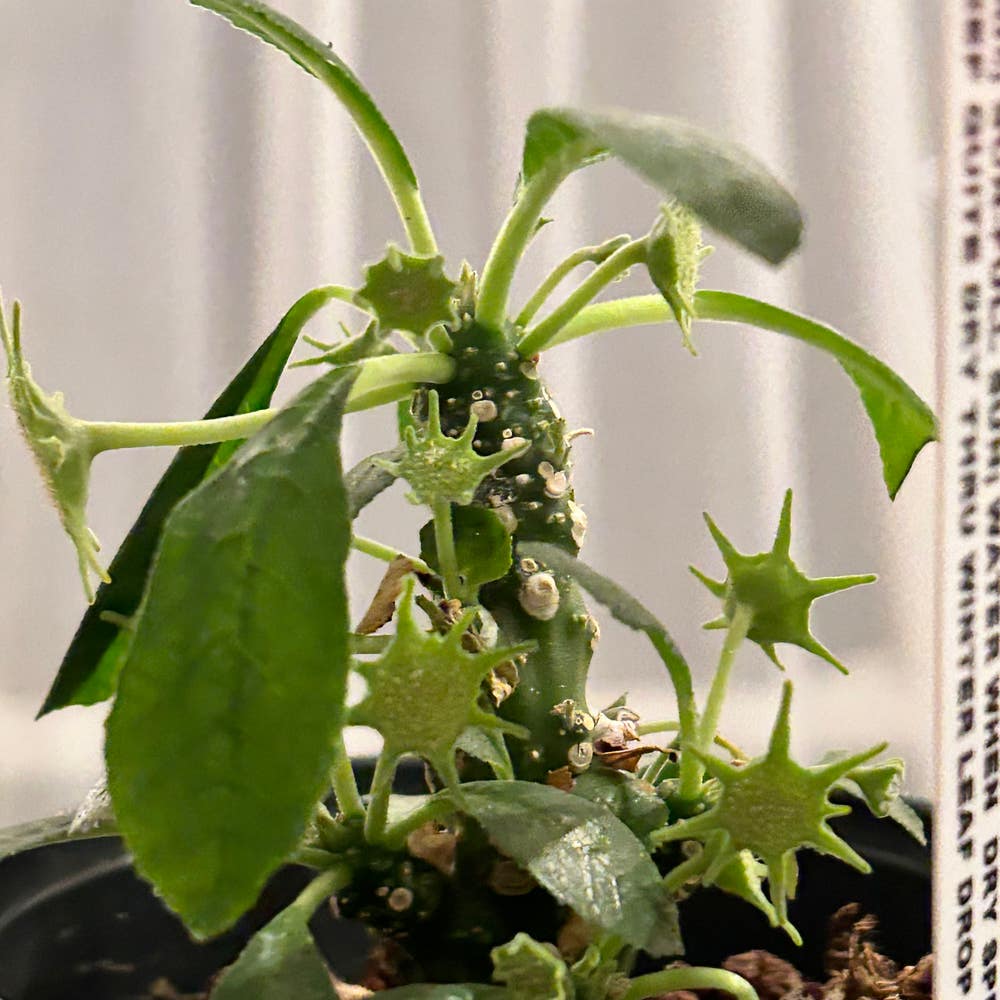
Propagating Dorstenia horwoodii: The Ultimate Guide
Dorstenia horwoodii
By the Greg Editorial Team
Apr 22, 2024•5 min read
This article was created with the help of AI so we can cover more plants for you. May contain errors. See one? Report it here.
- Healthy offsets and leaves are key to successful Dorstenia horwoodii propagation.
- Well-draining soil and moisture crucial for rooting cuttings and seeds.
- Monitor for pests and diseases, adjust care to prevent propagation pitfalls.
Getting Started with Offsets
🌱 Spotting and Snipping the Right Offsets
To propagate Dorstenia horwoodii, begin with healthy offsets. These are the young shoots that mirror the parent plant. Look for offsets with a developed root system; they should be firm yet still connected to the mother plant. Using sterilized scissors or a knife, make a clean cut to separate the offset, ensuring minimal harm to both the roots and the main plant.
🌱 Planting Your Offsets
Soil preparation is crucial. Opt for a well-draining mix to provide the perfect bed for your offsets. Choose a pot that's just right—spacious enough to allow growth but snug enough to offer support. It should have drainage holes to prevent waterlogging, which is the nemesis of healthy root development. Plant the offset shallowly, just deep enough to stand upright. Water sparingly at first to encourage root growth without risking rot.
Leaf Cuttings: A Step-by-Step Guide
💧 Choosing the Best Leaves
Selecting the right leaf is crucial for successful propagation. Look for leaves that are plump, indicating they're full of moisture and ready to root. A healthy sheen is a good sign, while wilted or discolored leaves should be avoided. Use sterilized scissors or pruners for a clean cut close to the stem, minimizing damage and disease risk.
🌱 Rooting Your Leaf Cuttings
Rooting is all about the soil, moisture, and warmth. After snipping your chosen leaf, allow the cut end to callus over for a few days to prevent rot. This is like giving your leaf a tiny shield against moisture overload. Once callused, place the leaf on a well-draining soil mix—think sandy loam or sphagnum moss—and lightly press it down.
Keep the soil consistently moist but not waterlogged; it should feel like a well-wrung sponge. Cover the cutting with plastic to create a mini greenhouse effect, maintaining high humidity without turning it into a plant sauna. Remember, your cuttings need indirect light—direct sunlight is a recipe for crispy leaves.
Warmth is a silent ally in this process. Aim for an ambient temperature between 75° to 80°F to encourage those shy roots to emerge. Patience is key; roots take time to develop, and watching for them can feel like a slow dance with nature. When you finally spot those tiny white tendrils, it's a small victory—your leaf is on its way to becoming a new plant.
Sowing the Future: Seed Propagation
👩🌾 Harvesting Seeds Like a Pro
Timing is critical when harvesting Dorstenia horwoodii seeds. The seeds, nestled within the plant's fruit, are ready when the fruit ripens. Unlike some plants that launch their seeds far and wide, Dorstenia horwoodii requires a gentler approach. Handle the seeds with care—they're as delicate as they are potent.
🌱 From Seed to Seedling
To transform a seed into a seedling, mimic nature's nurturing environment. A mix of potting soil, coarse sand, and perlite creates the perfect seed-starting medium. Sow the seeds surface-level and dust them with a whisper of soil. Keep the soil consistently moist and warm, but beware of waterlogging. Patience is key; these seeds will sprout on their own schedule, revealing the first signs of life with a sprout that's ready to face the world.
Overcoming Propagation Pitfalls
🌱 Common Hiccups and How to Fix Them
🍄 Root Rot: The Silent Killer
Root rot is the silent killer in the propagation game. If your offsets or cuttings start to look like they're auditioning for a zombie film, it's time to act. Snip the affected parts and replant in well-draining soil. Remember, your watering can isn't a showerhead; go easy on the hydration.
🌿 Stretching and Scorched Leaves: A Balancing Act
If your Dorstenia horwoodii starts stretching like it's trying to reach the ceiling, it's begging for more light. Conversely, leaves that look sunburnt need a break from the spotlight. Find that sweet spot where your plant can soak up rays without turning into a crisp.
🌱 Damping Off: The Seedling Reaper
Damping off can make seedlings collapse faster than a house of cards. Keep the soil damp, not soggy, and maintain a cozy temperature. This isn't a water park, so no flooding the seed trays, please.
🐜 Pest Patrol: Keeping Critters at Bay
Pests are like those party crashers who eat all your snacks. Keep an eye out for uninvited guests and show them the door with a gentle insecticide or a swipe of neem oil. Vigilance is key—don't let them settle in.
🍄 Fungal Foes: Airflow is Your Ally
Fungal infections love a good sauna. To avoid turning your propagation station into a mushroom farm, ensure good airflow. A fan can be your best friend here, keeping the air moving and the fungi at bay.
🔄 When to Fold 'Em: Knowing When to Start Over
Sometimes, despite your best efforts, propagation is a bust. If your plant looks more pitiful than promising, it's okay to start over. Take it as a learning experience, not a defeat.
📝 Documentation: Your Roadmap to Success
Keep a log of what works and what doesn't. This isn't just busywork; it's your roadmap to avoiding past mistakes and replicating successes. Patterns will emerge, and soon you'll be propagating like a pro.
⚠️ Safety First
This content is for general information and may contain errors, omissions, or outdated details. It is not medical, veterinary advice, or an endorsement of therapeutic claims.
Always consult a qualified healthcare professional before using any plant as food, medicine, or supplement.
Never eat any plant (or feed one to pets) without confirming its identity with at least two trusted sources.
If you suspect poisoning, call Poison Control (800) 222-1222, the Pet Poison Helpline (800) 213-6680, or your local emergency service immediately.
Spotted an error? Please report it here.
Ensure your Dorstenia horwoodii offsets and cuttings thrive 🌿 with Greg's custom watering reminders, tailored to your plant's propagation stage and environment.