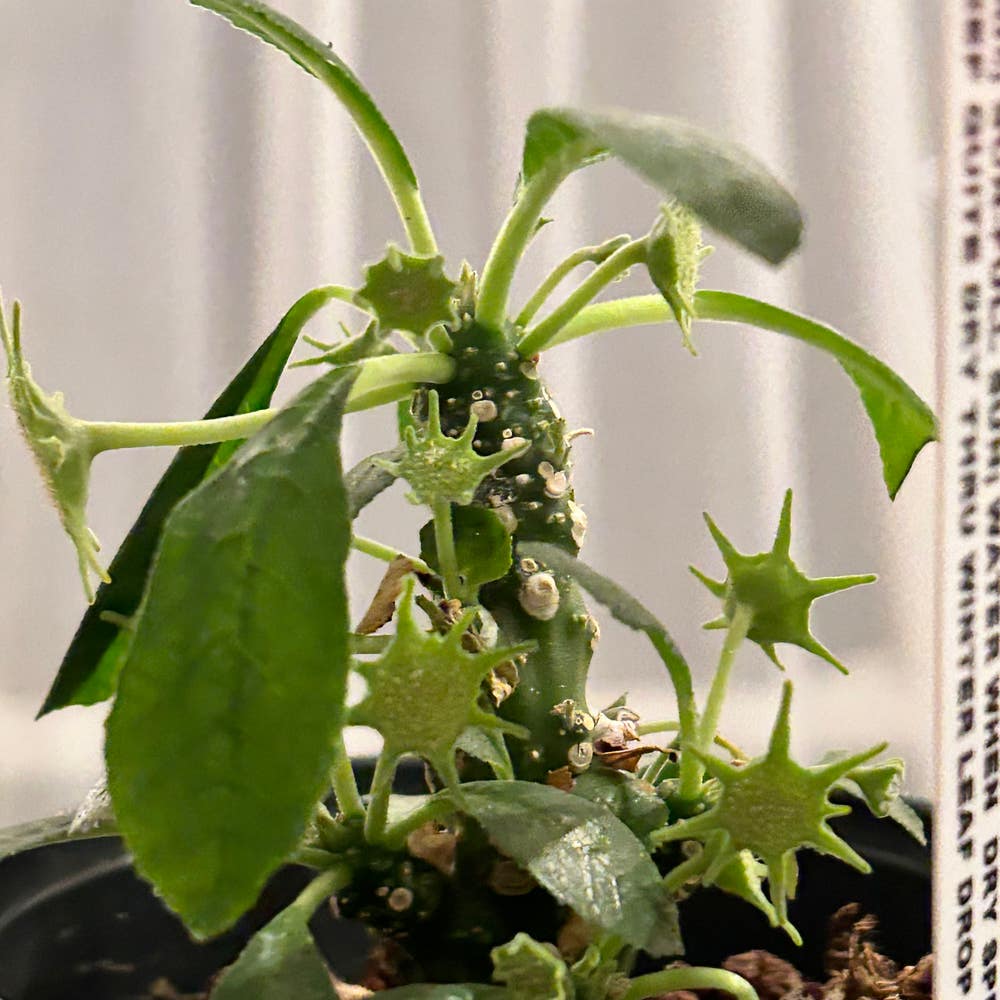
Why Are My Dorstenia horwoodii Leaves Falling Over?
Dorstenia horwoodii
By the Greg Editorial Team
Apr 22, 2024•5 min read
This article was created with the help of AI so we can cover more plants for you. May contain errors. See one? Report it here.
- 💧 Overwatering and underwatering both harm Dorstenia Horwoodii; balance is key.
- 🌞 Bright, indirect light and 65°F-75°F temperatures are ideal for plant health.
- 🌱 Proper drainage and soil aeration prevent root rot and leaf droop.
Spotting the Signs: When Your Dorstenia Horwoodii is Unhappy
🚰 Identifying Overwatering Symptoms
Yellowing leaves and a wilted appearance may signal your Dorstenia Horwoodii is getting more water than it can handle. Soggy soil should raise an alarm; it's a breeding ground for root rot, which undermines leaf stability.
🚰 How to tell if you're overwatering
If the soil feels perpetually wet and leaves detach with minimal effort, you're likely overdoing the hydration. Root rot often follows, marked by a musty odor and roots that are mushy to the touch.
🏜️ Recognizing Underwatering Red Flags
Wrinkled, lifeless leaves are the desperate flags of a thirsty Dorstenia. Soil pulling away from the pot's edge is a clear distress signal, indicating an urgent need for water.
🚰 Balancing the water needs of your plant
Your Dorstenia Horwoodii isn't tied to a strict watering schedule. Instead, water when the soil feels dry, not just because the calendar tells you to. It's about finding the right drought and drench balance.
Light and Temperature: Finding the Sweet Spot
⛅️ Ensuring Adequate Light Without the Burn
Bright, indirect light is your Dorstenia horwoodii's best friend. It's like a cozy middle ground where your plant can soak up the rays without the risk of a sunburn. If you notice your plant stretching out or leaning, it's probably begging for more light. Rotate it regularly to ensure all sides get their fair share of illumination.
🌡️ Keeping the Temperature Just Right
Your plant doesn't appreciate temperature drama. It thrives in a steady climate, away from the mood swings of drafty windows or hot radiators. If the leaves are wilting or browning, it might be a sign of temperature distress. Keep the thermostat consistent, ideally between 65°F and 75°F. Adjust your plant's position gradually to avoid shocking its system and watch it return to its perky self.
The Foundation of Health: Soil and Potting Mastery
🌊 The Perils of Poor Drainage
Waterlogged soil is a silent killer, often going unnoticed until it's too late. To spot this soggy culprit, check if the soil feels more like a wet sponge than dry earth. If your pot's drainage is as effective as a clogged gutter, it's time for a change. Ensure pots have holes—no ifs, ands, or buts. A pebble layer at the bottom isn't just for show; it's an extra defense against standing water. Consider a well-draining potting mix your plant's life insurance against root rot.
🏺 Choosing the Right Pot
Your pot choice isn't just about aesthetics; it's about survival. A pot without drainage holes is a ticking time bomb for root health. Choose wisely—your plant's luxury condo needs a built-in drainage system. Keep those holes clear, because a blocked drainage hole is as useful as a screen door on a submarine.
🌱 Battling Soil Compaction
Compacted soil is like tight jeans after a big meal—uncomfortable and restrictive. If your plant's leaves are drooping, it might be screaming for some breathing room. Aerate the soil to keep it as fluffy as a perfectly whipped meringue. When potting, treat the soil like a delicate pastry dough; don't overpack it. Roots need space to dance, not just stand.
🌿 Techniques for Keeping the Soil Fluffy
Mixing in perlite or pumice is like throwing a lifeline to drowning roots—they introduce air pockets and improve drainage. Remember, dense soil is a no-go. Your goal is a light and airy mix that treats water like a visitor, not a permanent resident. Regularly check the soil's moisture; if it's more akin to a bog than a garden, it's intervention time. Keep the soil as lively as a party, with organic matter to nourish and aerate.
Reviving and Thriving: Turning the Tide on Droopy Leaves
💧 Watering Wisdom: Quenching Your Plant's Thirst Effectively
Crafting the perfect watering schedule for your Dorstenia horwoodii is less about sticking to a calendar and more about syncing with the plant's needs. Observe and adapt; water when the top inch of soil feels like a dry martini—crisp and parched.
Tools and tricks for monitoring soil moisture can be a plant saver. A moisture meter is like having a secret agent who knows exactly when to water. No meter? No problem. The trusty finger test works too—just dive in and feel around.
🌞 Light and Temperature Tweaks for Peak Performance
Adjusting your plant's sunbathing and temperature regimen is crucial. If your Dorstenia is drooping, it might be begging for a sunnier spot or a break from the heat. Watch for the tell-tale signs and move it to that sweet spot where it's warm, but not baking.
Quick fixes for common environmental stressors include playing musical chairs with your pots. Too hot? Shift it to the shade. Too cold? Find a cozy corner. Your plant's comfort zone is key to its perkiness.
Soil and Potting Pro Tips
When and how to repot? It's like knowing when to break up with a cramped apartment. If roots are peeking out, it's time for a new home. Choose a pot with drainage holes to avoid a swampy mess.
Soil amendments and aeration tactics can make your Dorstenia's roots do the happy dance. Mix in some perlite or coarse sand to keep the soil from getting as compact as a rush-hour subway. Airy soil equals happy roots equals perky leaves.
⚠️ Safety First
This content is for general information and may contain errors, omissions, or outdated details. It is not medical, veterinary advice, or an endorsement of therapeutic claims.
Always consult a qualified healthcare professional before using any plant as food, medicine, or supplement.
Never eat any plant (or feed one to pets) without confirming its identity with at least two trusted sources.
If you suspect poisoning, call Poison Control (800) 222-1222, the Pet Poison Helpline (800) 213-6680, or your local emergency service immediately.
Spotted an error? Please report it here.
Ensure your Dorstenia Horwoodii stays upright and vibrant 🌱 with Greg's custom watering schedule and environmental tips tailored to your home's unique conditions.