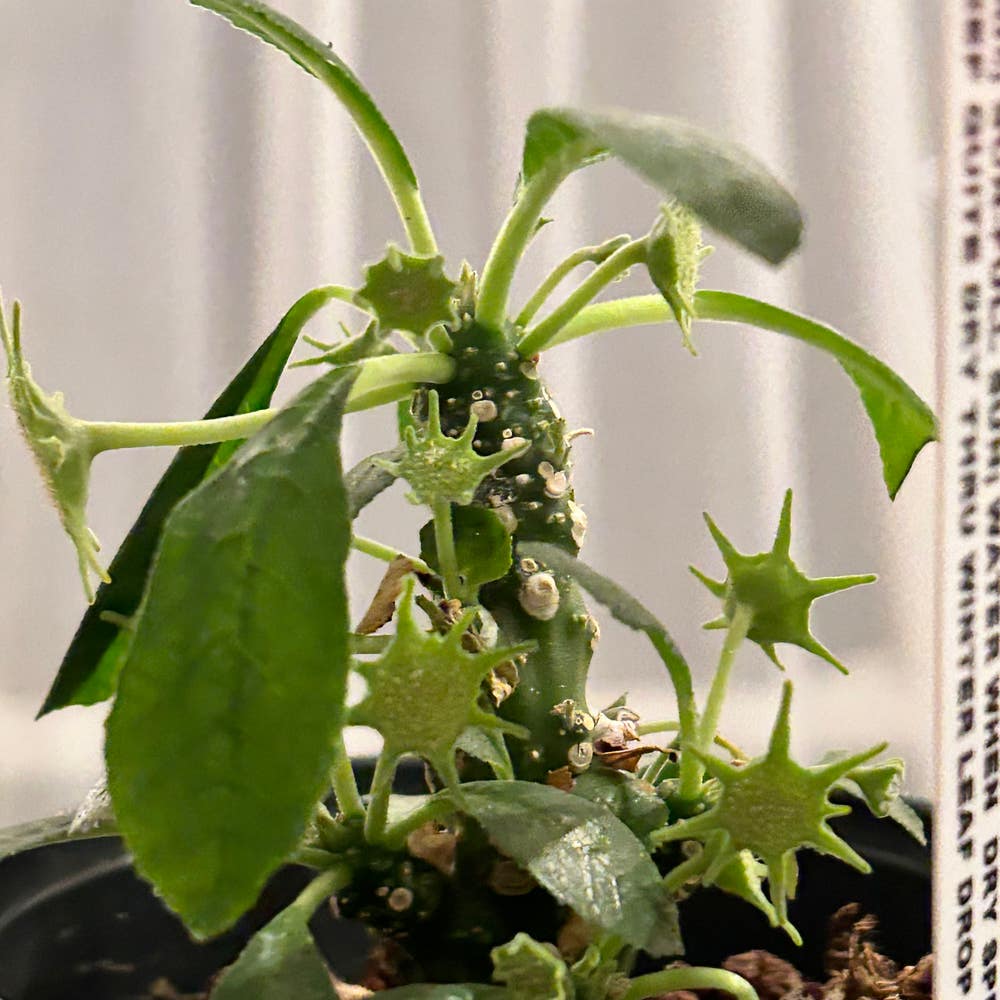
Light Requirements For Your Dorstenia horwoodii by Season
Dorstenia horwoodii
By the Greg Editorial Team
Apr 22, 2024•5 min read
This article was created with the help of AI so we can cover more plants for you. May contain errors. See one? Report it here.
- Bright, indirect light is key for Dorstenia horwoodii, especially in warm months.
- Grow lights supplement winter light; choose LEDs for energy efficiency.
- Seasonal adjustments necessary to prevent sunburn and encourage blooming.
Basking in the Right Light: Indoor Care
🌷 Spring and Summer: The Bright Side of Life
During the warmer months, your Dorstenia horwoodii is a bit of a sun worshipper, thriving in bright, indirect light. It's a balancing act; too much direct sunlight can lead to a crispy plant, not the ideal aesthetic. Position it where the light is generous but filtered, like near an east-facing window with a sheer curtain for a soft touch.
🛡️ Shielding from Too Much Sun
Beware the midday solar smackdown. Your Dorstenia horwoodii can get sunburned just like you. If you notice the leaves getting a tan (and not the good kind), it's time to intervene. A strategic relocation or the use of blinds can save your plant from the harshness of direct rays.
🍂 Fall and Winter: Keeping the Glow Alive
As the days shorten, your indoor lighting strategy needs a tweak. Your Dorstenia horwoodii still craves light, even if it's playing hard to get. Keep it near a window where the sun's weaker rays can still reach it, ensuring it continues to photosynthesize and stay healthy.
💡 Considering Grow Lights
When the sun clocks out early, grow lights can keep the party going for your plant. Full-spectrum lights are like an all-you-can-eat buffet for Dorstenia horwoodii, offering a spread of light that mimics the sun. Set them up to follow natural daylight hours, and watch your plant maintain its rhythm without missing a beat.
Thriving Under the Sky: Outdoor Care
🌞 Spring and Summer: Sunbathing Guidelines
Outdoor care for Dorstenia horwoodii requires finesse. Morning light is your plant's best friend, offering a gentle embrace without the harshness of the afternoon sun. Find a spot that basks in these early rays but transitions to shade as the day heats up. This ensures your succulent gets the light it craves without the risk of sunburn.
🛡️ The no-burn zone: Preventing outdoor light damage during peak seasons.
Partial shade is the secret to avoiding crispy leaves. Think of it as a natural parasol for your plant. Keep an eye on the shifting angles of the sun; as summer progresses, the intensity can spike. If your plant starts to look like it's pleading for mercy, it's time to increase the shade.
🌬️ Fall and Winter: Prepping for the Chill
As the sun's enthusiasm wanes, your Dorstenia horwoodii needs a light strategy revamp. Gradually shift its position to soak up the weaker rays without succumbing to the cold. This might mean moving it closer to a south-facing wall that reflects sunlight and retains warmth.
❄️ Winter strategies: Maximizing light without the freeze.
Consider mulching to insulate the soil and protect the roots from Jack Frost's bite. On those rare sunny winter days, ensure your plant still gets its dose of light, but don't let it linger in the cold. If the mercury plummets, it's time to bring your green buddy indoors or into a sheltered area.
Let There Be Blooms: Light's Role in Flowering
Dorstenia horwoodii may not be the diva of the plant world, but it sure knows how to put on a floral show with the right lighting. To coax those elusive flowers into existence, consistent light is your secret weapon.
💡 Does Dorstenia horwoodii Flower?
Yes, it does. But it's a bit of a wallflower, needing encouragement to strut its stuff. The key? Bright, indirect light. Too much shade, and you'll be waiting in vain for blooms. Too much sun, and you might as well wave goodbye to those delicate petals before they even have a chance.
💡 Seasonal Light Tweaks
As the seasons shift, so should your light strategy. In spring and summer, your plant is all about soaking up those rays. Come fall and winter, you might need to play matchmaker with a grow light to keep the love affair between your Dorstenia horwoodii and light alive.
💡 Spring and Summer
During these seasons, your plant is in its element. Make sure it gets plenty of bright, but not direct, sunlight. Think of it as a sunbathing session that doesn't end with a sunburn.
💡 Fall and Winter
Shorter days can be a downer for your plant. This is when you bring out the grow lights. Set them up to mimic natural light patterns, and watch your Dorstenia horwoodii keep its glow.
Remember, it's not just about keeping your plant alive; it's about helping it thrive. And when it comes to blooms, light is the maestro, orchestrating the whole symphony.
Choosing and Using Grow Lights
💡 Picking the Perfect Grow Light
Selecting a grow light for your Dorstenia horwoodii is less about wattage wars and more about finding the right fit. LEDs are the gold standard, offering energy efficiency and a cooler touch—no plant saunas here. Full-spectrum LEDs are like a buffet of wavelengths, serving up a slice of the sun's natural goodness. Size matters; a small plant might need just a clip-on LED, while a larger setup could call for an LED panel.
💡 Setup and Scheduling: Making Artificial Light Work for Your Plant
Positioning your grow light is a game of inches—too close, and you risk a crispy Dorstenia; too far, and it's like sunbathing at midnight. Adjustable heights and intensity controls are your best friends. As for timing, it's not about clocking in hours; it's about rhythm. Use a timer to simulate the sun's ebb and flow, keeping your plant in sync with the day-night cycle. Aim for about a 12-hour light cycle, but stay flexible—plants don't wear watches.
Remember, grow lights are not a 'set and forget' gadget. Keep an eye on your plant's reaction. If it starts belting out a rendition of "I Will Survive," you're probably doing it right. If not, tweak the setup. It's like being a plant DJ—adjust the lights until the vibe is just right.
⚠️ Safety First
This content is for general information and may contain errors, omissions, or outdated details. It is not medical, veterinary advice, or an endorsement of therapeutic claims.
Always consult a qualified healthcare professional before using any plant as food, medicine, or supplement.
Never eat any plant (or feed one to pets) without confirming its identity with at least two trusted sources.
If you suspect poisoning, call Poison Control (800) 222-1222, the Pet Poison Helpline (800) 213-6680, or your local emergency service immediately.
Spotted an error? Please report it here.
Keep your Dorstenia horwoodii thriving 🌞 by leveraging Greg's PlantVision to adjust to seasonal light changes for perfect growth year-round!