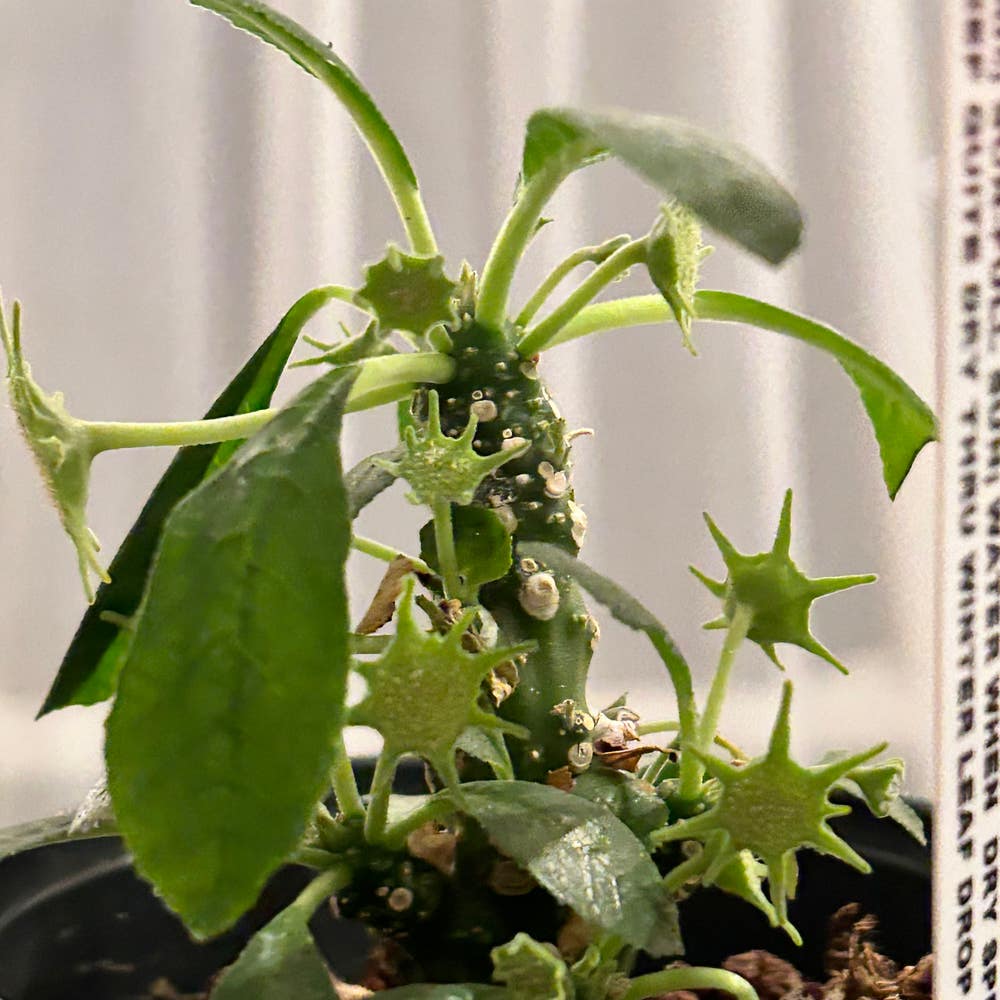
💧 What Is The Best Way To Water a Dorstenia horwoodii?
Dorstenia horwoodii
By the Greg Editorial Team
Apr 22, 2024•4 min read
This article was created with the help of AI so we can cover more plants for you. May contain errors. See one? Report it here.
- Check soil dryness: Water when top inch is dry.
- Seasonal watering: More in summer, less in winter.
- Soak and dry method: Saturate soil, then let it dry.
When to Water: Tuning into Your Plant's Thirst Signals
💧 Recognizing Thirsty Dorstenia: Visual Cues and Soil Checks
Your Dorstenia horwoodii isn't shy about showing when it's thirsty. Droopy leaves? It's time to grab the watering can. But hold up—check the soil first. If the top inch feels like a desert, water away. If it's damp, give it a break. Yellow leaves or a mushy base scream overwatering, so ease up on the enthusiasm.
🏜️ The Dry Down: How Long to Wait Between Waterings
Patience is a virtue, especially when it comes to watering. Let the soil dry out before going in for another round. This isn't just about playing hard to get; it's about letting the roots breathe and preventing rot. The finger test is your best friend here—second knuckle deep. If it's dry, it's time to hydrate.
🌱 Seasonal Shifts: Adjusting Your Watering with the Calendar
As the seasons change, so does your Dorstenia's drink order. Summer? It's like a marathon runner—needs lots of hydration. Winter? More like a couch potato—cut back on the water. Always check the soil's moisture level before watering, and remember: overwatering during dormancy is a one-way ticket to plant heaven.
How to Water: Techniques for Hydrating Your Dorstenia Horwoodii
💦 The Soak and Dry Method: Ensuring Even Moisture
The soak and dry method isn't just a trend; it's the lifeline for your Dorstenia horwoodii. Fully saturate the soil until water runs free from the drainage holes. Then, channel your inner patience and wait. Only water again when the soil feels like a deserted beach—dry.
💧 Water Quantity: How Much is Just Right?
Think of your Dorstenia horwoodii as a dinner guest. You wouldn't flood their plate with gravy, right? 0.5 cups of water every 9 days should suffice, assuming you're not hosting it in a sauna. Adjust the portion if your home swings from the Sahara to the Amazon.
🌊 Tools of the Trade: Using Watering Cans and Moisture Meters
Old-school watering cans get the job done, but a moisture meter? That's like upgrading from a flip phone to the latest smartphone. It tells you exactly when your plant's thirst needs quenching. No guesswork, no drama, just a happy, hydrated Dorstenia horwoodii.
The Impact of Environment on Watering Frequency
🏡 Home Sweet Home: How Your House Conditions Dictate Watering
Your house conditions are the backstage crew of your plant's performance. They work silently but can make or break the show. Temperature and humidity levels in your home are like invisible puppeteers, pulling the strings on your Dorstenia horwoodii's thirst. A plant basking in the glow of a sunny window might guzzle water like it's going out of style, while its shady corner cousin sips slowly.
🌱 Pot Talk: Size, Material, and Drainage Considerations
Pot size matters more than you might think. A tiny pot is a cramped studio apartment for roots; it fills up and dries out faster than you can say "water me." Conversely, a large pot is like a spacious suburban home, holding onto moisture for the long haul. And let's not forget material—terra cotta breathes easy, letting soil dry out quicker, while plastic is the clingy type, retaining water like a stage-five clinger. Drainage holes? Non-negotiable. They're the escape route for excess water, preventing your plant's roots from drowning in soggy despair.
Troubleshooting Watering Woes
🌊 Signs of Overindulgence: Dealing with Overwatering
Overwatering is like giving your plant an all-you-can-drink buffet when it's not that thirsty. Look for soil that's constantly wet or a plant that's lost its vibrant green for a sickly pale shade. If the roots are as mushy as overcooked noodles, you've gone too far. Trim the soggy roots with sterilized scissors and repot in fresh, well-draining soil. Make sure your pot has drainage holes that aren't just for show.
🏜️ Parched Plants: Recognizing and Correcting Underwatering
Underwatering turns your Dorstenia horwoodii into a drama queen with drooping leaves and tips as brown as burnt toast. The soil will be as dry as a desert, crumbling at a touch. To revive your thirsty plant, establish a consistent watering schedule. Water deeply but allow the soil to dry out between drinks. Keep an eye on the plant's recovery; you should see it perk up and flaunt its lushness within a week.
⚠️ Safety First
This content is for general information and may contain errors, omissions, or outdated details. It is not medical, veterinary advice, or an endorsement of therapeutic claims.
Always consult a qualified healthcare professional before using any plant as food, medicine, or supplement.
Never eat any plant (or feed one to pets) without confirming its identity with at least two trusted sources.
If you suspect poisoning, call Poison Control (800) 222-1222, the Pet Poison Helpline (800) 213-6680, or your local emergency service immediately.
Spotted an error? Please report it here.
Keep your Dorstenia horwoodii thriving 🌿 with Greg's personalized reminders that adjust to your plant's needs and your unique home environment.