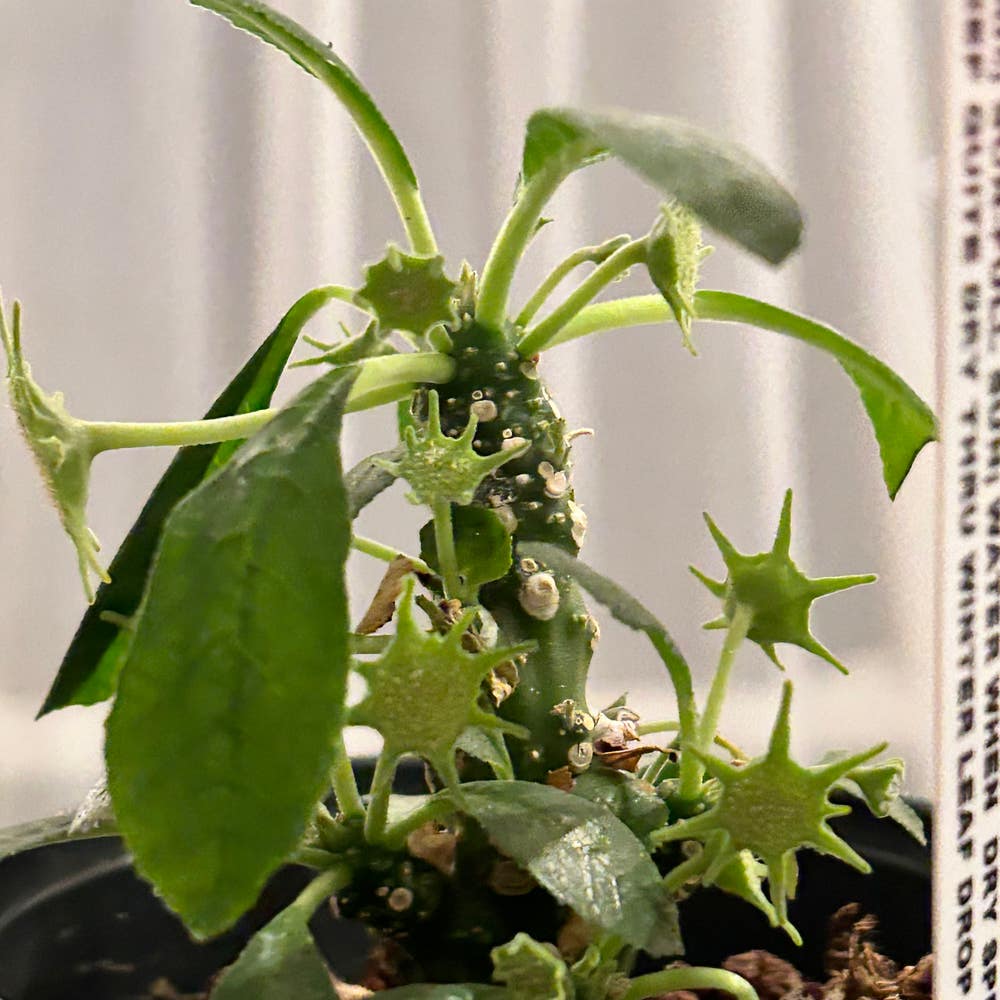
4 Outdoor Care Tips for Horwood's Dorstenia 💧
Dorstenia horwoodii
By the Greg Editorial Team
Sep 30, 2024•6 min read
This article was created with the help of AI so we can cover more plants for you. May contain errors. See one? Report it here.
- ☀️ Horwood's Dorstenia needs 4-6 hours of sunlight daily for optimal growth.
- 💧 Water when top 1-2 inches of soil are dry to prevent root rot.
- 🌱 Fertilize every 4-6 weeks during the growing season for healthy growth.
Sunlight Needs
Optimal Sunlight Exposure 🌞
Horwood's Dorstenia thrives in full sun to partial shade, requiring about 4-6 hours of direct sunlight daily. This exposure is crucial as it promotes healthy growth and vibrant foliage, ensuring your plant looks its best.
Signs of Insufficient Sunlight 🌑
If your Dorstenia is not getting enough light, you might notice etiolated growth, characterized by stretched stems and pale leaves. Additionally, leaf drop can occur, where the plant prematurely sheds leaves due to inadequate light, signaling a need for more sun.
Understanding these sunlight needs is essential for nurturing your Dorstenia effectively. With the right light conditions, your plant will flourish, setting the stage for the next important aspect of its care: watering requirements.
Watering Requirements
General Watering Guidelines 🌊
Watering your Horwood's Dorstenia is crucial for its health. Allow the top 1-2 inches of soil to dry out between waterings to prevent over-saturation.
Proper drainage is essential. Ensure that your pots or garden beds have adequate drainage to avoid root rot, which can be detrimental to your plant's growth.
Adjustments Based on Season ☀️
As the temperature rises during the hot months, you'll need to increase your watering frequency. Keep a close eye on soil moisture to ensure your plant stays hydrated.
In cooler months, reduce your watering schedule. Allow for longer drying periods to prevent waterlogging and promote healthy root development.
With these watering tips in mind, your Horwood's Dorstenia will thrive, setting the stage for the next essential aspect: soil preferences.
Soil Preferences
Ideal Soil Composition 🌱
For Horwood's Dorstenia, the right soil is crucial. Aim for well-draining soil rich in organic matter, ideally a mix of potting soil, perlite, and compost.
This combination ensures that the roots have access to nutrients while preventing waterlogging. Additionally, the soil pH should be slightly acidic to neutral, ranging from 6.0 to 7.0, to promote optimal growth.
Soil Preparation Tips 🛠️
To enhance soil quality, consider incorporating amendments. Adding organic matter not only improves soil structure but also boosts nutrient content, creating a thriving environment for your plant.
Testing your soil is equally important. Use a soil test kit to determine pH and nutrient levels, allowing you to make informed adjustments for the best results.
With the right soil setup, your Horwood's Dorstenia will flourish, setting the stage for healthy growth and vibrant foliage. Next, let’s explore the fertilization tips to keep your plant nourished.
Fertilization Tips
Fertilization Schedule 🌱
To keep your Horwood's Dorstenia thriving, fertilize every 4-6 weeks during the growing season, which spans from spring to early fall. Opt for a balanced, water-soluble fertilizer with an NPK ratio of 10-10-10 to ensure your plant receives essential nutrients.
Signs of Nutrient Deficiency ⚠️
Watch for yellowing leaves, a clear sign of nitrogen deficiency. If you notice stunted growth, it may indicate a lack of other essential nutrients, signaling that it's time to adjust your fertilization routine.
By staying attentive to your plant's needs, you can foster a vibrant and healthy environment for your Horwood's Dorstenia. Next, let’s explore the best planting options to maximize its growth potential.
Planting Options
🌱 Container Planting: Benefits and Drawbacks
Benefits
Container planting offers remarkable mobility. You can easily move your Horwood's Dorstenia indoors during extreme weather, ensuring it thrives regardless of the conditions outside.
Another advantage is the controlled environment. Managing soil and watering becomes simpler, allowing for better care and attention to your plant's needs.
Drawbacks
However, container planting has its limitations. The restricted root space may lead to the need for more frequent watering and fertilization, which can be a hassle.
Additionally, containers are temperature sensitive. They can heat up quickly in direct sunlight, potentially stressing your plant during hot spells.
🌍 In-Ground Planting: Benefits and Drawbacks
Benefits
In-ground planting provides a natural growth environment. Your Horwood's Dorstenia has ample space for roots to expand, promoting healthier growth.
Moreover, it requires less frequent watering. The soil retains moisture better than in containers, making it easier to maintain hydration levels.
Drawbacks
On the flip side, in-ground planting comes with its own set of challenges. There's a greater vulnerability to pests and diseases, as your plant is more exposed to outdoor elements.
Lastly, it offers limited mobility. If extreme weather strikes, protecting your plant can be more difficult compared to container options.
Understanding these planting options will help you make informed decisions for your Horwood's Dorstenia. Next, let’s explore how to protect your plant from environmental factors.
Protection from Environmental Factors
🌦️ Weather Protection Strategies
Mulching is a simple yet effective way to protect your Horwood's Dorstenia. Apply a 2-3 inch layer of mulch to retain moisture and regulate soil temperature, ensuring your plant thrives.
During cold snaps, frost protection is crucial. Use frost cloths or move containers indoors to shield your plants from harsh weather conditions.
🐛 Pest and Disease Management
Common Outdoor Pests
Aphids can be a nuisance for your Dorstenia. Look for curled leaves and sticky residue, which are telltale signs of an infestation.
Spider mites are another common pest. Keep an eye out for fine webbing and stippled leaves, indicating these tiny invaders are at work.
Common Diseases
Root rot is a serious concern, often caused by overwatering. Prevent this by ensuring your pots or garden beds have proper drainage.
Leaf spot is a fungal disease that can affect your plant’s health. Manage it by maintaining good air circulation and using appropriate watering techniques to keep leaves dry.
With these protective measures in place, your Horwood's Dorstenia will be better equipped to face environmental challenges. Next, let’s explore seasonal care to keep your plant thriving throughout the year.
Seasonal Care
🌱 Seasonal Changes and Their Impact
Spring marks the active growth phase for Horwood's Dorstenia. During this time, increase both watering and fertilization to support robust growth.
As temperatures begin to drop in fall, gradually reduce watering. This helps the plant acclimate to the changing conditions.
❄️ Winter Care Considerations
Frost can be a significant threat, so it's crucial to protect your outdoor plants. Use protective coverings to shield them from harsh winter conditions.
If temperatures dip below 50°F (10°C), consider moving container plants indoors. This transition helps maintain their health during colder months.
☀️ Summer Care Considerations
In summer, increased watering is essential, especially during heatwaves. Keep a close eye on soil moisture to ensure your plant remains hydrated.
Additionally, provide partial shade during the hottest part of the day. This simple step can prevent sunburn on the leaves and promote overall vitality.
With these seasonal care tips, your Horwood's Dorstenia will thrive throughout the year. Next, let’s explore how climate zone considerations can further enhance your plant care strategy.
Climate Zone Considerations
Best Climate Zones 🌞
Horwood's Dorstenia thrives best in USDA zones 9-11. These zones provide the warm temperatures that this plant loves, allowing it to flourish year-round.
Adaptation Tips for Different Climates 🌍
If you're in a cooler climate, consider using containers. This allows for easy mobility, so you can bring your Dorstenia indoors during winter.
In hotter climates, keep an eye on your plant's watering needs. Providing adequate shade can prevent sunburn on the leaves, ensuring your plant stays healthy and vibrant.
With these climate considerations in mind, you can create the ideal environment for your Horwood's Dorstenia to thrive. Next, let’s explore seasonal care to keep your plant flourishing throughout the year.
⚠️ Safety First
This content is for general information and may contain errors, omissions, or outdated details. It is not medical, veterinary advice, or an endorsement of therapeutic claims.
Always consult a qualified healthcare professional before using any plant as food, medicine, or supplement.
Never eat any plant (or feed one to pets) without confirming its identity with at least two trusted sources.
If you suspect poisoning, call Poison Control (800) 222-1222, the Pet Poison Helpline (800) 213-6680, or your local emergency service immediately.
Spotted an error? Please report it here.
Keep your Horwood's Dorstenia thriving all year long 🌞 with Greg's personalized care plans and watering reminders that ensure your plant gets just the right amount of love it needs!