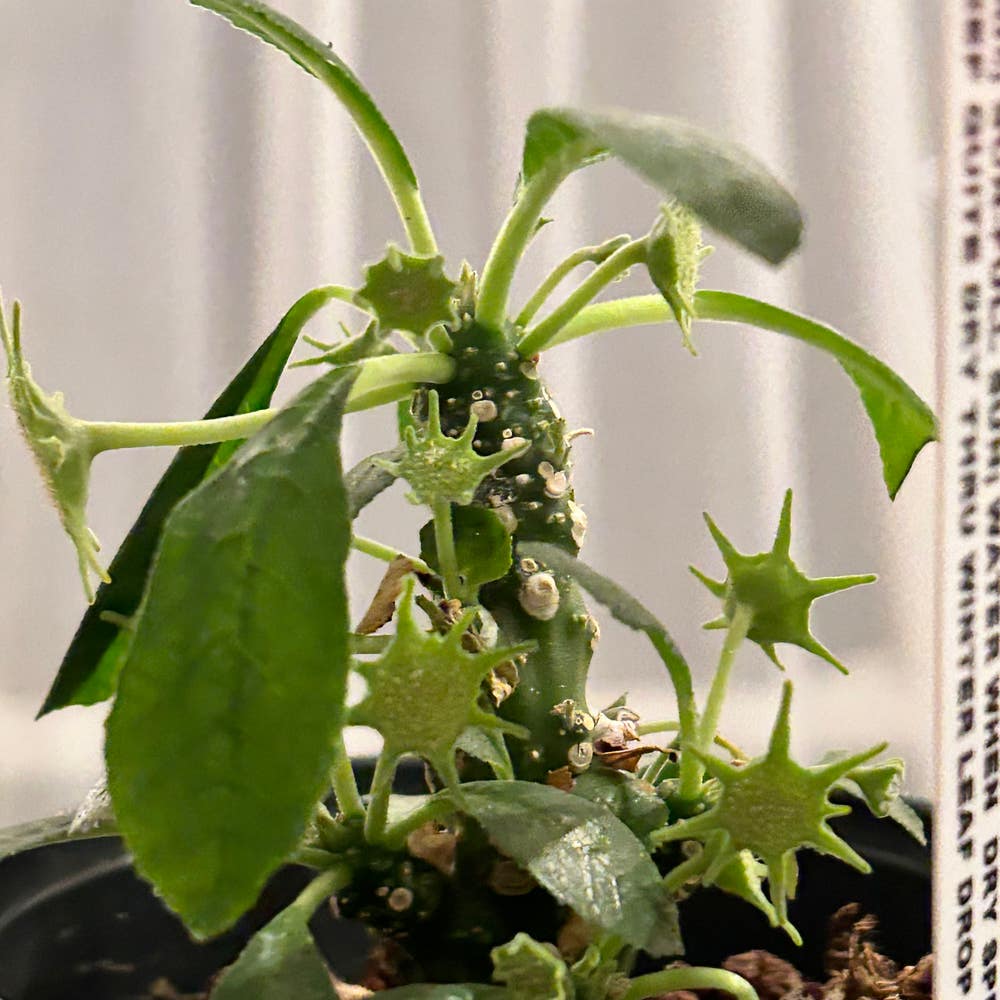
Dorstenia horwoodii Root Rot Solutions
Dorstenia horwoodii
By the Greg Editorial Team
Apr 22, 2024•4 min read
This article was created with the help of AI so we can cover more plants for you. May contain errors. See one? Report it here.
- Yellow leaves, wilting, bad odor? Likely root rot in Dorstenia horwoodii.
- Act fast: Remove, inspect, and trim roots; repot with well-draining soil.
- Prevent recurrence with proper watering, humidity, and regular root check-ups.
Spotting Trouble: Recognizing Root Rot in Dorstenia horwoodii
🚨 Telltale Signs
Yellowing leaves and wilting are the plant's version of waving a white flag. If your Dorstenia horwoodii looks more like it's prepping for autumn rather than thriving, take note. A foul odor is the equivalent of a smoke alarm for root health; don't ignore it.
To check for mushy, discolored roots, you'll need to play detective. Gently remove the plant from its pot and inspect the roots. Healthy roots should be firm and white, while rotten ones are the botanical version of a bad apple—squishy and dark.
🔍 Early Detection
Catching root rot early in Dorstenia horwoodii is like finding a leak in your roof before it collapses. It's crucial. If you suspect root rot, act fast. The first step is to isolate the plant; think quarantine, but for plants.
When you first spot trouble, don't just hope for the best. Investigate. If the roots are giving you a mushy handshake, it's time for an intervention. This isn't a drill; it's plant ICU time.
Emergency Response: Treating Root Rot Step by Step
🌱 Immediate Actions
When root rot rears its ugly head, it's time to get your hands dirty. Remove the Dorstenia horwoodii from its pot like you're uncovering a hidden treasure. Brush off the soil to reveal the roots' true state. If they're mushy and brown, it's surgery time. Sterilize your shears and cut with the precision of a seasoned surgeon, removing only the rotted parts.
🌿 Soil and Pot Overhaul
Next, it's all about giving your plant a fresh start. Toss the old soil; it's as useful as a chocolate teapot. Select a new pot with drainage holes that don't skimp on size – think roomy, not cramped. Fill it with well-draining soil that's as light and fluffy as a cloud. Remember, good drainage and aeration are your plant's new best friends, helping it bounce back with vigor.
Water Wisely: Adjusting Your Watering Habits
💧 Finding the Balance
After root rot recovery, pinpointing the ideal watering frequency for Dorstenia horwoodii is crucial. Overwatering can quickly lead to a relapse, while underwatering can stress the plant. Start by watering only when the top inch of soil is dry to the touch.
Use moisture meters to eliminate guesswork, providing a clear indication of when it's time to water. Remember, your plant's need for water will change with the seasons—less in the cool winter, more during the warm growing season.
🌱 Monitoring and Adapting
Observing your plant's reaction to watering is essential. Look for signs of renewed growth or, conversely, symptoms of distress. If leaves begin to yellow or wilt, reassess your watering strategy immediately.
Be ready to adjust your watering habits based on your plant's feedback and environmental changes. Use tools like hygrometers to keep track of humidity, and tweak your watering accordingly. Remember, consistent care is key to maintaining the health of your Dorstenia horwoodii.
Keeping It Dry: Long-Term Prevention Strategies
💧 The Right Environment
Humidity and temperature are the puppeteers of plant health. Too high, and you're asking for trouble; too low, and you're in a desert. Keep these levels just right to ward off root rot. Use a hygrometer to monitor humidity like a hawk. Air circulation? Non-negotiable. A fan or a cracked window can keep the air from going stale around your plant's roots.
👩⚕️ Regular Check-Ups
Make root inspections your new brunch date—regular and essential. Spotting the early signs of root rot is like catching a typo in an important email; do it before it's too late. If you notice your plant's leaves throwing a fit, it's time to adjust your care routine. Keep a keen eye on the soil moisture and remember, when it comes to watering, it's a marathon, not a sprint.
⚠️ Safety First
This content is for general information and may contain errors, omissions, or outdated details. It is not medical, veterinary advice, or an endorsement of therapeutic claims.
Always consult a qualified healthcare professional before using any plant as food, medicine, or supplement.
Never eat any plant (or feed one to pets) without confirming its identity with at least two trusted sources.
If you suspect poisoning, call Poison Control (800) 222-1222, the Pet Poison Helpline (800) 213-6680, or your local emergency service immediately.
Spotted an error? Please report it here.
Prevent root rot before it starts 🛡️ with Greg's tailored watering reminders and soil moisture tracking for your Dorstenia horwoodii.