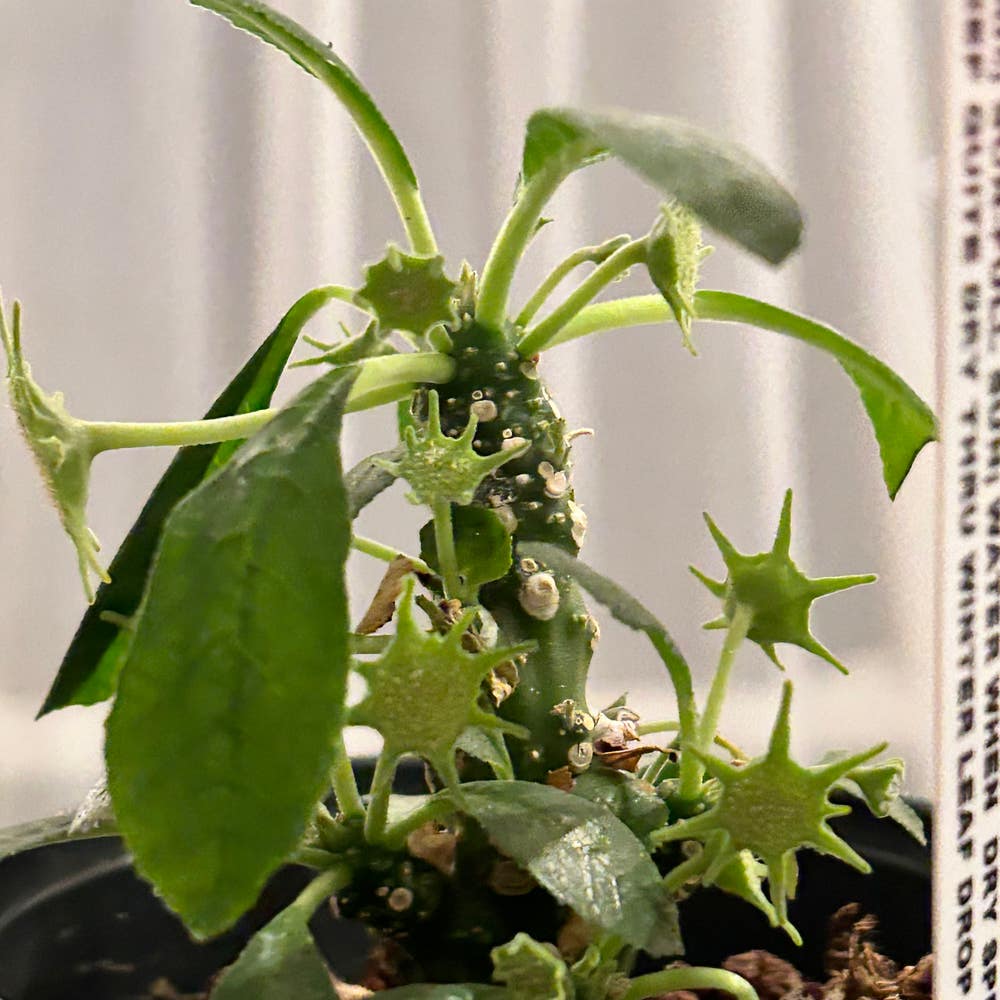
How Can You Tell If A Dorstenia horwoodii Is Dying?
Dorstenia horwoodii
By the Greg Editorial Team
Apr 22, 2024•5 min read
This article was created with the help of AI so we can cover more plants for you. May contain errors. See one? Report it here.
- Yellow or wrinkled leaves indicate over/underwatering; consistency in watering is vital.
- Bright, indirect light and stable temperature are essential for plant health.
- Combat pests, mold, and root rot with early detection and appropriate action.
When Watering Goes Wrong
🚱 Spotting the Signs of Water Woes
🌊 Identifying Overwatering
Yellow, bloated leaves are red flags for overwatering your Dorstenia horwoodii. If the pot feels like a drenched sponge, you've overdone the H2O. Root rot often follows, a silent killer that's hard to spot until it's too late.
🏜️ Recognizing Underwatering
Wrinkled, deflated leaves signal a thirsty Dorstenia horwoodii. A soil gap at the pot's edge is a desperate SOS for water. Don't wait for the plant to look like a balloon days after the party—hydrate!
🚿 Fixing the Flow
💧 Balancing Your Watering Routine
To avoid turning your plant into a desert dweller or a swamp creature, consistency is key. Water when the top inch of soil feels dry, but don't unleash a monsoon. Consider using a moisture meter for precision, or set a reminder to keep your watering on track. If overwatering is a chronic issue, a soil switch to a well-draining mix might just be your new best friend.
Light and Temperature: A Delicate Dance
🍃 Reading the Leaves for Light and Temperature Troubles
Irregular light can leave Dorstenia horwoodii looking less than stellar. Too much light scorches leaves, leaving them crisp and discolored. On the flip side, insufficient light causes the plant to stretch out, reaching for the sun in awkward poses.
Temperature swings are no less dramatic for this plant. Drooping leaves might indicate your Dorstenia horwoodii is experiencing the botanical equivalent of a temper tantrum due to fluctuating temperatures.
🌱 Setting the Stage for Stability
Finding the sweet spot for light and temperature is crucial for the health of your Dorstenia horwoodii. This means providing bright, indirect light and maintaining a consistent temperature that mimics the plant's natural habitat.
Adjust the plant's position with the changing angle of the sun throughout the seasons. Keep temperatures steady, ideally between 65-75°F (18-24°C), to prevent your plant from going into shock.
Bug Battles and Fungus Fights
🐛 Unwanted Guests: Pests on Your Plant
Aphids, mealybugs, and spider mites are the usual suspects when it comes to Dorstenia horwoodii. These pests are not just a nuisance; they can cause serious harm to your plant. Check the undersides of leaves and stems for any signs of infestation, such as sticky residue or webbing.
For DIY pest control, a mixture of water and mild dish soap can be effective. Spray it directly onto the pests. Neem oil is another go-to for its natural pesticidal properties. Remember, a clean plant is a happy plant, so keep your Dorstenia horwoodii's environment tidy to deter these critters.
🍄 Mold and Fungus Among Us
Mold and fungus thrive in moist, poorly ventilated conditions. White or black spots on the plant are a clear indication of fungal issues. To prevent mold and fungus, ensure good air circulation and avoid overwatering.
If you spot an outbreak, it's time to act. Remove affected parts with sterilized shears. Fungicidal sprays can be a plant-saver, but use them judiciously. Prevention is key, so keep the surrounding area dry and clean to avoid giving these uninvited guests a reason to return.
Root Rot: The Silent Killer
🕵️ Detecting the Dreaded Root Rot
Root rot sneaks up on Dorstenia horwoodii like a thief in the night. Early detection is your best bet to catch it. Look for leaves that droop without perking up after watering and a base that's softer than a ripe tomato. A foul odor from the soil is a dead giveaway—healthy plants don't smell like a marsh. If the roots are more brown and mushy than firm and white, it's time to act.
🛠️ Root Recovery Tactics
Once you've spotted root rot, it's all hands on deck. Unpot your plant with care and inspect the roots. Healthy ones look like fresh spaghetti, while rotten ones resemble overcooked noodles. Snip the bad parts with sterilized scissors—think of it as a precision strike. Then, repot in fresh soil that drains like a dream. Adjust your watering habits; let the soil dry out like a desert between drinks. If you're up against a fungal foe, consider a fungicide as your sidekick. Remember, the best offense is a good defense—keep the soil airy and never soggy.
Environmental Stress: Scorching and More
🌞 Leaf Scorching: When the Heat is Too Much
Leaf scorch in Dorstenia horwoodii manifests as brown, crispy edges, signaling that your plant might be auditioning for a role in a desert scene. Curling leaves or faded spots are the plant's version of a white flag, indicating surrender to excessive sunlight.
🌿 Easing the Environmental Strain
To combat environmental stress, think of your plant's space as a microclimate sanctuary. Consistent temperatures are the VIP passes to plant wellness. Use thermometers to monitor and maintain a stable climate. If your plant's leaves could talk, they'd probably ask for a humidifier to combat dry air.
Shade cloth can be a plant's knight in shining armor against harsh sunlight. For potted plants, ensure they're in containers that don't turn into mini ovens in the sun. And remember, mulch isn't just for aesthetics; it's a moisture and temperature regulator.
When heat waves hit, relocate your Dorstenia horwoodii to a cooler spot, away from the plant equivalent of a tanning bed. And if you've already spotted signs of heat stress, hydrate and be patient. Plants, like people, need time to recover from a sunburn.
⚠️ Safety First
This content is for general information and may contain errors, omissions, or outdated details. It is not medical, veterinary advice, or an endorsement of therapeutic claims.
Always consult a qualified healthcare professional before using any plant as food, medicine, or supplement.
Never eat any plant (or feed one to pets) without confirming its identity with at least two trusted sources.
If you suspect poisoning, call Poison Control (800) 222-1222, the Pet Poison Helpline (800) 213-6680, or your local emergency service immediately.
Spotted an error? Please report it here.
Combat your Dorstenia horwoodii's distress and nurture it back to health 🌱 with Greg's custom watering plans and community support for a thriving plant life.