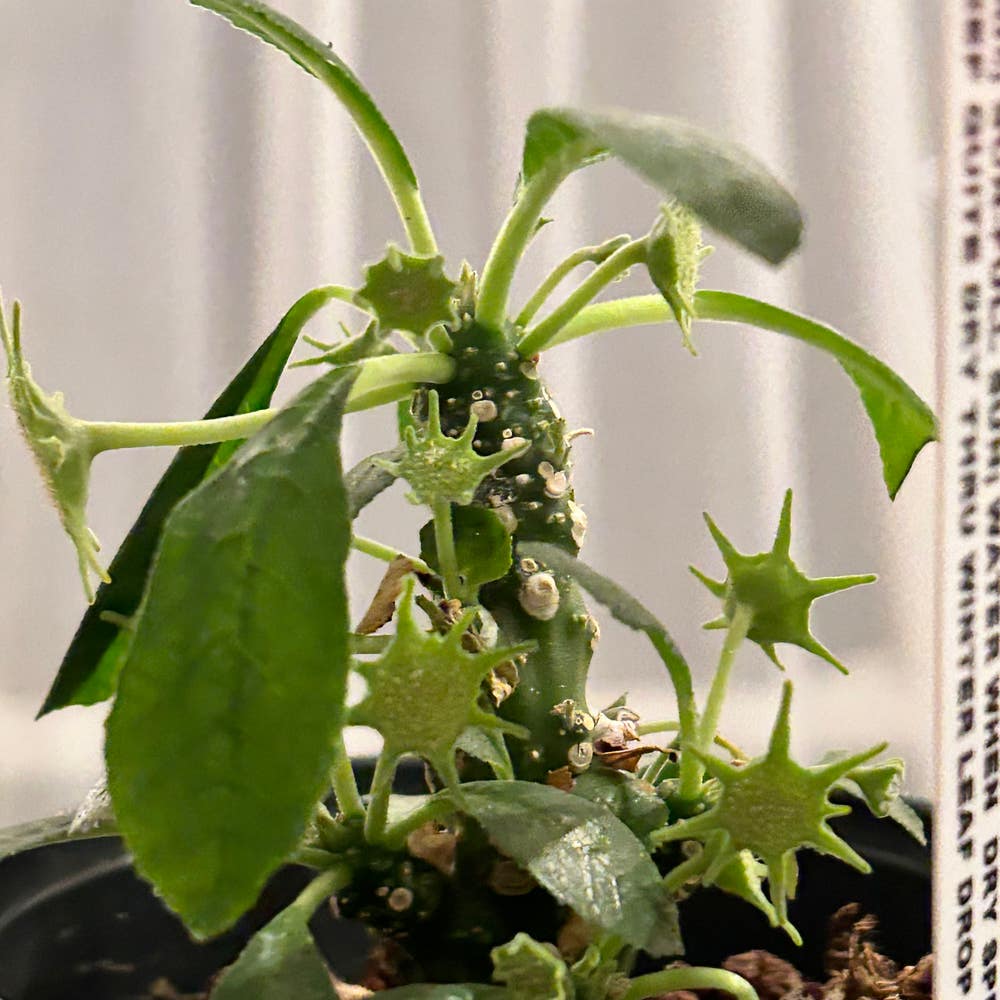
Black Spots on My Dorstenia horwoodii Leaves
Dorstenia horwoodii
By the Greg Editorial Team
Apr 22, 2024•3 min read
This article was created with the help of AI so we can cover more plants for you. May contain errors. See one? Report it here.
- Fungicides and antibacterials treat black spots; rotate to prevent resistance.
- Adjust care practices like soil moisture and air circulation to prevent spots.
- Seek expert help if spots persist despite treatment efforts.
Section
Turning the Tide: Effective Treatments for Black Spots
🍄 Fungicide to the Rescue
When black spots invade your Dorstenia horwoodii, reaching for a fungicide isn't overreacting—it's necessary. Choose wisely; copper hydroxide or mancozeb are your allies here. Apply with care, ensuring every part of the leaf is covered. It's like sunscreen; miss a spot, and you're inviting trouble. Follow the label religiously and rotate products to prevent the fungus from building resistance.
💊 Battling Bacteria
If bacteria are the culprits behind the black spots, antibacterial treatments step up to the plate. Use them judiciously, as if you're following a doctor's prescription to the letter. Overuse is a no-go—it's the fast track to creating superbugs on your plant. Keep an eye on the progress and reapply as needed, because this is a marathon, not a sprint.
🌱 Tweaking the Environment
Adjusting your plant care can often stop black spots before they start. Check the soil moisture before watering—overwatering is a fungal fiesta waiting to happen. Water directly at the roots to keep the leaves dry. Ensure good air circulation; it's like social distancing for plants. And remember, cleanliness is next to godliness—sterilize your tools as if you're scrubbing away the sins of infection.
Prevention is Key: Keeping Black Spots at Bay
🔍 Routine Checks
Regular monitoring is like the pulse check for your Dorstenia horwoodii. Inspect leaves for early signs of distress, such as spots or discoloration. Think of it as a detective looking for clues; catching issues early is your best bet for plant health.
💧 Optimal Care Practices
Watering is a critical factor. Ensure the soil is moist but not waterlogged, and always water at the base to keep leaves dry. Lighting should be bright yet indirect, and don't forget to rotate your plant for even exposure. Feeding should be consistent with the plant's growth stage and season.
🧼 Cleanliness and Hygiene
Keep your plant's environment as clean as your conscience. Remove fallen debris and sterilize your tools after each use. It's not just about being tidy; it's about breaking the cycle of pathogens. Remember, a clean plant is a happy plant, less likely to succumb to black spots.
When to Call in the Cavalry: Seeking Professional Help
🚨 Recognizing the Limits of DIY
Sometimes, your green thumb meets its match. Persistent issues or a severe outbreak that's spreading rapidly are clear signs you need more than what's in your garden shed. If your Dorstenia horwoodii is still sporting black spots after you've tried every trick in the book, it's time to seek professional help.
📸 Gathering Intel for the Experts
Before you reach out, document everything. Snap photos of the affected leaves, jot down any treatments you've tried, and note the progression of the spots. This information is crucial for plant specialists to diagnose and treat the issue effectively.
🕵️ Finding the Right Help
Your local county Extension office is a good starting point—they're the plant world's detectives. Alternatively, a reputable pest management professional with plant knowledge can offer the advanced help you need. Don't hesitate to ask fellow plant enthusiasts for recommendations; they might just have the perfect contact up their sleeve.
⏱ Act Swiftly, But Wisely
The sooner you get professional advice, the better the chances of your plant's recovery. But ensure the expert you choose is qualified and has a sensible plan of action. After all, you don't want to turn your home into a hazard zone with overly aggressive treatments.
⚠️ Safety First
This content is for general information and may contain errors, omissions, or outdated details. It is not medical, veterinary advice, or an endorsement of therapeutic claims.
Always consult a qualified healthcare professional before using any plant as food, medicine, or supplement.
Never eat any plant (or feed one to pets) without confirming its identity with at least two trusted sources.
If you suspect poisoning, call Poison Control (800) 222-1222, the Pet Poison Helpline (800) 213-6680, or your local emergency service immediately.
Spotted an error? Please report it here.
Keep your Dorstenia horwoodii spotless 🍃 with Greg's vigilant care reminders, ensuring you act swiftly to prevent and treat black spots.