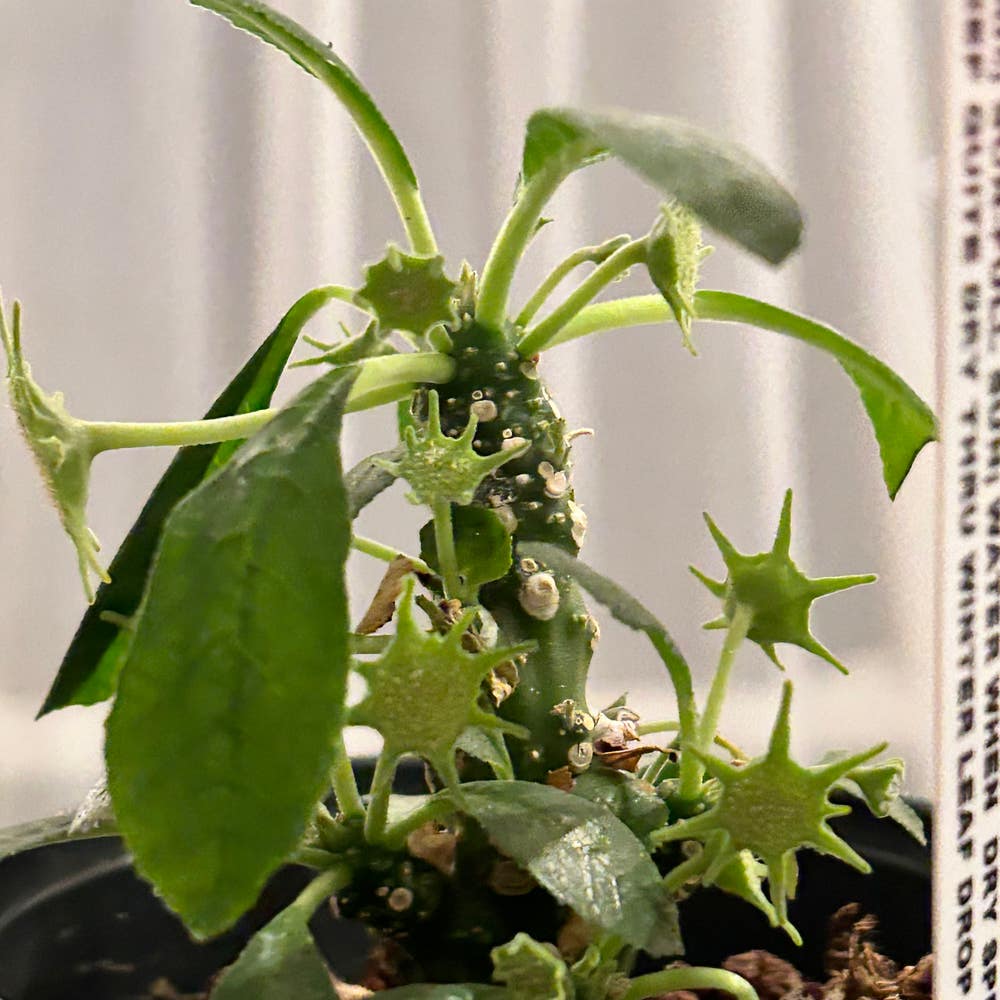
Why Are There Brown Spots on My Dorstenia horwoodii?
Dorstenia horwoodii
By the Greg Editorial Team
Apr 22, 2024•5 min read
This article was created with the help of AI so we can cover more plants for you. May contain errors. See one? Report it here.
- Fungal and bacterial spots differ; look for rings or water-soaked lesions.
- Prevent spots with good care: avoid overwatering and ensure proper light.
- Treat with fungicides or bactericides as needed, and improve airflow.
Spotting the Trouble: Identifying Brown Spots on Your Plant
🚩 Visual Cues: What do brown spots on Dorstenia horwoodii look like?
Brown spots on Dorstenia horwoodii are like red flags waving at you, demanding attention. They can vary from tiny specks to larger patches, and their texture can be a tell-tale sign. Crispy and dry spots could be the plant's silent scream about too much sun, while soft, mushy ones might be snitching on your overwatering habits. Look for spots with a yellow halo; they're not just accessorizing—they're indicating a potentially serious problem.
⏰ Timing and Progression: How and when do brown spots typically appear?
Brown spots don't just pop up for the fun of it; they're a sign that your plant is in a pickle. They can appear anytime, especially when the plant is stressed—think of it as your plant's version of breaking out before a big date. Catch them early, and you're playing hero, saving your plant from a world of hurt. Let them spread, and you're in for a battle. Regular check-ups during watering are your best bet to catch these party crashers before they ruin the vibe.
Fungal Foes: Tackling Fungal-Related Brown Spots
🍄 Spotting the Signs: Differentiating Fungal Spots from Other Causes
Brown spots on your Dorstenia horwoodii got you puzzled? Fungal infections often leave a calling card in the form of concentric rings or a yellow halo around the spots. Unlike the uniform appearance of pest damage, these spots are the plant world's equivalent of a red flag.
🍄 Fungus Among Us: Common Fungal Culprits and Their Treatment
Got irregular, crusty spots? It's probably a fungus gatecrashing your plant's party. Time to bring out the fungicides, but not all willy-nilly. Chlorothalonil or mancozeb might do the trick. Remember, like a potent hot sauce, a little goes a long way. Follow the label like it's a treasure map to healthy foliage.
🍄 Prevention is Key: Tips to Keep Fungi at Bay
Prevention is like the bouncer at the door, keeping the fungal party crashers out. Ensure airflow is top-notch and leaves stay dry. Think of it as setting up a no-fly zone for spores. And if you've got soggy soil, it's time for an intervention. Overwatering is like sending fungi a gilded invitation. Keep it dry, keep it moving, and keep an eye out.
Bacterial Battles: Dealing with Bacterial Brown Spots
🦠 Bacterial Spot Identification
Bacterial brown spots on Dorstenia horwoodii are sneaky invaders. They appear as water-soaked lesions, sometimes with a yellow halo. These spots can ooze or emit an odor, signaling it's time to act. Quick identification is essential to prevent further damage.
💣 Combating the Bacteria
When bacterial spots crash the party, it's time for targeted treatments. Copper-based bactericides are your first line of defense. Use them as directed—overuse is a no-go. Reapply treatments as necessary, keeping a close eye on your plant's recovery.
🧼 Clean and Clear: Preventative Measures
Prevention is your best weapon against bacterial brown spots. Quarantine new plants like they're potential double agents. Keep your gardening tools cleaner than your kitchen cutlery. Clear away debris, and improve air circulation. Avoid overhead watering to keep the leaves dry and less inviting to bacteria. Remember, an ounce of prevention is worth a pound of cure.
Environmental Factors: When Your Care Routine Causes Spots
🚰 Too Much Love: The Impact of Overwatering and Poor Drainage
Overwatering is the plant equivalent of an overbearing hug; it's suffocating. When your Dorstenia horwoodii's soil feels more like a swamp than a fertile ground, you've gone too far. Roots, like people, need space to breathe. Without oxygen, they rot, and brown spots are the tell-tale sign of their distress.
Poor drainage is like a bad relationship—it's all take and no give. Make sure your pots have holes, and the soil is well-draining. If your plant's feet are constantly wet, it's only a matter of time before the brown spots show up to the party.
🌞 Sunburned or Shaded: Finding the Light Sweet Spot for Dorstenia horwoodii
Sunburn in plants is real, and it's not pretty. If your Dorstenia horwoodii is getting more rays than a beachgoer in July, expect some crispy, brown blemishes. Conversely, too little light turns your plant into a wallflower, pale and spot-ridden from lack of sun.
Finding the light sweet spot is key. Bright, indirect sunlight is the golden ticket for Dorstenia horwoodii. It's like the perfect tan—enough to glow but not enough to burn.
🔄 Adjusting Your Approach: Simple Changes to Prevent Environmental Stress Spots
To prevent environmental stress spots, adjust your watering habits. Only water when the top inch of soil is dry. Think of it as the plant's way of asking for a drink, not a bath.
Monitor the light like a hawk. Too much and you're in sunburn territory; too little and your plant becomes a shadow of its former self. Aim for that bright, indirect sweet spot.
Lastly, check your room conditions. Avoid placing your Dorstenia horwoodii in the path of harsh drafts or next to heat sources. It's not just about temperature—it's about stability. Keep it consistent, and your plant will thank you with spot-free leaves.
⚠️ Safety First
This content is for general information and may contain errors, omissions, or outdated details. It is not medical, veterinary advice, or an endorsement of therapeutic claims.
Always consult a qualified healthcare professional before using any plant as food, medicine, or supplement.
Never eat any plant (or feed one to pets) without confirming its identity with at least two trusted sources.
If you suspect poisoning, call Poison Control (800) 222-1222, the Pet Poison Helpline (800) 213-6680, or your local emergency service immediately.
Spotted an error? Please report it here.
Keep your Dorstenia horwoodii spotless 🛡️ with Greg's personalized care reminders, helping you prevent brown spots by fine-tuning watering and sunlight exposure.