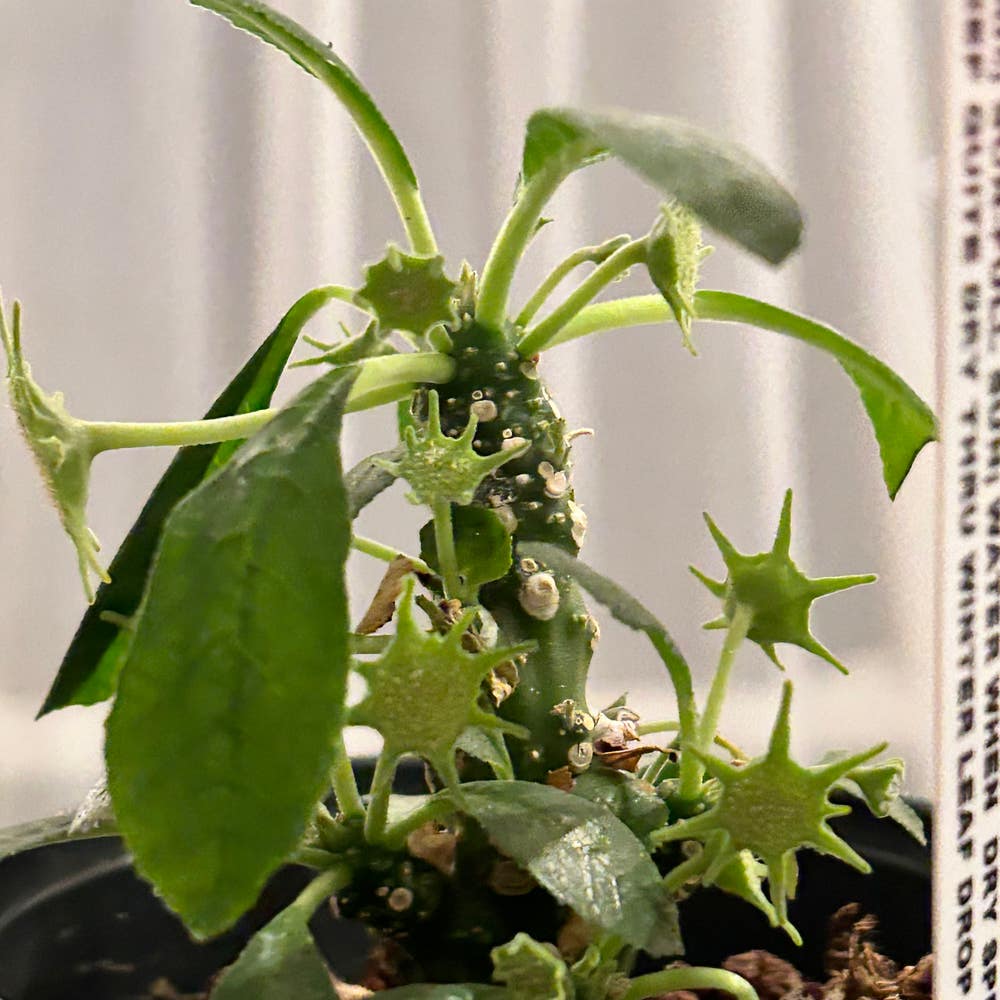
Why Are My Dorstenia horwoodii Leaves Mushy?
Dorstenia horwoodii
By the Greg Editorial Team
Apr 22, 2024•4 min read
This article was created with the help of AI so we can cover more plants for you. May contain errors. See one? Report it here.
- Mushy leaves signal distress, often due to overwatering or poor drainage.
- Severity indicates seriousness; yellow/brown leaves also warn of issues.
- Prevent with well-draining soil, proper watering, and good air flow.
Spotting Trouble: Signs Your Dorstenia horwoodii is Unhappy
🍄 Telltale Symptoms of Mushiness
Mushy leaves on your Dorstenia horwoodii are a distress signal you can't ignore. Discoloration is the first visual cue; leaves that turn from a healthy green to a troubling yellow or brown are crying out for help. If the texture of the leaves feels more like a wet sponge than a firm, plump leaf, it's time for some plant triage.
🚨 When to Worry: Severity of Leaf Mushiness
Not all mushiness spells doom. If you spot an isolated squishy leaf amidst an otherwise vibrant plant, you might just need a minor care adjustment. However, if your plant is sporting a collection of mushy leaves, or if the stems feel soft, it's a critical red flag. This isn't just a case of the Mondays for your plant; it's a full-blown cry for help.
The Usual Suspects: Identifying Causes of Mushiness
🌧️ Too Much Love: The Perils of Overwatering
Overwatering is like a helicopter parent for plants—it's suffocating. Dorstenia horwoodii leaves turning into a squishy mess? That's your red flag. The roots are gasping for air, not swimming in a pool. Yellow leaves and a stench of decay are your plant's SOS signal.
🚰 Stuck in the Mud: The Impact of Poor Drainage
Your plant's pot shouldn't be a swamp. If the soil feels like a wet sponge that never dries, you've got a drainage drama. Ensure your pot has drainage holes that aren't clogged. The goal is quick water exit, not a lingering puddle party.
🍄 Uninvited Guests: Fungal Infections at Play
Fungi are the party crashers in your plant's life. They love a moist environment almost as much as they love wrecking your plant's health. Spot white fuzz or blistered leaves? It's time for a fungal intervention. Remember, good air flow and a well-draining soil mix are your best defenses against these destructive gatecrashers.
First Aid for Mushy Leaves
💧 Cutting Back on H2O: Watering Wisely
Overwatering is a common misstep that turns your Dorstenia horwoodii's leaves to mush. Wait for the top inch of soil to dry before watering again. A moisture meter is a handy ally, but your finger can be just as effective. If the soil feels damp at a half-inch depth, skip the watering.
🚰 Clearing the Pipes: Enhancing Soil Drainage
Poor drainage is like a bad relationship—it's suffocating. Revamp your soil mix by adding perlite or sand to improve aeration. Ensure your pot has drainage holes that could make Swiss cheese jealous. This gives your plant's roots the space they need to breathe and not drown.
🍄 Fungus Among Us: Choosing the Right Treatment
Fungal infections are the party crashers you didn't invite. Prune mushy leaves with sterilized shears to stop the spread. Choose a copper-based fungicide—fungi hate it. After treating, keep a close eye on your plant's recovery like it's the season finale of your favorite show.
Keeping Leaves Firm and Happy
💧 Nailing the Watering Sweet Spot
Watering your Dorstenia horwoodii is like a tightrope walk—too much or too little, and you'll see a tumble. Check the top inch of soil; if it's dry, it's time to water. Remember, your plant's thirst changes with the seasons, so adapt your routine accordingly.
🌱 Soil Secrets: Mixing the Perfect Blend
Your plant's soil should be the Goldilocks of substrates—not too dense, not too light. Aim for a mix that's well-draining yet retains enough moisture to keep the roots happy. Incorporate organic matter like perlite or bark to ensure breathability.
🍄 Fungus-Proofing Your Plant's Environment
Fungi are the party crashers nobody wants. To keep them at bay, ensure good air circulation around your plant. If your home is a humidity haven, consider a dehumidifier or a fan to keep the air moving. Remember, stagnant air is fungi's best friend.
⚠️ Safety First
This content is for general information and may contain errors, omissions, or outdated details. It is not medical, veterinary advice, or an endorsement of therapeutic claims.
Always consult a qualified healthcare professional before using any plant as food, medicine, or supplement.
Never eat any plant (or feed one to pets) without confirming its identity with at least two trusted sources.
If you suspect poisoning, call Poison Control (800) 222-1222, the Pet Poison Helpline (800) 213-6680, or your local emergency service immediately.
Spotted an error? Please report it here.
Prevent mushy leaves and ensure your Dorstenia horwoodii thrives with Greg's tailored care reminders 🛡️, designed to optimize watering and plant health.