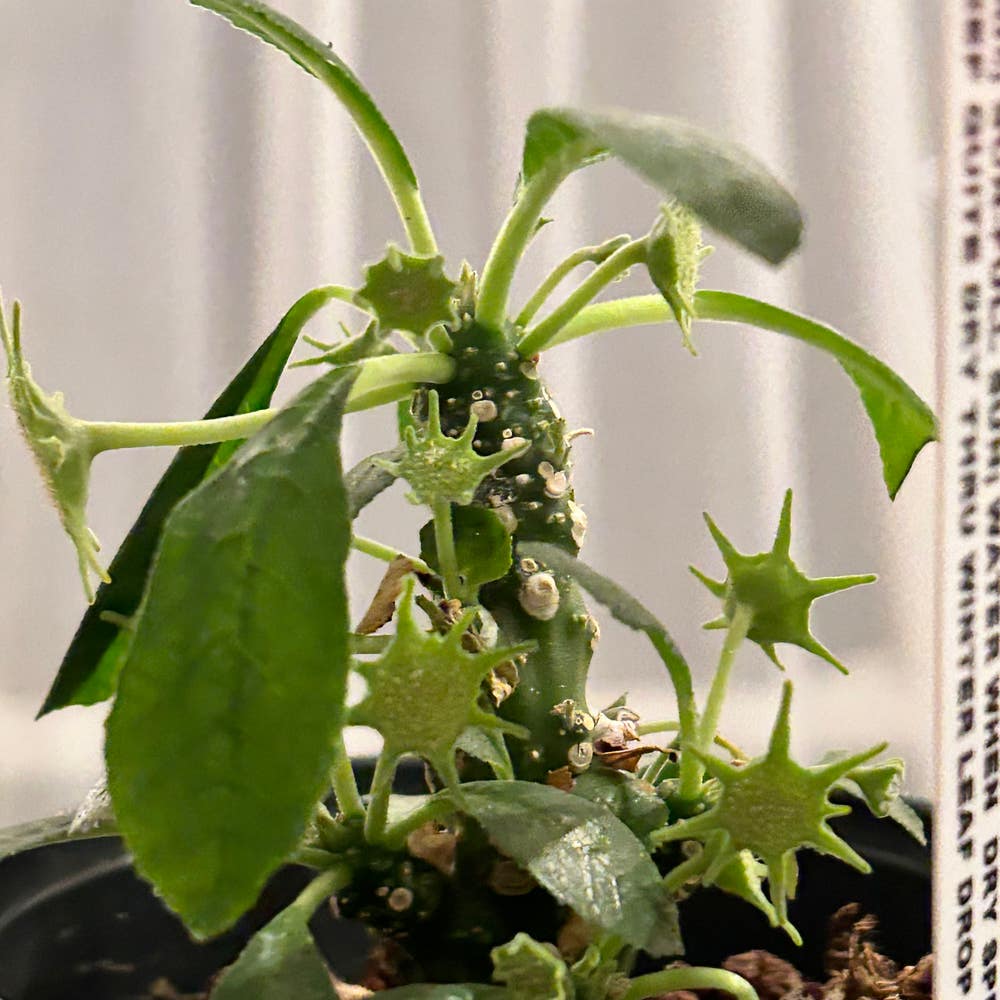
Optimal Hardiness Zones for Horwood's Dorstenia: 10a-11b
Dorstenia horwoodii
By the Greg Editorial Team
Sep 30, 2024•5 min read
This article was created with the help of AI so we can cover more plants for you. May contain errors. See one? Report it here.
- 🌡️ Horwood's Dorstenia thrives in zones 10a-11b, ideal for warm climates.
- ☀️ Requires 6+ hours of sunlight daily and high humidity for optimal growth.
- 🌍 Best grown in states like California and Florida, avoid extreme cold regions.
Temperature Tolerance
❄️ Cold Tolerance Specifics
Horwood's Dorstenia has a minimum temperature tolerance of about 30°F (-1°C). This means it can handle mild chills but is not frost-hardy.
Frost can severely damage the plant, leading to wilting or even death. Understanding the first and last frost dates in your area is crucial for protecting your Dorstenia.
🔥 Heat Tolerance Specifics
On the warmer side, Horwood's Dorstenia can thrive in temperatures up to 100°F (38°C). However, it performs best within a range of 70°F to 90°F (21°C to 32°C).
Humidity plays a significant role in heat tolerance. Higher humidity levels can help the plant cope with extreme heat, making it essential to monitor moisture in the air.
In summary, knowing both cold and heat tolerances is vital for successful cultivation. This understanding sets the stage for exploring ideal growing regions next.
Ideal Growing Regions
🌎 Examples of US States in Zones 10a-11b
Horwood's Dorstenia thrives in specific regions of the United States, particularly those classified within hardiness zones 10a to 11b. Key states include:
- California: Coastal areas like San Diego and Los Angeles are ideal.
- Florida: The southern regions, especially Miami and the Florida Keys, provide perfect conditions.
- Texas: Areas around the Gulf Coast, such as Houston and Corpus Christi, are also suitable.
These regions offer the warm temperatures and humidity that Horwood's Dorstenia needs to flourish.
🌤️ Factors Contributing to Ideal Growing Conditions
Understanding the climate characteristics that favor Horwood's Dorstenia is crucial for successful cultivation.
Climate Characteristics
Warm temperatures are essential, with average highs ranging from 70°F to 90°F. Mild winters with minimal frost are also important for the plant's survival.
Soil Conditions
Well-draining soil is a must. Horwood's Dorstenia prefers sandy or loamy soils that prevent waterlogging, which can lead to root rot.
Sunlight Exposure
Full sun is ideal for optimal growth. Aim for at least six hours of direct sunlight daily to ensure vibrant foliage and healthy development.
By focusing on these factors, you can create an environment where Horwood's Dorstenia can truly thrive. This knowledge sets the stage for exploring microclimates and their impact on cultivation.
Microclimates and Their Impact
🌱 How Microclimates Can Extend Growing Range
Microclimates play a crucial role in expanding the growing range for Horwood's Dorstenia. These localized areas can create conditions that differ significantly from the surrounding environment, offering warmth and protection from frost.
For instance, a south-facing slope can trap heat, making it an ideal spot for this plant. Similarly, areas shielded by buildings or trees can reduce wind exposure, further enhancing the plant's chances of thriving.
🏖️ Examples of Beneficial Microclimates
Several specific locations exemplify beneficial microclimates for Horwood's Dorstenia. Coastal regions often experience milder temperatures due to the ocean's moderating effect, providing a perfect habitat.
In urban settings, rooftop gardens can create warm microclimates, allowing for successful cultivation. A notable case study involves a community garden in Southern California, where residents have successfully grown Horwood's Dorstenia in a sheltered courtyard, showcasing the power of microclimates in urban agriculture.
Understanding these microclimates can significantly enhance your gardening success. By identifying and utilizing these unique environments, you can create optimal conditions for Horwood's Dorstenia, ensuring a flourishing garden.
As we explore the ideal growing regions next, consider how these microclimates can influence your choice of location.
State-Level Suitability Analysis
🌟 Suitable US States
Horwood's Dorstenia thrives in several states that fall within hardiness zones 10a-11b. Here’s a quick rundown of the most suitable states:
- California: Known for its Mediterranean climate, California offers warm temperatures and minimal frost, particularly in coastal regions.
- Florida: With its tropical climate, Florida provides the humidity and warmth that Horwood's Dorstenia loves, especially in southern areas.
- Texas: The southern parts of Texas have the heat and sunlight ideal for this plant, although care must be taken in areas with extreme summer temperatures.
- Arizona: Particularly in the southern regions, Arizona’s dry heat and low frost risk create a perfect environment for growth.
- Hawaii: The consistently warm temperatures and high humidity levels make Hawaii an excellent choice for cultivating Horwood's Dorstenia.
❌ Unsuitable US States
Conversely, some states are not conducive to the growth of Horwood's Dorstenia. Here’s a list of those states:
- Alaska: The extreme cold and long winters make it impossible for this plant to survive.
- North Dakota: With harsh winters and frequent frost, North Dakota's climate is too severe.
- Montana: The temperature extremes and short growing season hinder successful cultivation.
- Maine: The cold climate and frost occurrences make it unsuitable for Horwood's Dorstenia.
- Vermont: Similar to Maine, Vermont's long winters and cold temperatures are not ideal.
🔍 Reasons for Suitability or Unsuitability
Understanding why certain states are suitable or unsuitable for Horwood's Dorstenia involves analyzing several climate factors.
Temperature Extremes: States with milder winters and minimal frost occurrences are ideal. In contrast, areas with harsh winters and frequent freezing temperatures are unsuitable.
Humidity Levels: High humidity is beneficial for Horwood's Dorstenia. States with dry climates may struggle to provide the moisture this plant needs for optimal growth.
Local Climate Conditions: Each state's unique climate characteristics, including rainfall patterns and sunlight exposure, significantly impact the plant's ability to thrive.
In summary, selecting the right state for Horwood's Dorstenia involves considering temperature, humidity, and local climate conditions. Understanding these factors will help you create the perfect environment for this unique plant.
Next, we’ll explore how microclimates can further influence the growing range of Horwood's Dorstenia.
⚠️ Safety First
This content is for general information and may contain errors, omissions, or outdated details. It is not medical, veterinary advice, or an endorsement of therapeutic claims.
Always consult a qualified healthcare professional before using any plant as food, medicine, or supplement.
Never eat any plant (or feed one to pets) without confirming its identity with at least two trusted sources.
If you suspect poisoning, call Poison Control (800) 222-1222, the Pet Poison Helpline (800) 213-6680, or your local emergency service immediately.
Spotted an error? Please report it here.
Cultivating Horwood's Dorstenia in zones 10a-11b is easy with Greg's tailored care plans 🌱, ensuring you meet its temperature, humidity, and sunlight needs for thriving growth!