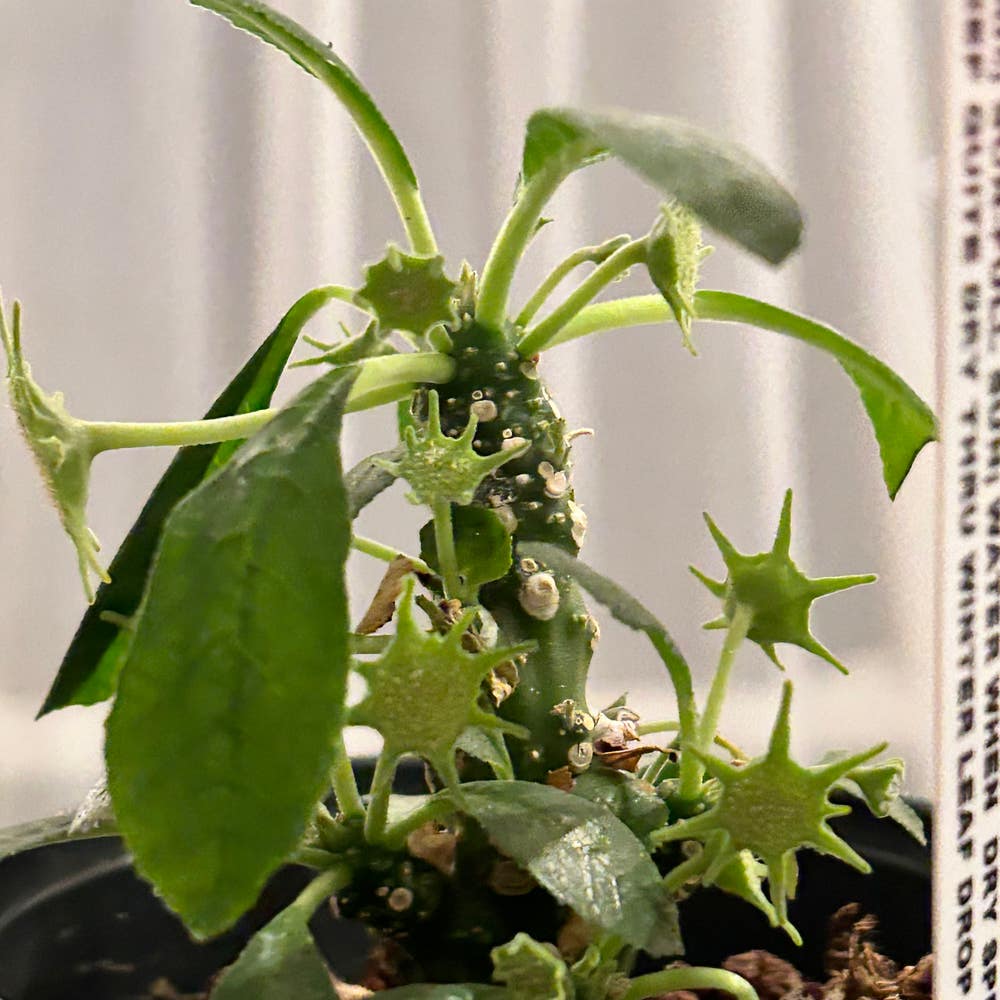
3 Do's and Don'ts of Growing Horwood's Dorstenia 🪴
Dorstenia horwoodii
By the Greg Editorial Team
Sep 30, 2024•5 min read
This article was created with the help of AI so we can cover more plants for you. May contain errors. See one? Report it here.
- 🌞 Horwood's Dorstenia thrives in bright, indirect light; avoid direct sunlight and harsh winds.
- 🌱 Use well-draining soil with pH 6.0-7.0 for optimal growth and root health.
- 💧 Water only when the top inch of soil dries to prevent root rot.
Cultivation Techniques
🌍 Choosing the Right Location
When growing Horwood's Dorstenia, location is key. For indoor plants, aim for bright, indirect light while steering clear of direct sunlight, which can scorch the leaves.
Outdoors, these plants thrive in partial shade or filtered sunlight. Ensure they are sheltered from harsh winds to promote healthy growth.
🏗️ Soil Preparation and Amendments
The right soil is crucial for your Dorstenia. Use a well-draining mix with a slightly acidic to neutral pH, ideally between 6.0 and 7.0.
To enhance drainage, consider adding amendments like perlite or sand. This will help prevent waterlogging and promote robust root development.
🌱 Planting Techniques and Spacing
Proper planting techniques set the foundation for success. Plant your Dorstenia 2-3 inches deep to ensure stability and growth.
For outdoor planting, maintain a spacing of 12-18 inches between each plant. If you're using containers, always choose pots with drainage holes to avoid excess moisture.
With these cultivation techniques in mind, you're well on your way to nurturing a thriving Horwood's Dorstenia. Next, let’s explore the essential aspects of watering and fertilizing to keep your plants flourishing.
Watering and Fertilizing
💧 Watering Frequency and Methods
To keep your Horwood's Dorstenia thriving, establish a consistent watering schedule. Allow the top inch of soil to dry out between waterings to prevent over-saturation.
When you do water, make sure to do it thoroughly. Water until it drains from the bottom, ensuring the roots receive adequate moisture without sitting in water.
🌱 Best Fertilizers
During the growing season, a balanced liquid fertilizer with an NPK ratio of 10-10-10 is your best bet. Apply this every 4-6 weeks in spring and summer to fuel healthy growth.
⚠️ Signs of Overwatering or Underwatering
Keep an eye on your plant for signs of distress. Overwatering often leads to yellowing leaves and root rot, while underwatering can cause wilting leaves and shriveling.
By staying vigilant about watering and fertilizing, you can ensure your Horwood's Dorstenia remains healthy and vibrant. Next, let’s dive into the essential pruning and maintenance techniques to keep your plant in top shape.
Pruning and Maintenance
When and How to Prune 🌿
Pruning Horwood's Dorstenia is essential for maintaining its health. Aim to prune in late winter or early spring, just before new growth begins.
Remove any dead or damaged leaves to encourage fresh growth. If the plant becomes too bushy, trim back excessive growth to promote better air circulation.
Ongoing Care Routine 🔍
Regular inspections are crucial for spotting pests and diseases early. Make it a habit to check your plant weekly for any signs of trouble.
Stick to a consistent watering and fertilizing schedule to keep your Dorstenia thriving. This routine will help you avoid common pitfalls and ensure your plant remains healthy.
Seasonal Care Considerations ❄️
In winter, reduce watering to prevent over-saturation and protect your plant from cold drafts. This adjustment is vital for its survival during the colder months.
As summer approaches, increase humidity and watering frequency. Your Dorstenia will appreciate the extra care, leading to vibrant growth and lush foliage.
With these pruning and maintenance tips, your Horwood's Dorstenia will flourish beautifully. Next, let's explore common challenges and solutions to keep your plant in top shape.
Common Challenges and Solutions
🐛 Identifying and Managing Pests
Growing Horwood's Dorstenia can attract a few unwelcome guests. Common pests include mealybugs, aphids, and spider mites, which can wreak havoc on your plants.
To combat these pests, consider using neem oil or insecticidal soap. Regular inspections are crucial; catching infestations early can save your plant from significant damage.
🦠 Addressing Common Diseases
Fungal issues, particularly root rot, often stem from overwatering. This condition can be detrimental, leading to wilting and eventual plant death.
To prevent root rot, ensure your soil is well-draining and adhere to proper watering techniques. A little caution goes a long way in keeping your Dorstenia healthy.
🌱 Tips for Overcoming Growth Issues
If you notice stunted growth, it might be time to adjust the light conditions. Moving your plant to a brighter location can stimulate new growth.
Humidity control is also essential. Consider using a humidity tray or misting the leaves to create a more favorable environment for your plant.
With these strategies, you'll be well-equipped to tackle common challenges and keep your Horwood's Dorstenia thriving. Next, let's explore the benefits of container growing for this unique plant.
Container Growing
Best Pots and Soil for Container Growth 🌱
Choosing the right pot is crucial for your Horwood's Dorstenia. Opt for terracotta or plastic pots that feature drainage holes to prevent water accumulation.
For soil, a cactus mix or well-draining potting soil works wonders. This combination ensures your plant has the right environment to thrive.
Drainage Considerations 🚰
Proper drainage is essential to prevent root rot and promote healthy growth. Without it, your plant could suffer from excess moisture, leading to serious issues.
To enhance drainage, consider adding gravel or perlite at the bottom of your pots. This simple technique can make a significant difference in your plant's health.
Mobility and Light Requirements for Container Plants 🌞
Placement matters when it comes to container plants. Rotate your pots regularly to ensure even light exposure, which helps your Dorstenia grow evenly.
Mobility is another advantage of container growing. You can easily move your plants indoors during colder months or extreme weather, providing them with the protection they need.
As you embark on your container gardening journey, remember that the right pot, soil, and care can lead to a flourishing Horwood's Dorstenia. Next, let’s explore common challenges and solutions to keep your plant thriving.
⚠️ Safety First
This content is for general information and may contain errors, omissions, or outdated details. It is not medical, veterinary advice, or an endorsement of therapeutic claims.
Always consult a qualified healthcare professional before using any plant as food, medicine, or supplement.
Never eat any plant (or feed one to pets) without confirming its identity with at least two trusted sources.
If you suspect poisoning, call Poison Control (800) 222-1222, the Pet Poison Helpline (800) 213-6680, or your local emergency service immediately.
Spotted an error? Please report it here.
Nurture your Horwood's Dorstenia to thriving perfection 🌱 with Greg's custom watering alerts and care tips that make plant parenting a breeze!