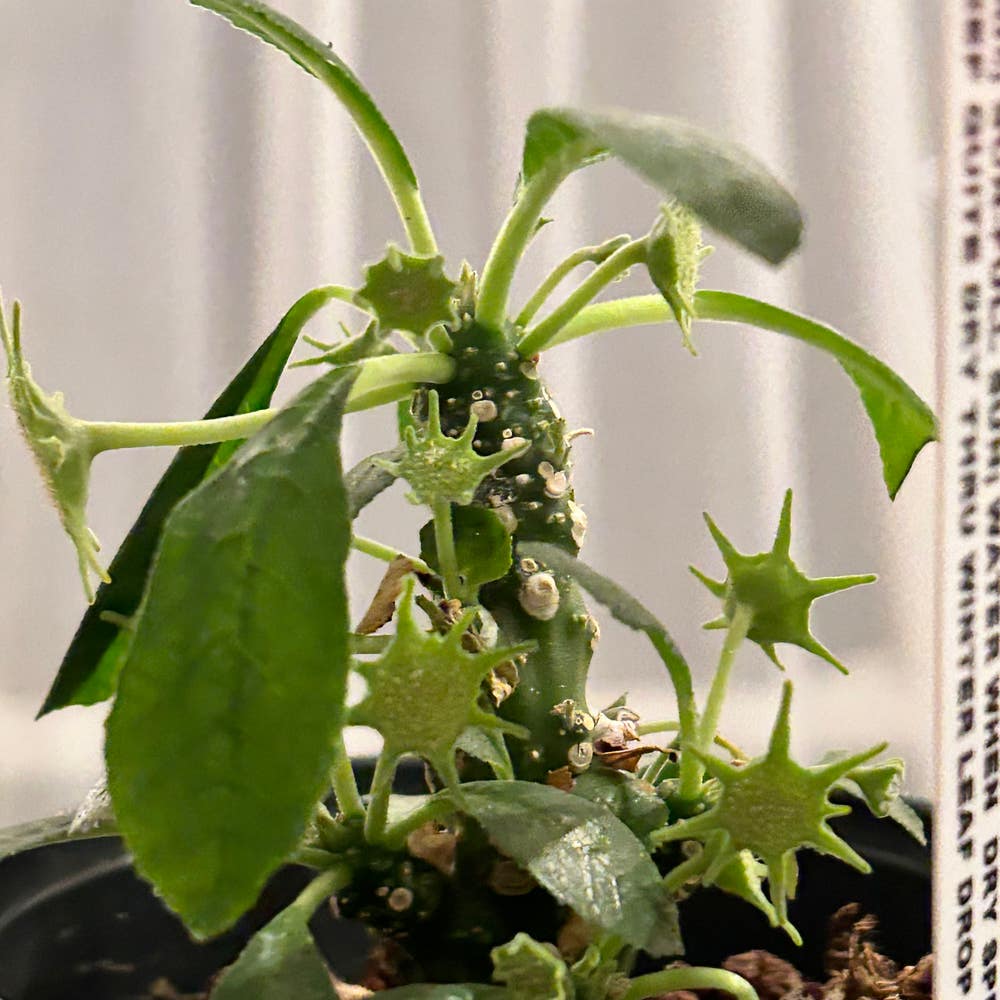
Why Are My Dorstenia horwoodii Leaves Droopy?
Dorstenia horwoodii
By the Greg Editorial Team
Apr 22, 2024•4 min read
This article was created with the help of AI so we can cover more plants for you. May contain errors. See one? Report it here.
- 💧 Under or overwatering? Check for wilted or yellow leaves and adjust watering.
- ☀️🌡️ Bright, indirect light and 65-75°F keep Dorstenia horwoodii leaves perky.
- 🐜 Pest problems? Inspect regularly and use insecticidal soap or neem oil.
When Thirsty Leaves Droop: Underwatering Woes
🚰 Spotting the Thirst Signals
Wilting leaves on your Dorstenia horwoodii aren't just for dramatic effect—they're a cry for hydration. If the soil feels like a barren wasteland and the pot is lighter than your last online shopping package, your plant is signaling an SOS. Crispy leaf edges are the botanical equivalent of a parched throat, begging for a drink.
🚰 Quenching the Thirst
To properly hydrate your plant, think of watering as a rhythm, not a random act. Start by soaking the soil until it's moist, not drenched. Ensure the water reaches the roots without turning the pot into a mini swimming pool. After watering, the soil should feel like a wrung-out sponge—damp but not wet. If the soil dries out faster than your phone battery, consider increasing the watering frequency, but always check the soil moisture first to avoid overdoing it.
Drowning in Excess: The Overwatering Ordeal
🌊 The Soggy Signs of Too Much Love
Yellowing leaves and a pot heavier than your conscience after skipping the gym—classic overwatering. If your Dorstenia horwoodii's leaves are more limp than a forgotten salad, it's time to rethink your watering strategy. Soggy soil that clings to your fingers is a cry for help.
Rescuing Roots from the Flood
First, stop watering; your plant isn't auditioning for a role in "Waterworld." Let the soil dry to the touch on top before even thinking about more water. If the roots are looking like leftovers forgotten in the fridge, trim the rot. Consider a pot with better drainage or a soil mix that doesn't hold onto water like a grudge. Remember, your plant's not a fish—it doesn't need to swim.
Feeling the Heat (and the Chill): Temperature and Light Troubles
🌞 Finding the Sweet Spot for Sun and Shade
Dorstenia horwoodii has a preference for bright, indirect sunlight. Direct rays can be brutal, leaving leaves as crisp as overcooked bacon. Position your plant where it can soak up the sun's energy without the risk of a sunburn.
🌡️ Keeping Cool (or Warm)
This plant doesn't appreciate the drama of temperature swings. Aim for a steady 65-75°F (18-24°C) to keep it from throwing a fit. Protect it from drafts and heat sources that could cause leaf droopiness. In winter, keep it away from frosty windows, and in summer, consider some strategic shading. Remember, gradual acclimatization to new temperatures is like teaching it a new dance move – it takes a bit of patience.
The Groundwork for Good Health: Soil and Drainage
🌧️ The Perils of Poor Drainage
Bad drainage is like a party foul for Dorstenia horwoodii—it's a buzzkill for your plant's health. When soil is too clingy, holding water like a grudge, roots suffocate and leaves droop in despair. Yellow leaves are the distress flares, signaling that your plant's roots are drowning in excess moisture.
💡 Soil Solutions
The right mix is your plant's VIP ticket to thriving. Aim for a soil blend that's the life of the party—well-aerated and nutrient-rich. Add in some perlite or coarse sand to keep things loose and breathable. Think of it as creating a personal space bubble for the roots. Regularly check the soil's pH and nutrient levels; it's like keeping tabs on a good friend. If you're not sure about your soil's drainage, do a quick percolation test—better safe than soggy.
Bug Off! Battling Pest-Induced Droopiness
🐜 Unwanted Guests
Pests can turn your Dorstenia horwoodii into their personal buffet, leaving leaves droopy and distressed. Mealybugs, spider mites, and aphids are the usual suspects. They're stealthy, but not invisible. Look for white fluff, tiny webs, or a sticky honeydew residue. Discoloration or speckling on leaves? It's time to play detective.
🦟 Pest Control Tactics
Regular inspections are your first line of defense. Flip those leaves and scrutinize stems. If you spot trouble, a water blast can dislodge the freeloaders. Still there? Insecticidal soap or neem oil can persuade them to leave. For the tenacious types, consider miticides, but only as a last resort. Prevention is the real hero here. Keep your plant's environment clean, with good airflow, and dry leaves to make it less pest-friendly. If you're feeling eco-friendly, introduce natural predators like ladybugs to keep the peace. Remember, consistency is key—regular checks are better than a full-blown bug crisis.
⚠️ Safety First
This content is for general information and may contain errors, omissions, or outdated details. It is not medical, veterinary advice, or an endorsement of therapeutic claims.
Always consult a qualified healthcare professional before using any plant as food, medicine, or supplement.
Never eat any plant (or feed one to pets) without confirming its identity with at least two trusted sources.
If you suspect poisoning, call Poison Control (800) 222-1222, the Pet Poison Helpline (800) 213-6680, or your local emergency service immediately.
Spotted an error? Please report it here.
Ensure your Dorstenia horwoodii stays perfectly hydrated and pest-free with Greg's tailored watering plans and community advice 🌿.