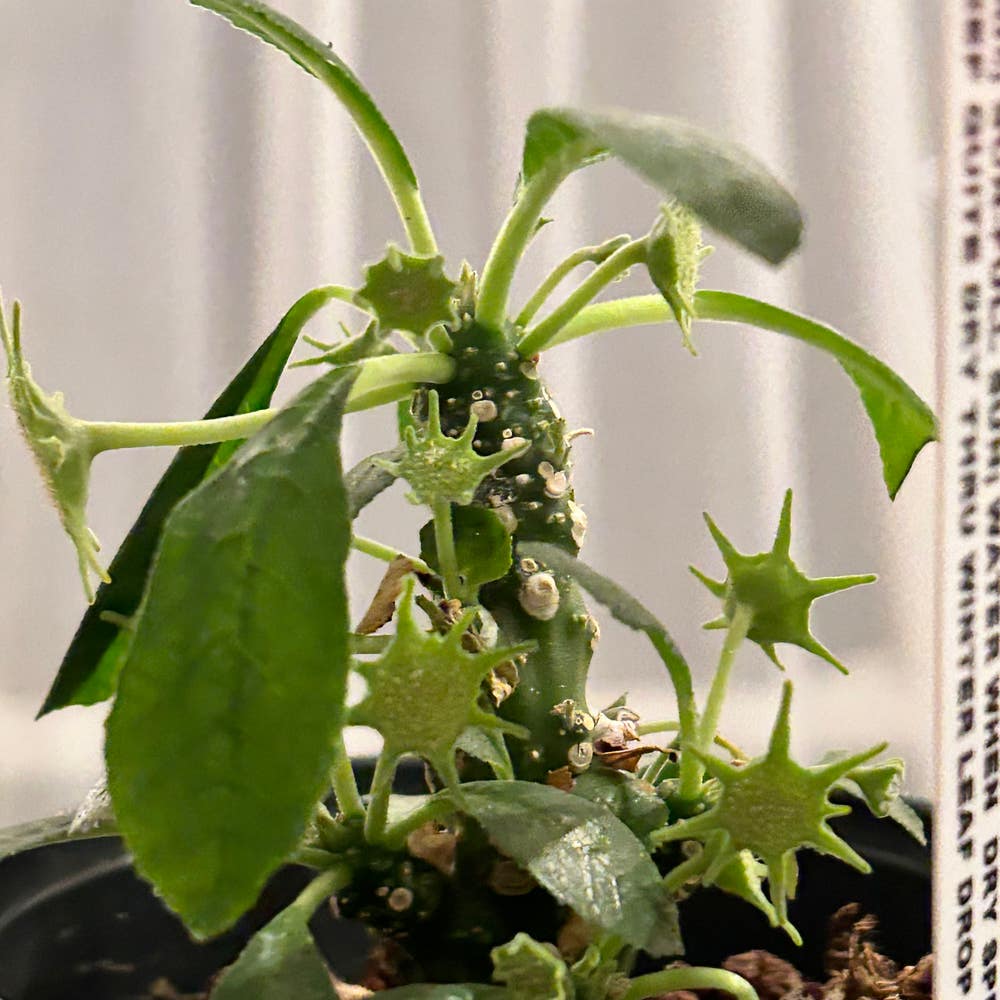
Choosing Fertilizer For My Dorstenia horwoodii
Dorstenia horwoodii
By the Greg Editorial Team
Apr 22, 2024•4 min read
This article was created with the help of AI so we can cover more plants for you. May contain errors. See one? Report it here.
- Higher phosphorus NPK ratio boosts Dorstenia horwoodii blooms.
- Organic vs. synthetic affects plant growth and flowering.
- Fertilize in growth phase; reduce in autumn to prevent over-fertilization.
Picking the Perfect Fertilizer for Your Dorstenia horwoodii
💡 Understanding NPK Ratios
NPK ratios are the ABCs of plant nutrition, spelling out the balance of nitrogen (N), phosphorus (P), and potassium (K). For your Dorstenia horwoodii, it's not just about feeding—it's about fine dining. The ideal NPK ratio for this particular plant leans towards a higher phosphorus content to promote those eye-catching blooms.
🍽️ Organic vs. Synthetic: Making the Choice
When it comes to fertilizers, it's a showdown between organic and synthetic. Organic options promise a slow-release buffet for your Dorstenia horwoodii, enhancing soil health with a side of eco-friendliness. Synthetic fertilizers, on the other hand, are the fast food of plant nutrition—quick, concentrated, and precise. Your choice here influences not just growth but also how spectacularly your plant blooms.
Timing is Everything: When to Fertilize
🔄 Syncing with Growth Cycles
Dorstenia horwoodii, like any plant, has growth cycles. To fertilize effectively, you need to match your schedule to these cycles. During the active growth phase, typically spring through summer, your plant is in high gear. It's pushing out leaves and, if you're lucky, those quirky flowers. This is when it's hungriest for nutrients.
🍂 Seasonal Smarts
As autumn rolls in, Dorstenia horwoodii starts to slow its roll. It's winding down, and so should your fertilization. Cut back on the feed to let your plant prepare for its winter nap without the burden of excess nutrients. It's like easing off the gas pedal as you coast into a parking spot—smooth and controlled.
Fertilizing Dorstenia horwoodii: A Step-by-Step Guide
💧 The Right Amount
Less is more when it comes to fertilizing your Dorstenia horwoodii. Start with a half-strength solution of the recommended dosage on your fertilizer package. This cautious approach helps prevent nutrient burn, a common blunder that can set your plant's health back significantly.
🌱 Application Techniques
Before you even think about fertilizing, make sure your plant is well-watered. Dry soil and fertilizer are a combo that's about as helpful as a screen door on a submarine. For granular fertilizers, sprinkle them evenly around the soil, avoiding a too-close-for-comfort situation with the stem. Liquid fertilizers should be diluted and applied with a watering can, ensuring an even distribution that targets the soil, not the foliage. Remember, you're not making a salad, so keep the dressing off the leaves. If you do end up with fertilizer on the foliage, think quick and flush it off with water to avoid damage.
Recognizing and Resolving Over-Fertilization
🚨 Spotting the Telltale Signs
Yellowing or browning leaves may signal distress in your Dorstenia horwoodii, hinting at over-fertilization. Scorched tips and edges are your plant's way of saying, "Ease up on the nutrients, buddy." If the roots look more like something from a horror movie—blackened or limp—it's a clear cry for help. And let's not ignore the flowers; if they're not blooming with gusto, you might be looking at a classic case of nutrient overload.
🛑 Damage Control
Caught in the act of over-fertilizing? Stop all fertilizer application immediately. Remove any visible fertilizer from the soil surface to prevent further harm. Next, give the soil a thorough flush with water—think of it as hitting the reset button on your plant's root environment. Repeat this every few days until you see signs of improvement. If you spot damaged leaves, it's time for a trim; this helps your plant focus on getting back to its healthy self. In severe cases, don't hesitate to replace the top layer of soil or go for a full repot. Remember, recovery takes time, so hold off on the fertilizer and watch for your plant's comeback before you even think about the next feed.
⚠️ Safety First
This content is for general information and may contain errors, omissions, or outdated details. It is not medical, veterinary advice, or an endorsement of therapeutic claims.
Always consult a qualified healthcare professional before using any plant as food, medicine, or supplement.
Never eat any plant (or feed one to pets) without confirming its identity with at least two trusted sources.
If you suspect poisoning, call Poison Control (800) 222-1222, the Pet Poison Helpline (800) 213-6680, or your local emergency service immediately.
Spotted an error? Please report it here.
Nurture bountiful blooms 🌼 on your Dorstenia horwoodii with Greg's tailored fertilizing reminders, ensuring your green friend gets the perfect nutrients at the right time.