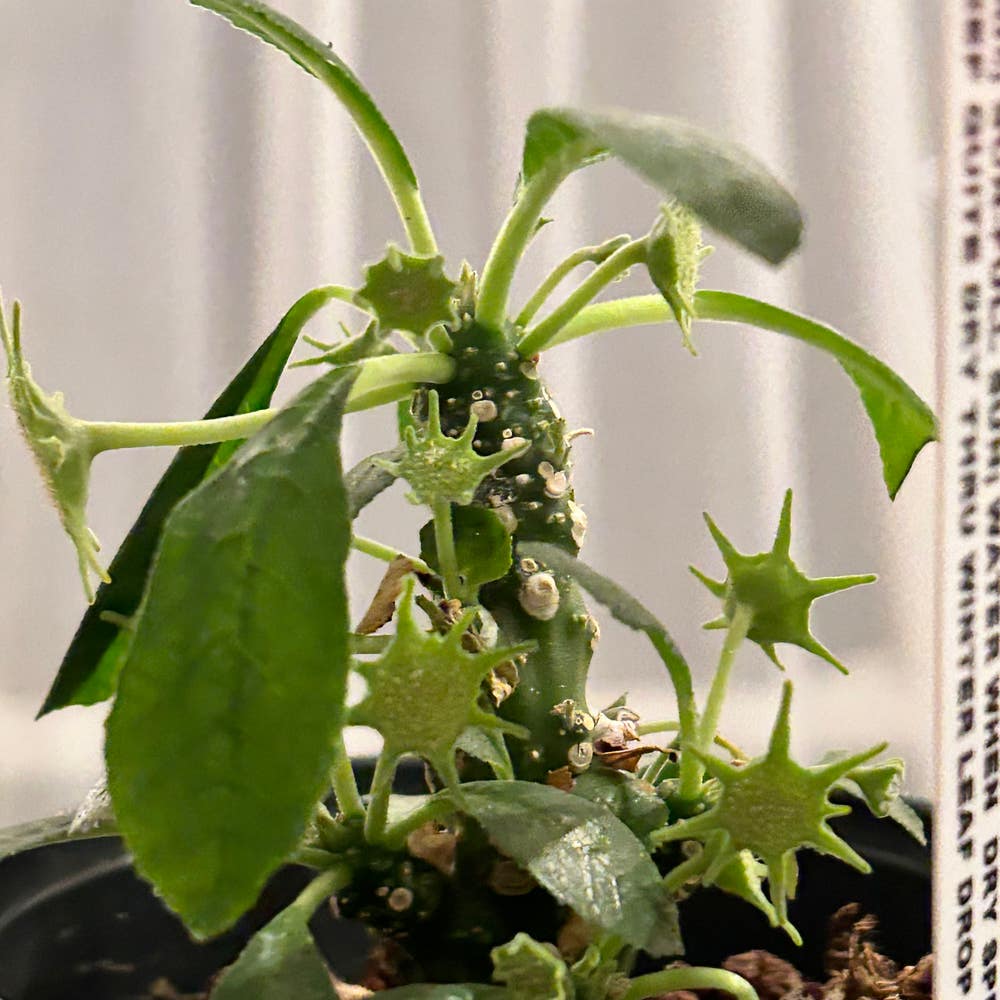
Why Are the Leaves on My Dorstenia horwoodii Turning Yellow?
Dorstenia horwoodii
By the Greg Editorial Team
Apr 22, 2024•4 min read
This article was created with the help of AI so we can cover more plants for you. May contain errors. See one? Report it here.
- Light, water, nutrients affect leaf color; adjust care for healthy Dorstenia horwoodii.
- 🌱 Yellowing top leaves signal care routine issues; monitor and modify practices.
- Consistent moisture and drainage in soil are key to preventing yellow leaves.
Spotting Trouble: Signs Your Dorstenia Horwoodii is Unhappy
🟡 Visual cues of yellowing leaves
Yellowing leaves on your Dorstenia horwoodii are the first red flags. This discoloration can signal several issues, from natural aging to more serious stress factors.
🟤 Other symptoms to watch for
Browning edges or tips and a general lack of luster can accompany yellowing leaves. If your plant's leaves are drooping or if it shows stunted growth, it's time to take a closer look.
🟡 When to be concerned about the yellowing
Be particularly vigilant if the newer leaves at the top are turning yellow. This is an unusual pattern that often points to a care routine issue. If the yellowing is widespread or accompanied by other distress signs, such as wilting or mushy leaves, your Dorstenia horwoodii needs immediate attention.
Root of the Problem: Identifying Causes of Yellow Leaves
☀️ Sun Struggles: How Light Affects Leaf Color
Yellowing leaves on your Dorstenia horwoodii? Lighting could be the culprit. These plants need their Goldilocks zone: not too much sun, not too little. Too much sun can bleach leaves to a sickly yellow, while too little leaves them languishing for more. Adjust their spot to find that sweet spot of bright, indirect light.
💦 Drowning Roots: The Overwatering Issue
Overwatering is like throwing your plant's roots a pool party without an exit. Roots need oxygen, and too much water drowns them out, leading to yellow leaves. The fix? Let the soil's top inch dry out before you water again. Think of it as a thirst-quenching rhythm rather than a flood.
🌿 Starvation Mode: Nutrient Deficiencies and Their Role
Your plant could be starving for nutrients. Yellow leaves often scream "Feed me!" but in a less Audrey II way. Ensure you're using a balanced fertilizer to keep your Dorstenia horwoodii from going into starvation mode. A nutrient boost can turn those yellow leaves back to a lush green.
First Aid for Foliage: Treating Yellow Leaves
💡 Let There Be Light: Adjusting Sun Exposure
Your Dorstenia horwoodii craves bright, indirect light. If it's lounging in full sun, it's time to emulate a beach umbrella and provide some shade. Conversely, if it's too dim, consider a sunny window or a grow light to mimic the sun's embrace.
🚰 Thirst Control: Fine-Tuning Watering Habits
Watering is a delicate dance. Check the soil's moisture—dry? Time for a thorough drink. Damp? Hold off to avoid root rot. Aim for a consistent watering schedule that keeps the soil evenly moist. Remember, your plant's thirst varies with the seasons.
🍽️ Feeding Your Plant: Choosing the Right Fertilizer
Nutrient deficiencies turn leaves yellow faster than a traffic light. Opt for a balanced fertilizer and apply it judiciously. Overfeeding can harm the roots, so think of fertilizer as a spice—best used in moderation. Watch for signs of improvement and adjust as necessary.
Keeping Green: Prevention Tips for Healthy Leaves
🌞 Perfecting the Light Recipe
Bright, indirect light is the sweet spot for Dorstenia horwoodii. Too much sun can scorch the leaves, while too little can cause them to yellow and drop. Monitor the light throughout the day and adjust your plant's position as needed to avoid those extremes.
🚰 Water Wisdom: Balancing Moisture and Drainage
Get your watering routine down to a science. Use a soil moisture meter to check before watering—aim for moist, not soggy. Let tap water sit to evaporate chlorine, or use filtered water to keep your plant's leaves from getting tip burn. When watering, target the soil, not the foliage, to prevent fungal diseases.
🍽️ Soil Secrets: Ensuring the Right Mix
Choose a well-draining soil mix; think of it as a comfy bed for your plant's roots. Incorporate perlite or sand to improve drainage. Consistency is key—keep the soil consistently moist but never waterlogged. Remember, a happy root system leads to happy leaves.
⚠️ Safety First
This content is for general information and may contain errors, omissions, or outdated details. It is not medical, veterinary advice, or an endorsement of therapeutic claims.
Always consult a qualified healthcare professional before using any plant as food, medicine, or supplement.
Never eat any plant (or feed one to pets) without confirming its identity with at least two trusted sources.
If you suspect poisoning, call Poison Control (800) 222-1222, the Pet Poison Helpline (800) 213-6680, or your local emergency service immediately.
Spotted an error? Please report it here.
Banish yellow leaves and keep your Dorstenia horwoodii thriving 🌟 with Greg's tailored reminders for the perfect light, water, and nutrients!