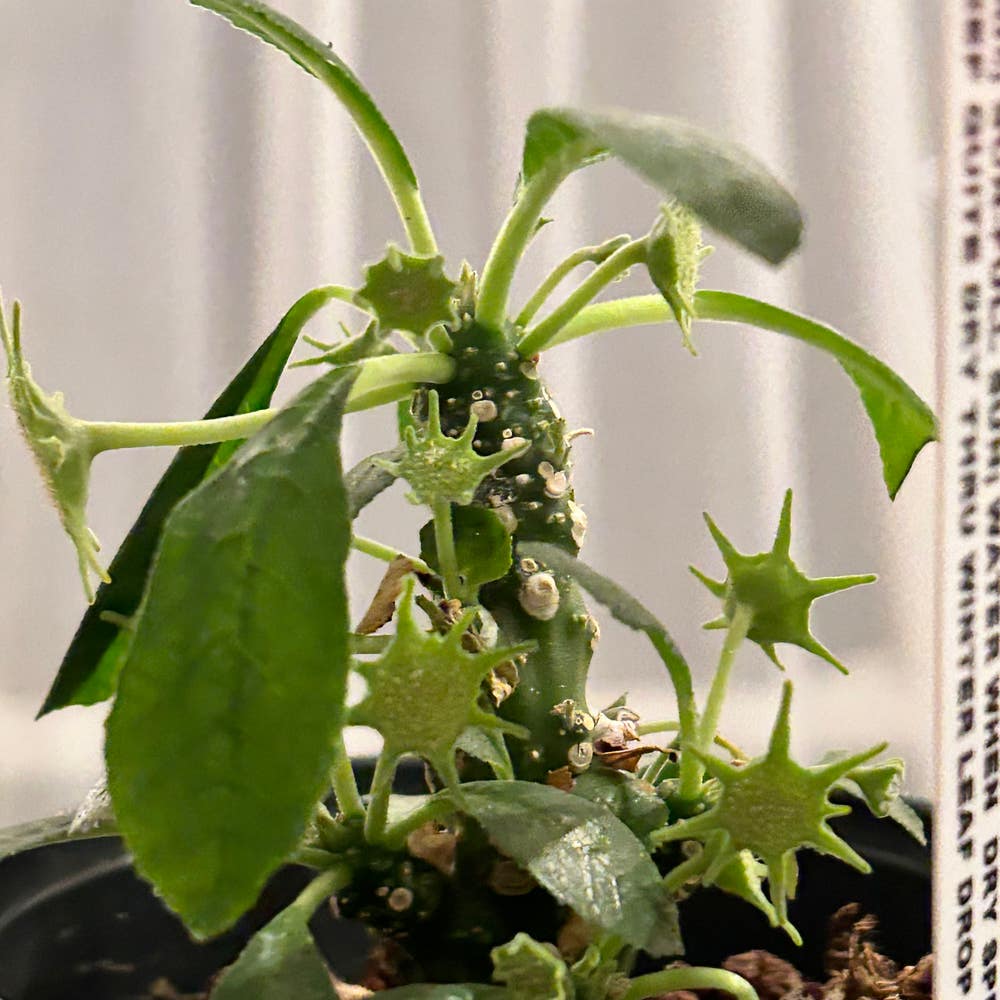
Best Soil Potting Mix for Dorstenia horwoodii
Dorstenia horwoodii
By the Greg Editorial Team
Apr 22, 2024•5 min read
This article was created with the help of AI so we can cover more plants for you. May contain errors. See one? Report it here.
- 🌱 Mold and compaction harm Dorstenia horwoodii; ensure well-draining soil.
- Perlite or pumice improves drainage, preventing root issues.
- Refresh soil mix periodically for nutrient-rich, healthy growth.
Spotting Trouble: When Your Dorstenia horwoodii's Soil Goes Bad
🚨 Telltale Signs of Unhealthy Soil
Mold is the alarm bell of soil health, and Dorstenia horwoodii's soil is no exception. A fuzzy growth on the surface or a musty smell is your cue; the soil is too wet. If the soil feels like concrete, you've got compaction, and that's bad news for root breathing space. Poor drainage? It's the silent root killer. If water pools on the surface, consider it a cry for help.
The Fallout
Bad soil doesn't just look unappealing; it's a threat to your Dorstenia horwoodii. Compacted soil strangles roots, while excess moisture is a welcome mat for mold and root rot. Spot yellow leaves or a plant that's stopped growing? That's your Dorstenia horwoodii waving a white flag. Don't let waterlogged or foul-smelling soil shorten your plant's lifespan.
Fixing the Mix: Reviving Unhealthy Soil
🕵️ Mold Be Gone!
Mold is the unwanted guest in your Dorstenia horwoodii's pot. To kick it out, start by removing any visible mold. Let the soil dry; this might mean watering less. Cinnamon or a baking soda solution can act as a natural fungicide. Remember, these are quick fixes. The real game-changer is adjusting your watering habits and ensuring your pot has drainage holes.
🌪️ Drainage and Aeration Tactics
Improving soil structure isn't just good practice; it's a lifeline for your plant. Mix in perlite or pumice to enhance drainage. If your pot's more sealed than a drum, it's time to drill holes. Consider a soil remix if water still loves to linger. Keep an eye on moisture levels before watering to prevent an encore of "The Mold Returns."
Shop Smart: Choosing the Best Commercial Soil Mix
🌱 Key Ingredients to Look For
When on the hunt for a commercial soil mix for your Dorstenia horwoodii, think Goldilocks: not too rich, not too poor, but just right. Drainage is king, so eyeball the label for perlite, pumice, or coarse sand. These are the unsung heroes that keep water moving, preventing your plant's roots from drowning in soggy despair. Organic matter should be there, but it's a side dish, not the main course. A sprinkle of compost or worm castings will do the trick, offering a nutrient boost without turning your pot into a swamp.
Ignore the siren call of fancy packaging; what you need is a mix that can breathe, not a bag that just looks pretty on the shelf. And for the eco-warriors, look for organic certifications to sleep soundly, knowing your green thumb isn't leaving a black mark on the planet.
🌿 Top Picks for Dorstenia horwoodii
Now, let's talk brands. If you're after a mix that's been around the block and knows what it's doing, Black Gold Cactus Mix is your old reliable. It's the comfort food of soil mixes—nothing flashy, just solid, dependable performance.
For those who want a mix that's a bit more tailored, the Hoffman 10404 Organic Cactus and Succulent Soil Mix is like a bespoke suit for your Dorstenia horwoodii. It's got that peat moss and perlite duo that strikes a perfect balance between moisture retention and drainage.
And if you're the type who reads reviews before buying a toothbrush, look for products that have plant lovers raving. Brands like Bonsai Jack or Espoma offer mixes that are the talk of the town for good reason—they get the job done without the need for constant fussing.
Remember, your Dorstenia horwoodii isn't just another pretty face. It's a living, breathing entity that deserves a home as dynamic and well-rounded as it is. Choose wisely, and watch your plant thrive.
DIY Soil Crafting: Your Own Mix for Dorstenia horwoodii
🌱 The Perfect Recipe
Creating a custom soil mix for your Dorstenia horwoodii is like becoming its personal chef. You'll need to measure out a blend that ensures optimal growth. Start with three parts potting soil as your base for structure and nutrients. Add two parts coarse sand or chicken grit for improved drainage – essential for preventing root rot. Then, mix in one part perlite to keep the soil light and airy, facilitating root health and water management.
🧼 Sterilization and Preparation
Before you let your Dorstenia horwoodii sink its roots into your homemade mix, sterilize it to prevent introducing pests or diseases. You can bake the soil at 200°F (93°C) for 30 minutes. This step is crucial; it's like giving your plant's new home a deep clean before moving in. Once cooled, thoroughly combine the ingredients to avoid any hotspots. Consistency is key – every root deserves the same level of care.
Keeping It Fresh: Long-Term Soil Maintenance
💧 Routine Checks and Balances
Regular soil checks are the unsung heroes of plant care. Get up close and personal with your Dorstenia horwoodii's soil; it should feel like a handshake from Mother Nature – firm yet giving. If it's more like a wet sponge or a desert, recalibrate your watering habits. Monthly probing isn't nosy; it's necessary. Look for compaction, dryness, or a soil surface that resembles the cracked surface of a forgotten cake.
🌱 Refreshing the Mix
Think of soil like a good party – it needs a refresh every couple of years to keep the vibes high. When your Dorstenia horwoodii starts giving you the silent treatment (read: stunted growth), it's time to reinvigorate the mix. Add a dash of perlite, a sprinkle of coarse sand, and a generous helping of peat moss to get the party – I mean, growth – started again. Remember, you're not just changing the soil; you're giving your plant a nutrient spa. Keep an eye on the calendar; this isn't an annual event, but don't wait for a leap year either.
⚠️ Safety First
This content is for general information and may contain errors, omissions, or outdated details. It is not medical, veterinary advice, or an endorsement of therapeutic claims.
Always consult a qualified healthcare professional before using any plant as food, medicine, or supplement.
Never eat any plant (or feed one to pets) without confirming its identity with at least two trusted sources.
If you suspect poisoning, call Poison Control (800) 222-1222, the Pet Poison Helpline (800) 213-6680, or your local emergency service immediately.
Spotted an error? Please report it here.
Revitalize your Dorstenia horwoodii's growth with the ideal soil mix and let Greg's custom watering plans 💧 ensure your plant's roots are always in top condition.