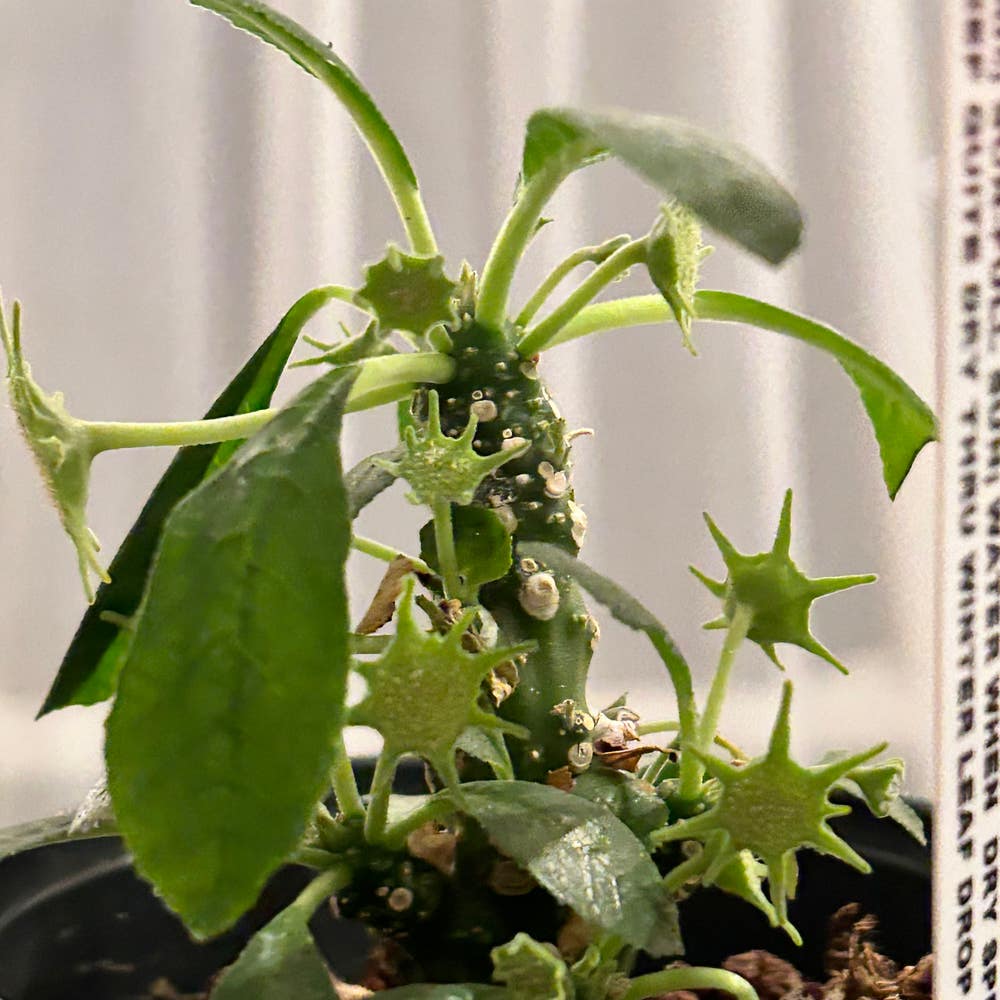
Does My Dorstenia horwoodii Need Direct Sunlight?
Dorstenia horwoodii
By the Greg Editorial Team
Apr 22, 2024•3 min read
This article was created with the help of AI so we can cover more plants for you. May contain errors. See one? Report it here.
- Bright, indirect sunlight preferred; direct sun can stress Dorstenia horwoodii.
- East-facing windows ideal; west-facing may be too harsh.
- Seasonal care adjustments necessary for thriving Dorstenia horwoodii.
Sunlight Needs for Dorstenia horwoodii
Direct sunlight can be a no-go for your Dorstenia horwoodii. This plant prefers a life in the bright, indirect limelight. Think of it as a celebrity that doesn't want to get papped; it needs the exposure but not the harsh glare.
🌡️ Recognizing Signs of Sunlight Stress
Sunburned Symptoms
Leaves turning the color of a lobster? That's a classic sign your Dorstenia horwoodii has had too much sun. Crispy edges and bleached spots are the plant's SOS signals.
The Shade Seeker
Not enough light, and your plant will start reaching out like it's trying to snag the remote from across the room. Sparse growth and leggy stems are your clues to up the light ante.
🌍 Adapting to Your Environment
Window Wisdom
East-facing windows are your Dorstenia horwoodii's best friend, offering that gentle morning light. West-facing ones? They're the afternoon frenemies, potentially too intense.
Hemisphere Hints
Your location on the globe matters. The sun's path changes with the seasons, and so should your plant's prime real estate by the window. Keep an eye on the light quality and adjust accordingly.
Protecting Dorstenia horwoodii from Harsh Rays
When the sun gets aggressive, your Dorstenia horwoodii needs a shield. Think of it as sunblock for your succulent.
🌞 When the Sun Packs a Punch: Protecting Your Plant
Sheer curtains are like sunglasses for your plant. They let in light without the burn. If you're tech-savvy, slap on some UV window film. It's like a high-tech fortress against UV rays.
For outdoor plants, shade cloths are the knight in shining armor during peak sun hours. They fend off the sun's fiery arrows, so to speak.
🎨 Creative Shading: Simple Solutions for Intense Sunlight
Rotate your Dorstenia horwoodii regularly. It's like ensuring everyone gets a turn at the window seat.
Taller plants can be comrades-in-arms, providing a canopy against the sun's onslaught. It's a natural and aesthetic defense strategy.
Seasonal Sunlight Shifts
The sun's mood swings with the seasons, and so should your plant care tactics.
☀️ Summer vs. Winter Sun: Adjusting Dorstenia horwoodii Care with the Seasons
In summer, your plant's spot might turn from cozy to scorching. It's time to move it back or rig up some shade.
Come winter, the sun plays hard to get. Coax your Dorstenia horwoodii closer to the light, but watch out for cold drafts by windows. It's like a game of hot and cold.
Remember, the sun's path changes, and so does your plant's need for shades or a sunny spot. Stay alert and be ready to adapt. It's less about sticking to a rigid schedule and more about reading the room—or in this case, the sky.
Tailoring Your Care Routine
🌱 Monitoring and Adjusting: Keeping Your Dorstenia horwoodii Happy Year-Round
Your Dorstenia horwoodii doesn't have a snooze button; vigilance is key. Check the soil's moisture level with the dedication of a barista perfecting your morning espresso. Seasons change, and so should your care. When summer heat turns up, your watering can gets busier. Come winter, it's time to ease up as your plant sips less.
🌞 The Role of Watering and Feeding in Sunlight Management
Watering is an art, and sunlight is part of the palette. Brighter light means thirstier plants. But don't drown the poor thing in your enthusiasm; let the soil dry out between waterings. Feeding? It's like seasoning a dish—essential but easy to overdo. Stick to a balanced fertilizer, and only when your plant is actively growing. Remember, less is more when the sun takes a vacation.
⚠️ Safety First
This content is for general information and may contain errors, omissions, or outdated details. It is not medical, veterinary advice, or an endorsement of therapeutic claims.
Always consult a qualified healthcare professional before using any plant as food, medicine, or supplement.
Never eat any plant (or feed one to pets) without confirming its identity with at least two trusted sources.
If you suspect poisoning, call Poison Control (800) 222-1222, the Pet Poison Helpline (800) 213-6680, or your local emergency service immediately.
Spotted an error? Please report it here.
Keep your Dorstenia horwoodii sun-stress-free ☀️ by leveraging Greg's PlantVision to find the ideal spot and set up custom watering reminders based on seasonal light changes.