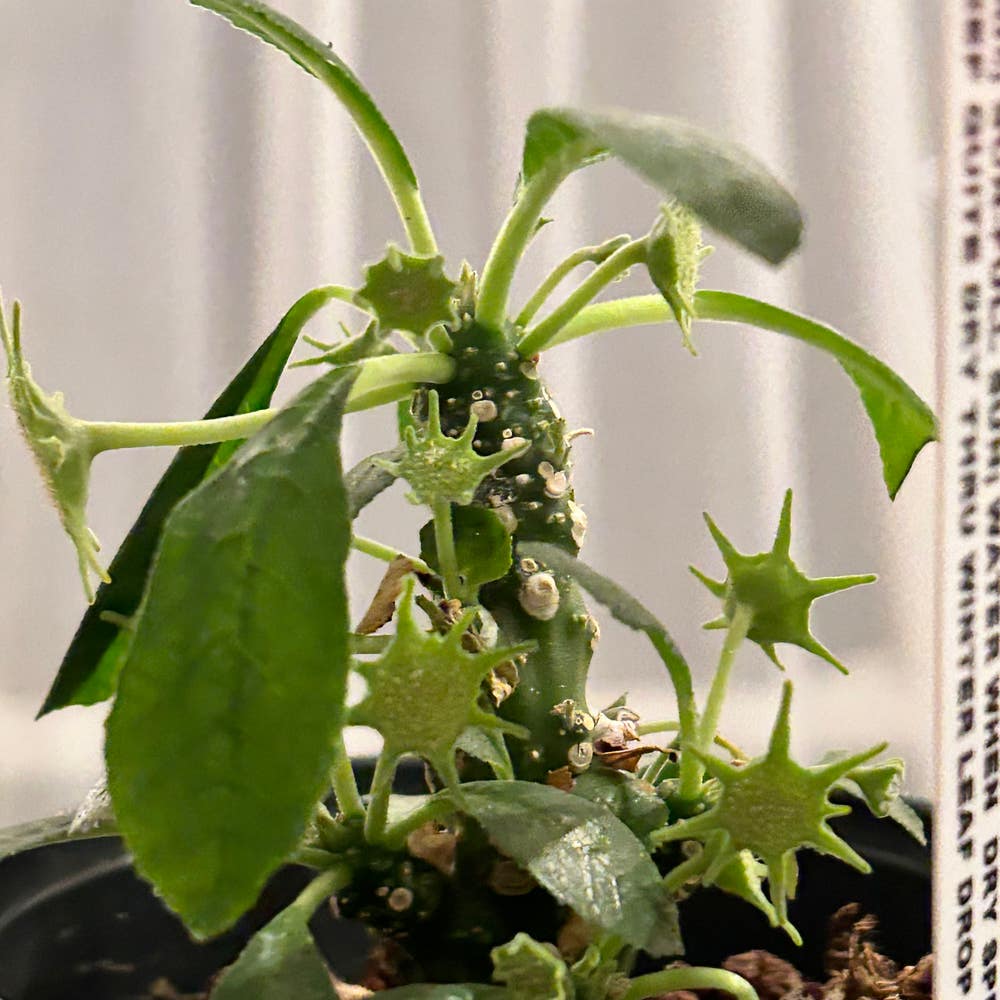
🐛 What To Do About Bugs on My Dorstenia horwoodii?
Dorstenia horwoodii
By the Greg Editorial Team
Apr 22, 2024•4 min read
This article was created with the help of AI so we can cover more plants for you. May contain errors. See one? Report it here.
- 🕷️ Spot spider mites early with webbing and speckled leaves; water spray first.
- 🐞 Scale and mealybugs: Look for sticky residue; remove with alcohol or brush.
- 🌱 Prevent pests with dry soil, regular checks, and natural predators like ladybugs.
Spot the Invaders: Identifying Common Pests
🕷️ Spider Mites: The Sneaky Sap-Suckers
Tiny but troublesome, spider mites are the ninjas of the plant world, often going unnoticed until their damage is done. Webbing under leaves and a speckled look on foliage are their calling cards.
To evict these pests, start with a water spray to disrupt their hideouts. If they cling on, insecticidal soap or neem oil can send them packing. For a stubborn infestation, miticides are the big guns, but they're the option of last resort due to environmental concerns.
🦟 Scale: The Sticky Freeloaders
Scale insects are the masters of disguise, masquerading as harmless bumps on stems and leaves. Their presence is betrayed by sticky honeydew they leave behind, which can lead to sooty mold.
Combat these critters by scraping them off with a soft brush or dabbing them with rubbing alcohol on a cotton swab. Keep a vigilant eye post-treatment; these pests are notorious for making a comeback.
🦟 Fungus Gnats and Fruit Flies: The Soil Lurkers
If you're seeing tiny flies around your plant's soil, you've likely got fungus gnats or fruit flies. These pests are more than just a nuisance; they can harm young plants and root systems.
To tackle them, let the soil dry out between waterings and use sticky traps to catch the adults. This one-two punch can help keep your soil pest-free.
🐛 Mealybugs: The Fluffy Vandals
Mealybugs are the bane of many plant enthusiasts, leaving behind a white, cottony residue as they suck the life out of your plants. They're particularly fond of cozying up in the nooks and crannies of your Dorstenia horwoodii.
To show these fluffy vandals the door, wipe them with alcohol or apply insecticidal soap. Regular inspections are key to catching these pests early and preventing a full-scale invasion.
Other Unwelcome Guests (If Applicable)
🐜 Aphids: The Plant Juice Junkies
Aphids are tiny but terrible, clustering on new growth and secreting sticky honeydew. Spot them by their love for the freshest parts of your Dorstenia horwoodii.
Blast them away with a strong water jet or apply insecticidal soap for a more thorough cleanse. For those who prefer a direct approach, a cotton swab dipped in rubbing alcohol does wonders.
🦟 Thrips: The Microscopic Marauders
Thrips are masters of disguise, leaving behind silvery trails and speckled leaves as evidence of their presence. To catch them in the act, shake a leaf over white paper and watch for tiny, moving black specks.
Combat these pests with neem oil or insecticidal soap, applied with persistence. Blue sticky traps can also be allies in your battle against thrips. Remember, vigilance is your best defense—catch them early.
Winning the War: Pest Control Strategies
🛡️ The Best Offense is a Good Defense: Preventative Tips
Prevention is your plant's personal bodyguard against pests. Regular inspections are a must—think of them as routine security checks for your Dorstenia horwoodii. Keep the soil on the drier side; overwatering is like throwing a pest party with an open invite. Prune away any dead or dying foliage; it's not just a trim, it's eliminating potential pest hideouts.
⚔️ When Pests Prevail: Choosing Your Weapons Wisely
If pests have breached the perimeter, it's time to choose your counterattack wisely. Start with the least harmful methods. Introduce natural predators like ladybugs, which are like having your own pest control ninjas. If you need to escalate, opt for insecticidal soaps or neem oil—they're the special forces of pest control, effective yet environmentally conscious.
🌿 The Organic Arsenal: Natural Remedies That Pack a Punch
When it's time to fight back, your organic arsenal is ready. Neem oil and insecticidal soaps are the judo masters of pest control, flipping pests without trashing the planet. Apply these treatments during the twilight hours when beneficial insects clock out, and pests are most vulnerable. And remember, variety is the spice of life and the bane of pests—rotate your treatments to prevent any pesky resistance training.
⚠️ Safety First
This content is for general information and may contain errors, omissions, or outdated details. It is not medical, veterinary advice, or an endorsement of therapeutic claims.
Always consult a qualified healthcare professional before using any plant as food, medicine, or supplement.
Never eat any plant (or feed one to pets) without confirming its identity with at least two trusted sources.
If you suspect poisoning, call Poison Control (800) 222-1222, the Pet Poison Helpline (800) 213-6680, or your local emergency service immediately.
Spotted an error? Please report it here.
Keep your Dorstenia horwoodii thriving and pest-free 🌿 with Greg's reminders for regular inspections and tailored care tips to nip those bugs in the bud!